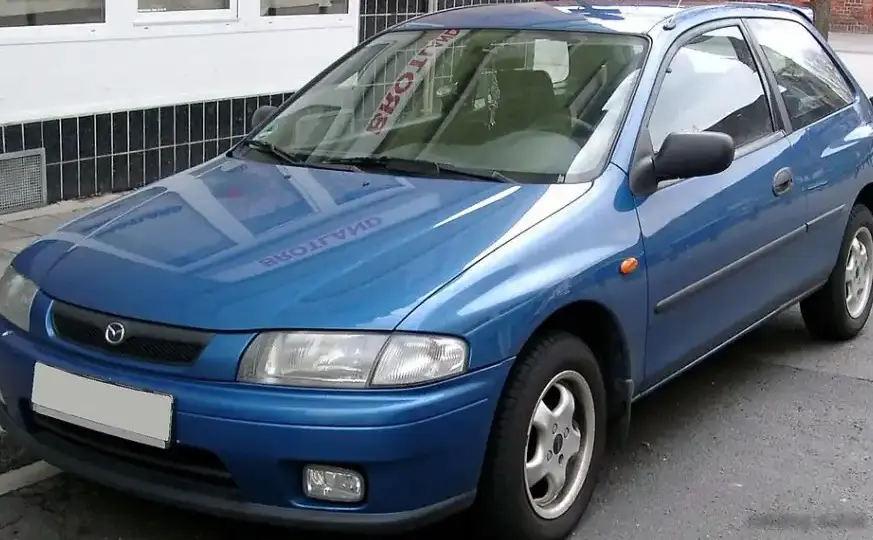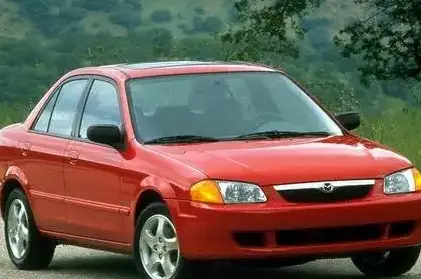
The Mazda Protege 1.3i, produced between 1998 and 2003, represented the entry point into Mazda’s compact sedan lineup during that period. Part of the P platform generation, this variant was primarily aimed at budget-conscious buyers seeking reliable and economical transportation. While the Protege was sold globally, its significance was particularly strong in North America, where it served as a competitor to vehicles like the Honda Civic, Toyota Corolla, and Nissan Sentra. The 1.3i model, with its smaller engine, offered a more affordable option compared to the higher-trim levels featuring larger engines and more extensive features.
Technical Specifications
| Brand | Mazda |
| Model | Protege |
| Generation | Protege |
| Type (Engine) | 1.3 i (85 Hp) |
| Start of production | 1998 year |
| End of production | 2003 year |
| Powertrain Architecture | Internal Combustion engine |
| Body type | Sedan |
| Seats | 5 |
| Doors | 4 |
| Fuel Type | Petrol (Gasoline) |
| Weight-to-power ratio | 12 kg/Hp, 83.3 Hp/tonne |
| Weight-to-torque ratio | 9.3 kg/Nm, 107.8 Nm/tonne |
| Power | 85 Hp @ 6000 rpm |
| Power per litre | 64.2 Hp/l |
| Torque | 110 Nm @ 4000 rpm, 81.13 lb.-ft. @ 4000 rpm |
| Engine layout | Front, Transverse |
| Engine Model/Code | B3 |
| Engine displacement | 1323 cm3, 80.73 cu. in. |
| Number of cylinders | 4 |
| Engine configuration | Inline |
| Cylinder Bore | 71 mm, 2.8 in. |
| Piston Stroke | 83.6 mm, 3.29 in. |
| Compression ratio | 9:1 |
| Number of valves per cylinder | 4 |
| Fuel injection system | Multi-port manifold injection |
| Engine aspiration | Naturally aspirated engine |
| Valvetrain | DOHC |
| Kerb Weight | 1020 kg, 2248.72 lbs |
| Fuel tank capacity | 50 l, 13.21 US gal | 11 UK gal |
| Length | 4315 mm, 169.88 in. |
| Width | 1695 mm, 66.73 in. |
| Height | 1410 mm, 55.51 in. |
| Wheelbase | 2610 mm, 102.76 in. |
| Front track | 1470 mm, 57.87 in. |
| Rear (Back) track | 1470 mm, 57.87 in. |
| Drivetrain Architecture | The Internal combustion engine (ICE) drives the front wheels of the vehicle. |
| Drive wheel | Front wheel drive |
| Front brakes | Ventilated discs |
| Rear brakes | Drum |
| Tires size | 175/70 R13 |
Powertrain & Engine Architecture
The heart of the Protege 1.3i was the Mazda B3 engine, a 1.3-liter inline-four cylinder powerplant. This engine utilized a naturally aspirated configuration with multi-port fuel injection and a double overhead camshaft (DOHC) valvetrain. The B3 engine was known for its relatively simple design, contributing to its reliability and ease of maintenance. The 9:1 compression ratio was a standard choice for the era, balancing fuel efficiency with acceptable performance. While not a powerhouse, the B3 engine was designed to provide adequate power for everyday driving. The engine was typically paired with a four-speed automatic transmission, although a five-speed manual was also available. The automatic transmission was chosen by many buyers for its convenience, particularly in urban environments.
Driving Characteristics
The 1.3i Protege, equipped with the automatic transmission, offered a comfortable but uninspiring driving experience. Acceleration was modest, with 0-60 mph times estimated around 12-14 seconds. The automatic transmission featured relatively tall gear ratios, prioritizing fuel economy over spirited performance. This meant that the engine often felt strained when attempting to accelerate quickly or climb hills. Compared to the higher-trim Proteges with the 1.6L or 1.8L engines, the 1.3i felt noticeably slower. However, for drivers prioritizing fuel efficiency and smooth, predictable operation, the 1.3i automatic provided a suitable solution. The steering was light and easy, making it maneuverable in city traffic, but lacked the feedback desired by more enthusiastic drivers.
Equipment & Trim Levels
The 1.3i Protege typically served as the base model, and as such, came with a relatively limited set of standard features. Typically, it included features like air conditioning, power steering, and an AM/FM radio. Interior upholstery was usually cloth, and the dashboard featured a simple, functional design. Optional extras included power windows and locks, a CD player, and alloy wheels. The trim level was often simply designated as “DX” or a similar base-level identifier. The focus was on providing essential transportation at an affordable price point, so luxury features were generally reserved for the higher trim levels.
Chassis & Braking
The Protege 1.3i utilized a front-wheel-drive chassis with independent front suspension and a torsion beam rear suspension. The front suspension featured MacPherson struts, while the rear suspension was designed to minimize cost and complexity. Braking duties were handled by ventilated discs on the front wheels and drum brakes on the rear. This configuration was common for vehicles in this price range during the late 1990s and early 2000s. The relatively light weight of the 1.3i model helped to compensate for the less sophisticated rear braking system. Stabilizer bars were typically included on the front suspension to reduce body roll during cornering.
Market Reception & Comparison
The Mazda Protege 1.3i was generally well-received as a practical and economical compact car. Critics praised its reliability and fuel efficiency, but noted its lack of performance and refinement compared to some of its competitors. Compared to the higher-trim Protege models, the 1.3i offered significantly lower running costs but at the expense of driving enjoyment. The 1.6L and 1.8L versions provided a more engaging driving experience, but also came with a higher price tag. Fuel economy for the 1.3i was typically in the range of 28-32 mpg city and 35-40 mpg highway, making it an attractive option for commuters.
Legacy
The Mazda Protege 1.3i, while not the most exciting version of the Protege, has proven to be a durable and reliable vehicle. Many examples are still on the road today, a testament to the quality of its engineering and construction. The B3 engine is known for its longevity, and parts availability remains relatively good. In the used car market, the 1.3i Protege represents an affordable and practical option for buyers seeking a basic, dependable compact sedan. While it may not offer the performance or features of more modern vehicles, its simplicity and reliability continue to appeal to a segment of the market.