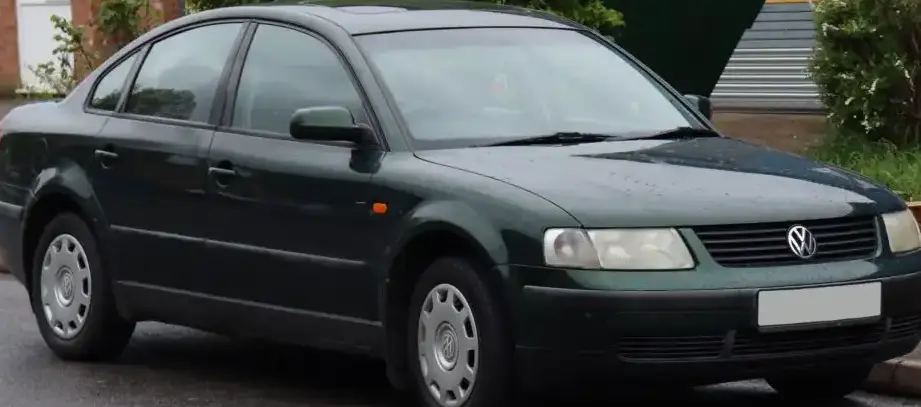
The Volkswagen Passat B5 2.0i, produced between 1997 and 2000, represented a significant step forward for Volkswagen’s mid-size offering. Positioned as a mainstream variant within the B5 Passat range (which spanned from 1996-2005), the 2.0i aimed to provide a balance of affordability, practicality, and reasonable performance. It served as a key model in the North American and European markets, offering a more accessible entry point into the Passat lineup compared to the more powerful VR6 models or the fuel-efficient TDI diesels. This version was a core component of the 3B platform, sharing its underpinnings with the Audi A4 and A6 of the same era.
Technical Specifications
| Brand | Volkswagen |
| Model | Passat |
| Generation | Passat (B5) |
| Type (Engine) | 2.0 i (115 Hp) |
| Start of production | 1997 |
| End of production | 2000 |
| Powertrain Architecture | Internal Combustion engine |
| Body type | Sedan |
| Seats | 5 |
| Doors | 4 |
| Fuel consumption (urban) | 12.3 l/100 km (19.1 US mpg, 23 UK mpg) |
| Fuel consumption (extra urban) | 6.3 l/100 km (37.3 US mpg, 44.8 UK mpg) |
| Fuel consumption (combined) | 8.3 l/100 km (28.3 US mpg, 34 UK mpg) |
| Fuel Type | Petrol (Gasoline) |
| Acceleration 0 – 100 km/h | 11.2 sec |
| Acceleration 0 – 62 mph | 11.2 sec |
| Acceleration 0 – 60 mph | 10.6 sec |
| Maximum speed | 200 km/h (124.27 mph) |
| Weight-to-power ratio | 11.7 kg/Hp |
| Weight-to-torque ratio | 7.8 kg/Nm |
| Power | 115 Hp @ 5400 rpm |
| Torque | 172 Nm @ 3200 rpm (126.86 lb.-ft. @ 3200 rpm) |
| Engine layout | Front, Longitudinal |
| Engine Model/Code | AZM, BFF |
| Engine displacement | 1984 cm3 (121.07 cu. in.) |
| Number of cylinders | 4 |
| Engine configuration | Inline |
| Cylinder Bore | 82.5 mm (3.25 in.) |
| Piston Stroke | 92.8 mm (3.65 in.) |
| Compression ratio | 10.3:1 |
| Number of valves per cylinder | 2 |
| Fuel injection system | Multi-port manifold injection |
| Engine aspiration | Naturally aspirated |
| Engine oil capacity | 4 l (4.23 US qt | 3.52 UK qt) |
| Coolant capacity | 7 l (7.4 US qt | 6.16 UK qt) |
| Kerb Weight | 1340 kg (2954.19 lbs.) |
| Max. weight | 1900 kg (4188.78 lbs.) |
| Max load | 560 kg (1234.59 lbs.) |
| Trunk (boot) space – minimum | 475 l (16.77 cu. ft.) |
| Trunk (boot) space – maximum | 800 l (28.25 cu. ft.) |
| Fuel tank capacity | 62 l (16.38 US gal | 13.64 UK gal) |
| Length | 4703 mm (185.16 in.) |
| Width | 1746 mm (68.74 in.) |
| Height | 1462 mm (57.56 in.) |
| Wheelbase | 2703 mm (106.42 in.) |
| Front track | 1515 mm (59.65 in.) |
| Rear track | 1515 mm (59.65 in.) |
| Drivetrain Architecture | Front wheel drive |
| Number of gears | 5 |
| Gearbox type | Manual transmission |
| Front suspension | Coil spring |
| Rear suspension | Coil spring |
| Front brakes | Ventilated discs |
| Rear brakes | Disc |
| Assisting systems | ABS (Anti-lock braking system) |
| Steering type | Steering rack and pinion |
| Power steering | Hydraulic |
| Tires size | 195/65 R15 |
| Wheel rims size | 6J x 15 |
INTRODUCTION
The Passat B5 2.0i, manufactured from 1997 to 2000, was a cornerstone of Volkswagen’s mid-size sedan lineup. It represented a significant evolution from the B4 generation, boasting a more refined interior, improved ride quality, and a more modern aesthetic. The 2.0i variant, powered by the AZM or BFF engine code, was specifically targeted at buyers seeking a practical and reliable family car without the premium price tag of the higher-performance models. It was a popular choice in Europe, where fuel economy and sensible performance were highly valued, and also gained traction in North America as a more affordable alternative to European rivals.
Powertrain & Engine Architecture
At the heart of the Passat 2.0i lies the 1.8-liter, inline-four cylinder engine, designated with engine codes AZM or BFF depending on the specific market and year. This engine is a naturally aspirated unit featuring multi-port fuel injection. The engine’s design prioritized smooth operation and reasonable fuel efficiency over outright power. The valvetrain utilizes two valves per cylinder (SOHC), contributing to its simplicity and reliability. The 2.0i was typically paired with a five-speed manual transmission, although a four-speed automatic transmission was also available, and was a common choice for North American buyers. The automatic transmission, while offering convenience, did impact acceleration and fuel economy compared to the manual version. The engine is longitudinally mounted, driving the front wheels.
Driving Characteristics
The 115 horsepower and 126.86 lb-ft of torque produced by the 2.0i engine provided adequate, but not exhilarating, performance. Acceleration from 0-60 mph took around 10.6 to 11.2 seconds, making it competitive with other mainstream sedans of the era. The automatic transmission, while smooth, resulted in noticeable power loss during gear changes. The gear ratios were tuned for fuel efficiency rather than sporty acceleration. In real-world driving, the 2.0i felt most comfortable during highway cruising, where its relaxed engine character and comfortable suspension provided a pleasant experience. Compared to the VR6, the 2.0i lacked the punch for quick overtaking maneuvers, but it offered a more economical and less demanding driving experience. The manual transmission version provided a more engaging driving experience, allowing drivers to better utilize the engine’s available power.
Equipment & Trim Levels
The Passat 2.0i typically came equipped with a reasonable level of standard features. These included power windows, power locks, air conditioning, and an AM/FM radio. Higher trim levels, often denoted by additional badging, added features such as alloy wheels, upgraded upholstery (often cloth or velour), a sunroof, and a more sophisticated audio system. Optional extras included leather upholstery, heated front seats, and a CD changer. The interior design was generally conservative, focusing on functionality and durability. The dashboard layout was straightforward and easy to use, with clearly labeled controls.
Chassis & Braking
The Passat B5 featured an independent suspension setup at all four corners, utilizing coil springs and shock absorbers. The front suspension employed MacPherson struts, while the rear suspension utilized a multi-link design. This setup provided a comfortable ride and good handling characteristics. Braking duties were handled by ventilated discs at the front and solid discs at the rear. Anti-lock braking system (ABS) was standard, enhancing safety. The steering was rack-and-pinion with hydraulic power assistance, providing precise and responsive steering feel. The standard tire size was 195/65 R15, offering a good balance of comfort and grip.
Market Reception & Comparison
The Passat 2.0i was generally well-received by automotive critics as a sensible and practical family sedan. It was praised for its comfortable ride, spacious interior, and good build quality. However, some critics noted that the engine lacked the power of its competitors and that the automatic transmission could feel sluggish. Compared to the VR6 Passat, the 2.0i offered significantly better fuel economy, but at the expense of performance. The TDI diesel models provided even better fuel economy, but were often more expensive to purchase and maintain. The 2.0i represented a sweet spot for buyers seeking a balance of affordability, practicality, and reliability.
Legacy
The Passat B5 2.0i has proven to be a relatively reliable vehicle, with many examples still on the road today. The engine, while not particularly powerful, is known for its durability and longevity. The automatic transmission, however, can be prone to issues if not properly maintained. In the used car market, the 2.0i Passat B5 remains an affordable and practical option for buyers seeking a comfortable and reliable sedan. Its simple design and readily available parts make it relatively easy to maintain and repair. While it may not offer the prestige of some of its rivals, the Passat 2.0i continues to be a popular choice for those seeking a sensible and dependable vehicle.