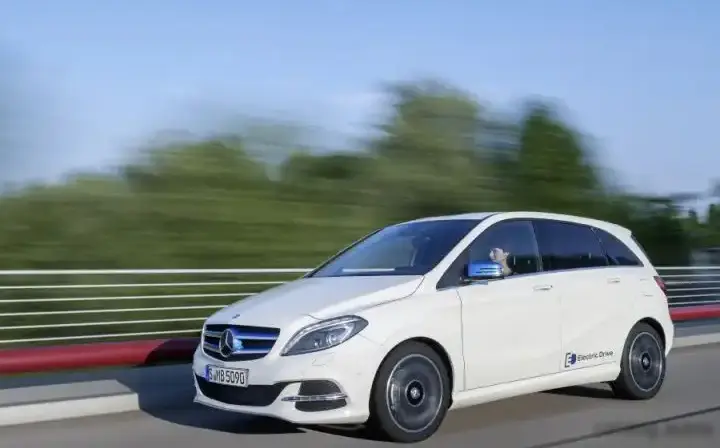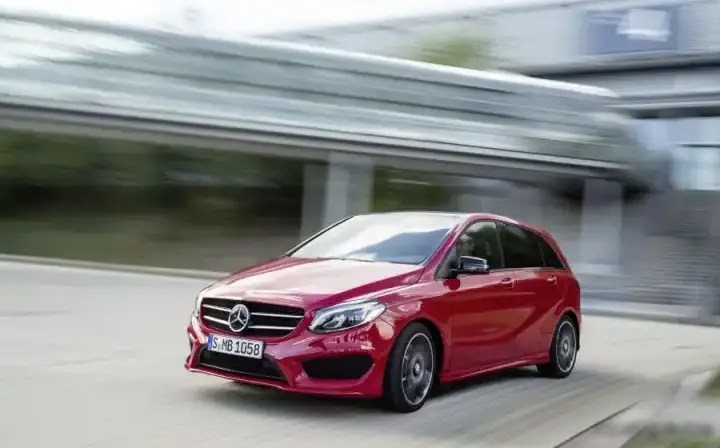
The Mercedes-Benz B-Class (W246 facelift) B 180 CDI, produced from 2014 to 2018, represented an entry-level diesel option within the second generation of the B-Class compact hatchback. Positioned as a fuel-efficient and practical choice, it catered to buyers prioritizing economy and usability over outright performance. This variant occupied the lower end of the B-Class range, slotting below more powerful gasoline and diesel models like the B 200 CDI and B 250. The W246 facelift brought styling updates and revised interior appointments compared to the pre-2014 models, enhancing the B-Class’s appeal in the competitive compact segment.
Technical Specifications
| Brand | Mercedes-Benz |
| Model | B-class |
| Generation | B-class (W246 facelift 2014) |
| Type (Engine) | B 180 CDI (109 Hp) |
| Start of production | 2014 |
| End of production | 2018 |
| Powertrain Architecture | Internal Combustion engine |
| Body type | Hatchback |
| Seats | 5 |
| Doors | 5 |
| Fuel consumption (urban) | 5.0-4.9 l/100 km (47 – 48 US mpg, 56.5 – 57.6 UK mpg, 20 – 20.4 km/l) |
| Fuel consumption (extra urban) | 3.9-3.7 l/100 km (60.3 – 63.6 US mpg, 72.4 – 76.3 UK mpg, 25.6 – 27 km/l) |
| Fuel consumption (combined) | 4.3-4.1 l/100 km (54.7 – 57.4 US mpg, 65.7 – 68.9 UK mpg, 23.3 – 24.4 km/l) |
| CO2 emissions | 112-108 g/km |
| Fuel Type | Diesel |
| Acceleration 0 – 100 km/h | 11.6 sec |
| Acceleration 0 – 62 mph | 11.6 sec |
| Acceleration 0 – 60 mph | 11 sec |
| Maximum speed | 190 km/h (118.06 mph) |
| Emission standard | Euro 6 |
| Weight-to-power ratio | 13 kg/Hp, 76.8 Hp/tonne |
| Weight-to-torque ratio | 5.5 kg/Nm, 183.1 Nm/tonne |
| Power | 109 Hp @ 4000 rpm |
| Power per litre | 74.6 Hp/l |
| Torque | 260 Nm @ 1750-2500 rpm (191.77 lb.-ft. @ 1750-2500 rpm) |
| Engine layout | Front, Transverse |
| Engine Model/Code | OM 607.951 |
| Engine displacement | 1461 cm3 (89.16 cu. in.) |
| Number of cylinders | 4 |
| Engine configuration | Inline |
| Compression ratio | 15.5:1 |
| Fuel injection system | Diesel Commonrail |
| Engine aspiration | Turbocharger, Intercooler |
| Engine oil capacity | 4.5 l (4.76 US qt | 3.96 UK qt) |
| Coolant | 6.3 l (6.66 US qt | 5.54 UK qt) |
| Kerb Weight | 1420 kg (3130.56 lbs.) |
| Max. weight | 1985 kg (4376.18 lbs.) |
| Max load | 565 kg (1245.61 lbs.) |
| Trunk (boot) space – minimum | 488 l (17.23 cu. ft.) |
| Trunk (boot) space – maximum | 1547 l (54.63 cu. ft.) |
| Fuel tank capacity | 50 l (13.21 US gal | 11 UK gal) |
| Length | 4393 mm (172.95 in.) |
| Width | 1786 mm (70.31 in.) |
| Height | 1557 mm (61.3 in.) |
| Wheelbase | 2699 mm (106.26 in.) |
| Front track | 1552 mm (61.1 in.) |
| Rear (Back) track | 1549 mm (60.98 in.) |
| Ride height (ground clearance) | 98 mm (3.86 in.) |
| Minimum turning circle (turning diameter) | 11 m (36.09 ft.) |
| Drivetrain Architecture | The Internal combustion engine (ICE) drives the front wheels of the vehicle. |
| Drive wheel | Front wheel drive |
| Number of gears and type of gearbox | 6 gears, manual transmission |
| Front suspension | Independent, type McPherson with coil spring and anti-roll bar |
| Rear suspension | Independent coil spring |
| Front brakes | Ventilated discs |
| Rear brakes | Disc |
| Assisting systems | ABS (Anti-lock braking system) |
| Steering type | Steering rack and pinion |
| Tires size | 195/65 R15 |
| Wheel rims size | 15 |
Powertrain & Engine Architecture
The B 180 CDI utilized the OM607.951 engine, a 1.5-liter inline-four cylinder diesel engine. This engine was a member of Mercedes-Benz’s compact diesel family, known for its efficiency and relatively low emissions. It featured a turbocharger with an intercooler to boost power output and improve combustion efficiency. The engine employed a common rail direct fuel injection system, delivering fuel directly into the combustion chamber at high pressure for optimized fuel atomization and cleaner burning. The engine’s 15.5:1 compression ratio was typical for a diesel engine, contributing to its thermal efficiency. The 6-speed manual transmission was standard, providing a balance between fuel economy and driver control.
Driving Characteristics
The B 180 CDI, with its 109 horsepower and 260 Nm (192 lb-ft) of torque, offered adequate performance for everyday driving. Acceleration from 0 to 62 mph took approximately 11.6 seconds, and top speed was rated at 190 km/h (118 mph). While not particularly sporty, the engine delivered a usable amount of torque from low engine speeds, making it suitable for urban and highway driving. Compared to the more powerful B 200 CDI, the B 180 CDI felt noticeably slower, especially during overtaking maneuvers. The manual transmission provided a more engaging driving experience than the optional automatic, allowing drivers to better control engine speed and maximize fuel efficiency. The gear ratios were tuned for economy, prioritizing fuel consumption over rapid acceleration.
Equipment & Trim Levels
The B 180 CDI typically came equipped with standard features such as air conditioning, power windows, central locking, and a basic audio system. Safety features included ABS, ESP (Electronic Stability Program), and multiple airbags. Higher trim levels offered options like alloy wheels, a more advanced infotainment system with navigation, leather upholstery, and parking sensors. The interior design was functional and modern, with a focus on practicality and usability. The B-Class was known for its versatile interior, with rear seats that could be folded down to increase cargo space.
Chassis & Braking
The W246 B-Class featured an independent suspension setup, with McPherson struts at the front and a multi-link suspension at the rear. This configuration provided a comfortable ride and decent handling characteristics. The front brakes were ventilated discs, while the rear brakes were solid discs. The steering was a rack-and-pinion system, offering precise and responsive steering feel. The B 180 CDI’s relatively low weight, at around 1420 kg (3130 lbs), contributed to its manageable handling and braking performance.
Market Reception & Comparison
The B 180 CDI was generally well-received by critics as a practical and fuel-efficient compact hatchback. Its low running costs and comfortable ride made it an attractive option for buyers seeking a sensible and economical vehicle. However, some reviewers criticized its lack of outright performance compared to its more powerful siblings. Compared to the B 200 CDI, the B 180 CDI offered lower fuel consumption but significantly reduced performance. The B 180 CDI’s reliability was generally good, with few major issues reported.
Legacy
The OM607.951 engine, found in the B 180 CDI, proved to be a durable and reliable powerplant. While not known for exceptional longevity, with proper maintenance, these engines can reach high mileage. On the used car market, the B 180 CDI remains a relatively affordable option, appealing to buyers seeking a fuel-efficient and practical compact hatchback. Its simplicity and relatively low maintenance costs make it a sensible choice for those prioritizing value and reliability over performance and luxury.