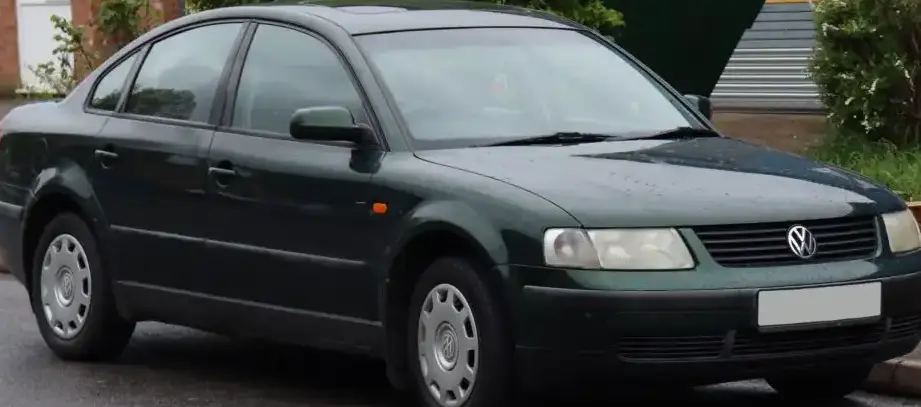
The Volkswagen Passat B5 2.3 VR5, produced between 1996 and 2000, represented a significant step forward for Volkswagen’s mid-size offering. Positioned as a more premium alternative within the B5 Passat range – which spanned from economical four-cylinder models to the performance-oriented VR6 – the 2.3 VR5 aimed to deliver a blend of refinement, performance, and distinctive character. Built on the Volkswagen Group’s 1HX0/A3 platform, shared with models like the Audi A4 and Skoda Superb, the B5 Passat was a critical model for Volkswagen in Europe and increasingly, in the North American market where it sought to establish itself as a credible alternative to Japanese and American sedans.
Technical Specifications
| Brand | Volkswagen |
| Model | Passat |
| Generation | Passat (B5) |
| Type (Engine) | 2.3 VR5 (150 Hp) |
| Start of production | 1996 |
| End of production | 2000 |
| Powertrain Architecture | Internal Combustion engine |
| Body type | Sedan |
| Seats | 5 |
| Doors | 4 |
| Fuel consumption (urban) | 13.5 l/100 km (17.4 US mpg) |
| Fuel consumption (extra urban) | 7.4 l/100 km (31.8 US mpg) |
| Fuel Type | Petrol (Gasoline) |
| Acceleration 0 – 100 km/h | 9.1 sec |
| Acceleration 0 – 62 mph | 9.1 sec |
| Acceleration 0 – 60 mph | 8.6 sec |
| Maximum speed | 220 km/h (136.7 mph) |
| Weight-to-power ratio | 8.9 kg/Hp |
| Weight-to-torque ratio | 6.5 kg/Nm |
| Power | 150 Hp @ 6000 rpm |
| Power per litre | 64.5 Hp/l |
| Torque | 205 Nm @ 3200 rpm (151.2 lb.-ft. @ 3200 rpm) |
| Engine layout | Front, Longitudinal |
| Engine Model/Code | AGZ |
| Engine displacement | 2324 cm3 (141.82 cu. in.) |
| Number of cylinders | 5 |
| Engine configuration | Inline |
| Cylinder Bore | 81 mm (3.19 in.) |
| Piston Stroke | 90.2 mm (3.55 in.) |
| Compression ratio | 10.1:1 |
| Number of valves per cylinder | 2 |
| Fuel injection system | Multi-port manifold injection |
| Engine aspiration | Naturally aspirated engine |
| Valvetrain | DOHC |
| Engine oil capacity | 3.7 l (3.91 US qt | 3.26 UK qt) |
| Coolant | 9 l (9.51 US qt | 7.92 UK qt) |
| Kerb Weight | 1335 kg (2943.17 lbs.) |
| Max. weight | 1885 kg (4155.71 lbs.) |
| Max load | 550 kg (1212.54 lbs.) |
| Trunk (boot) space – minimum | 475 l (16.77 cu. ft.) |
| Trunk (boot) space – maximum | 745 l (26.31 cu. ft.) |
| Fuel tank capacity | 62 l (16.38 US gal | 13.64 UK gal) |
| Length | 4670 mm (183.86 in.) |
| Width | 1740 mm (68.5 in.) |
| Height | 1460 mm (57.48 in.) |
| Wheelbase | 2700 mm (106.3 in.) |
| Front track | 1498 mm (58.98 in.) |
| Rear (Back) track | 1500 mm (59.06 in.) |
| Drivetrain Architecture | The Internal combustion engine (ICE) drives the front wheels of the vehicle. |
| Drive wheel | Front wheel drive |
| Number of gears and type of gearbox | 5 gears, manual transmission |
| Front suspension | Coil spring |
| Rear suspension | Coil spring |
| Front brakes | Ventilated discs |
| Rear brakes | Disc |
| Assisting systems | ABS (Anti-lock braking system) |
| Steering type | Steering rack and pinion |
| Power steering | Hydraulic Steering |
| Tires size | 195/65 R15 |
| Wheel rims size | 6J x 15 |
Powertrain & Engine Architecture
The heart of the Passat B5 2.3 VR5 is the AGZ engine code, a 2.3-liter naturally aspirated five-cylinder engine. This engine is a unique design, combining aspects of both inline and V-engines. The cylinders are arranged in a narrow V-configuration (10.6 degrees), sharing a single cylinder head. This layout allowed for a relatively compact engine while still providing a smoother power delivery than a typical inline-five. The AGZ utilizes multi-port fuel injection, delivering fuel directly into the intake ports, and a double overhead camshaft (DOHC) valvetrain for optimized airflow. The engine produces 150 horsepower at 6000 rpm and 205 Nm (151.2 lb-ft) of torque at 3200 rpm. The engine is longitudinally mounted, driving the front wheels through a five-speed manual transmission. While an automatic transmission was available, the manual was favored by enthusiasts for its more engaging driving experience.
Driving Characteristics
The 2.3 VR5 Passat offered a balanced driving experience. While not as overtly sporty as the VR6, it provided ample power for everyday driving and comfortable highway cruising. The five-cylinder engine delivered a distinctive exhaust note, setting it apart from the more common four-cylinder variants. Acceleration to 60 mph took approximately 8.6 seconds, and the car had a top speed of 136.7 mph. The manual transmission featured well-chosen gear ratios, allowing the engine to remain in its optimal power band. Compared to the 1.8L four-cylinder models, the VR5 offered noticeably more torque and a more refined feel. However, it lacked the outright performance of the VR6. The automatic transmission, while offering convenience, did diminish the engine’s responsiveness and resulted in slightly slower acceleration times.
Equipment & Trim Levels
The 2.3 VR5 typically came with a higher level of standard equipment than the base Passat models. Standard features included power windows, power locks, air conditioning, and an upgraded audio system. Interior upholstery was typically cloth, but leather options were available. Dashboard trim could vary, with woodgrain accents being a popular choice. Optional extras included a sunroof, heated seats, and a more advanced audio system with a CD changer. The VR5 trim was often seen as a stepping stone towards the more luxurious VR6, offering a good balance of features and price.
Chassis & Braking
The Passat B5 featured an independent suspension on all four wheels, utilizing coil springs and shock absorbers. The front suspension employed MacPherson struts, while the rear used a multi-link setup. This configuration provided a comfortable ride and good handling characteristics. Brakes were ventilated discs on the front wheels and solid discs on the rear. Anti-lock braking system (ABS) was standard. The VR5 models generally featured slightly thicker stabilizer bars compared to the base models, further enhancing handling stability.
Market Reception & Comparison
The Passat B5 2.3 VR5 was generally well-received by automotive critics. It was praised for its refined engine, comfortable ride, and spacious interior. However, some critics noted that the engine lacked the outright performance of its competitors, particularly in the North American market. Compared to the 1.8L four-cylinder models, the VR5 offered a significant improvement in performance and refinement, but at a higher price point. The VR6, while more expensive, provided a more engaging driving experience. Fuel economy was reasonable for its class, averaging around 22 mpg combined.
Legacy
The AGZ 2.3 VR5 engine, while not without its quirks, proved to be a relatively reliable powertrain. Common issues included oil leaks and occasional sensor failures, but these were generally not major concerns. Today, the Passat B5 2.3 VR5 is gaining a following among enthusiasts who appreciate its unique engine and distinctive character. Well-maintained examples are becoming increasingly collectible. The engine’s relatively simple design makes it easier to maintain and repair compared to some of the more complex engines of the era. The B5 Passat, in general, is remembered as a well-built and comfortable mid-size sedan that offered a compelling alternative to its competitors.