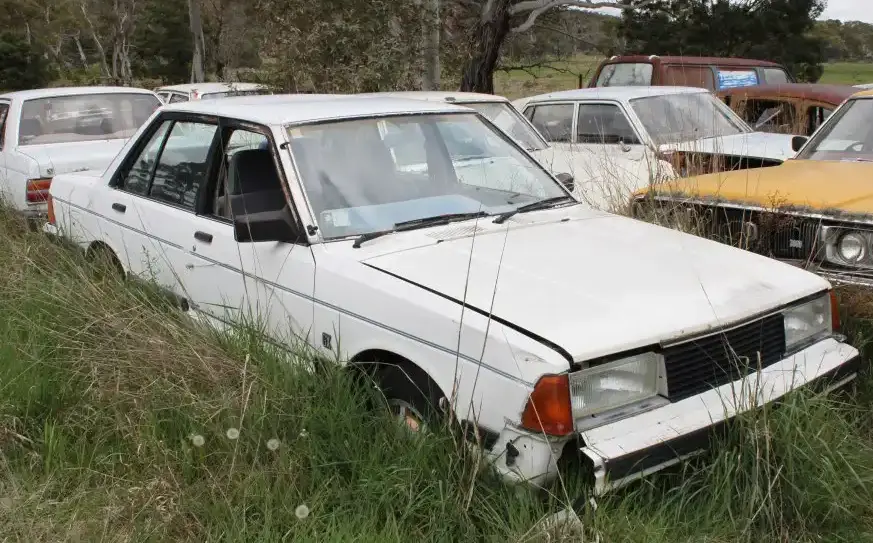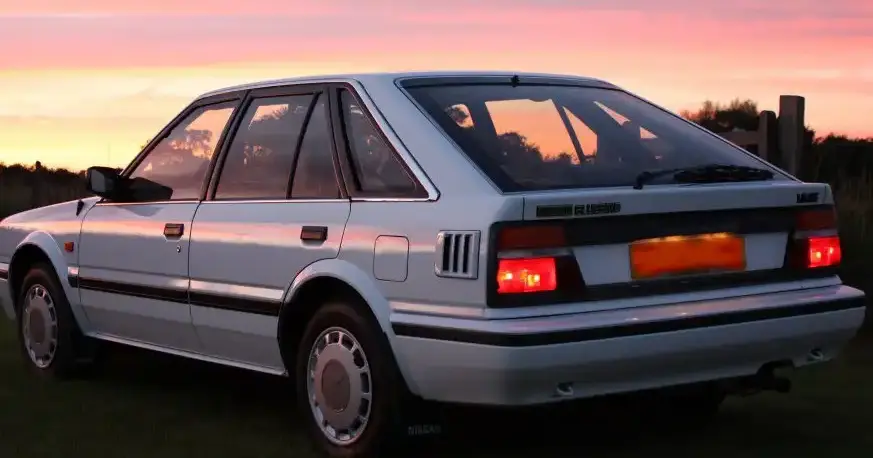
The Nissan Bluebird U13, produced between 1991 and 1995, represented a significant evolution of Nissan’s long-running Bluebird lineage. This generation, designated U13, was primarily aimed at the Japanese domestic market (JDM) and select export markets, offering a blend of comfort, practicality, and increasingly sophisticated technology. The 1.8i variant, equipped with a 125 horsepower engine, a four-speed automatic transmission, and a full-time four-wheel drive system, occupied a mid-range position within the U13 lineup, appealing to buyers seeking a well-equipped and capable family sedan. It was positioned above the base 1.6L models and below the more performance-oriented 2.0L variants.
Technical Specifications
| Brand | Nissan |
| Model | Bluebird |
| Generation | Bluebird (U13) |
| Type | 1.8i (125 Hp) 4×4 Automatic |
| Start of production | 1991 |
| End of production | 1995 |
| Powertrain Architecture | Internal Combustion engine |
| Body type | Sedan |
| Seats | 5 |
| Doors | 4 |
| Fuel Type | Petrol (Gasoline) |
| Weight-to-power ratio | 10.6 kg/Hp, 94.7 Hp/tonne |
| Weight-to-torque ratio | 8.4 kg/Nm, 118.9 Nm/tonne |
| Power | 125 Hp @ 6000 rpm |
| Power per litre | 68 Hp/l |
| Torque | 157 Nm @ 4800 rpm (115.8 lb.-ft. @ 4800 rpm) |
| Engine layout | Front, Transverse |
| Engine displacement | 1838 cm3 (112.16 cu. in.) |
| Number of cylinders | 4 |
| Engine configuration | Inline |
| Cylinder Bore | 82.5 mm (3.25 in.) |
| Piston Stroke | 86 mm (3.39 in.) |
| Compression ratio | 10:1 |
| Number of valves per cylinder | 4 |
| Fuel injection system | Multi-port manifold injection |
| Engine aspiration | Naturally aspirated engine |
| Kerb Weight | 1320 kg (2910.1 lbs.) |
| Fuel tank capacity | 60 l (15.85 US gal | 13.2 UK gal) |
| Length | 4585 mm (180.51 in.) |
| Width | 1695 mm (66.73 in.) |
| Height | 1405 mm (55.31 in.) |
| Wheelbase | 2620 mm (103.15 in.) |
| Front track | 1465 mm (57.68 in.) |
| Rear track | 1455 mm (57.28 in.) |
| Ride height (ground clearance) | 160 mm (6.3 in.) |
| Drive wheel | All wheel drive (4×4) |
| Number of gears and type of gearbox | 4 gears, automatic transmission |
| Front brakes | Ventilated discs |
| Rear brakes | Drum |
| Steering type | Steering rack and pinion |
| Tires size | 195/65 R14 |
| Wheel rims size | 14 |
Powertrain & Engine Architecture
The heart of the Bluebird 1.8i 4×4 Automatic is Nissan’s GA16DE inline-four cylinder engine. This 1.8-liter (1838cc) powerplant features a cast iron block and an aluminum cylinder head, a common configuration for engines of this era aiming for a balance of durability and weight reduction. The GA16DE utilizes multi-port fuel injection, delivering fuel directly to each intake port for improved combustion efficiency and throttle response. The engine employs a single overhead camshaft (SOHC) design with four valves per cylinder, contributing to its respectable power output of 125 horsepower at 6000 rpm and 157 Nm (115.8 lb-ft) of torque at 4800 rpm. The four-speed automatic transmission, typically a Jatco unit, was chosen for its smooth operation and ease of use, catering to the comfort-oriented nature of the Bluebird. The full-time four-wheel drive system, while adding weight, provided enhanced traction and stability, particularly beneficial in inclement weather conditions.
Driving Characteristics
The 1.8i Automatic configuration of the U13 Bluebird offered a comfortable and predictable driving experience. While not a performance-focused variant, the engine provided adequate power for everyday driving situations. Acceleration was reasonable, though noticeably slower than the 2.0L models. The automatic transmission, while smooth, lacked the responsiveness of a manual gearbox, and the gear ratios were tuned for fuel efficiency rather than outright performance. The four-wheel drive system instilled a sense of security and stability, especially on slippery surfaces, but also contributed to a slightly heavier feel compared to front-wheel drive Bluebird models. Steering was light and precise, making the car easy to maneuver in urban environments.
Equipment & Trim Levels
The 1.8i 4×4 Automatic trim typically included features such as power windows, power steering, central locking, and an AM/FM radio with cassette player. Higher trim levels offered options like air conditioning, alloy wheels, and upgraded interior upholstery. Interior materials were generally of good quality for the price point, with a focus on practicality and durability. The dashboard layout was functional and straightforward, with clearly labeled controls. The Bluebird U13 prioritized comfort and convenience, offering a well-equipped interior for its class.
Chassis & Braking
The U13 Bluebird utilized a MacPherson strut front suspension and a multi-link rear suspension, providing a comfortable ride and decent handling characteristics. The front brakes were ventilated discs, offering good stopping power, while the rear brakes were drums, a cost-saving measure common in this segment. The steering system employed a rack and pinion setup, providing precise and responsive steering feel. The 195/65 R14 tires offered a good balance of comfort and grip. Stabilizer bars were fitted to both the front and rear axles to reduce body roll during cornering.
Market Reception & Comparison
The Nissan Bluebird U13 1.8i 4×4 Automatic was generally well-received in its target markets. Critics praised its comfortable ride, spacious interior, and reliable powertrain. However, some noted that the automatic transmission could feel sluggish at times, and the four-wheel drive system added weight and complexity. Compared to other models in the Bluebird lineup, the 1.8i Automatic offered a good compromise between performance, fuel economy, and price. The 2.0L variants provided more power, while the 1.6L models were more affordable but less capable. Against competitors like the Toyota Corolla and Honda Accord, the Bluebird offered a competitive package with a focus on comfort and practicality.
Legacy
The Nissan Bluebird U13, particularly the 1.8i 4×4 Automatic variant, has proven to be a relatively reliable and durable vehicle. The GA16DE engine is known for its longevity, and the automatic transmission, while not particularly sophisticated, is generally dependable. Today, these cars are becoming increasingly rare, but well-maintained examples are sought after by enthusiasts and collectors. The U13 Bluebird represents a significant chapter in Nissan’s history, showcasing the company’s commitment to building comfortable, practical, and reliable family sedans. Its blend of features and affordability made it a popular choice for buyers in the early 1990s, and its enduring reputation for reliability continues to attract attention in the used car market.