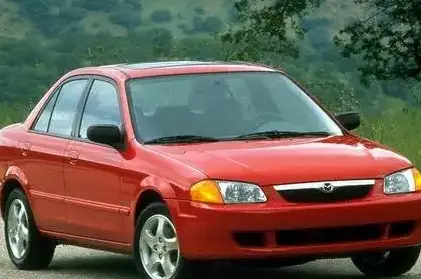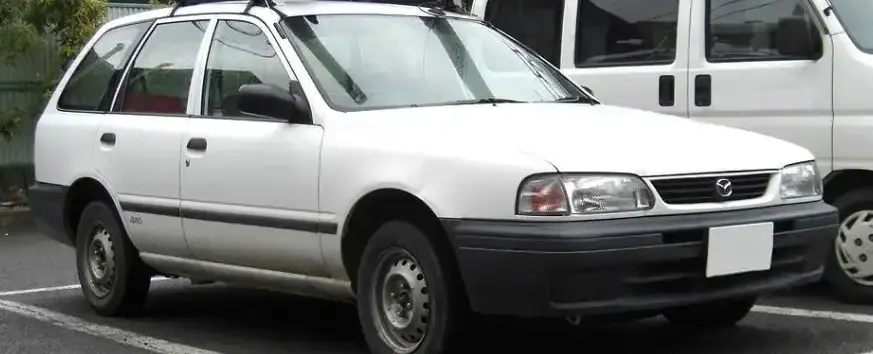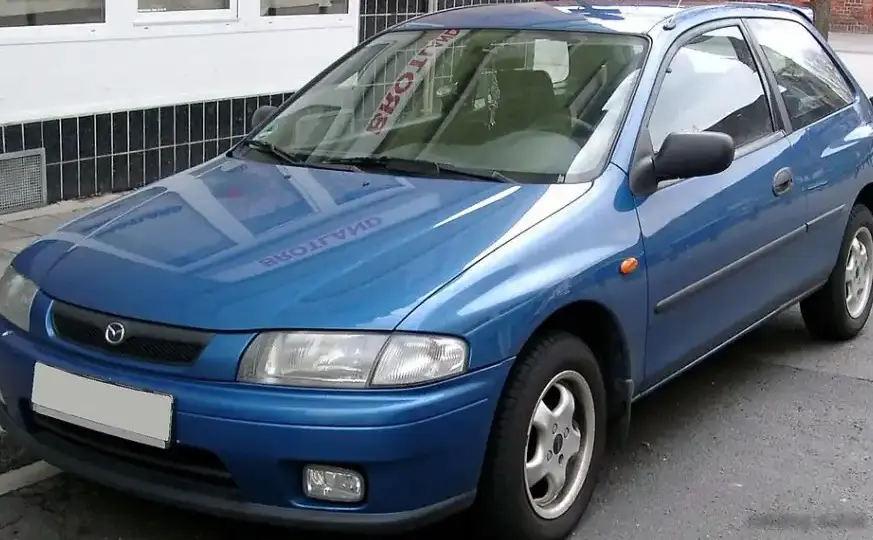
The Mazda Protege Hatchback 1.8i, produced between 1994 and 1998, represented a significant offering in the compact hatchback segment, particularly within the North American market. This variant, powered by the BP-ZE engine, occupied a middle ground within the Protege lineup, offering a balance between affordability, fuel efficiency, and acceptable performance. It was part of the broader Protege family, which aimed to establish Mazda as a more sporty and refined alternative to established Japanese competitors like Honda and Toyota. The 1.8i model aimed to appeal to buyers seeking a practical and reliable vehicle for daily commuting and small family needs.
Technical Specifications
| Brand | Mazda |
| Model | Protege |
| Generation | Protege Hatchback |
| Type (Engine) | 1.8 i (135 Hp) |
| Start of production | 1994 |
| End of production | 1998 |
| Powertrain Architecture | Internal Combustion engine |
| Body type | Hatchback |
| Seats | 5 |
| Doors | 5 |
| Fuel Type | Petrol (Gasoline) |
| Weight-to-power ratio | 9.8 kg/Hp, 102 Hp/tonne |
| Weight-to-torque ratio | 8.4 kg/Nm, 118.7 Nm/tonne |
| Power | 135 Hp @ 7000 rpm |
| Power per litre | 73.2 Hp/l |
| Torque | 157 Nm @ 4500 rpm (115.8 lb.-ft. @ 4500 rpm) |
| Engine layout | Front, Transverse |
| Engine Model/Code | BP-ZE |
| Engine displacement | 1845 cm3 (112.59 cu. in.) |
| Number of cylinders | 4 |
| Engine configuration | Inline |
| Cylinder Bore | 83 mm (3.27 in.) |
| Piston Stroke | 85 mm (3.35 in.) |
| Compression ratio | 9:1 |
| Number of valves per cylinder | 4 |
| Fuel injection system | Multi-port manifold injection |
| Engine aspiration | Naturally aspirated engine |
| Valvetrain | DOHC |
| Kerb Weight | 1323 kg (2916.72 lbs.) |
| Fuel tank capacity | 50 l (13.21 US gal | 11 UK gal) |
| Length | 4035 mm (158.86 in.) |
| Width | 1695 mm (66.73 in.) |
| Height | 1170 mm (46.06 in.) |
| Wheelbase | 2505 mm (98.62 in.) |
| Front track | 1460 mm (57.48 in.) |
| Rear (Back) track | 1460 mm (57.48 in.) |
| Drivetrain Architecture | The Internal combustion engine (ICE) drives the front wheels of the vehicle. |
| Drive wheel | Front wheel drive |
| Front brakes | Ventilated discs |
| Rear brakes | Drum |
Powertrain & Engine Architecture
The heart of the Protege 1.8i was the BP-ZE engine, a 1.8-liter inline-four cylinder powerplant. This engine utilized a cast iron block with an aluminum cylinder head, a common configuration for its time. The BP-ZE featured a dual overhead camshaft (DOHC) valvetrain with four valves per cylinder, contributing to its relatively high output for a naturally aspirated engine of its displacement. Fuel delivery was managed by a multi-port fuel injection system, providing precise fuel metering for improved efficiency and performance. The engine’s 9:1 compression ratio was a compromise between performance and the ability to run on readily available fuel grades. The BP-ZE engine was known for its durability and relatively simple design, making it easier to maintain compared to some of its more technologically advanced competitors.
The 1.8i Protege typically came equipped with a four-speed automatic transmission. This transmission was designed for smooth and comfortable operation, prioritizing ease of use over outright performance. While not offering the most responsive shifting characteristics, it was well-suited to the intended use case of the vehicle – daily commuting and general transportation. The automatic transmission’s gear ratios were optimized for fuel economy and acceptable acceleration in typical driving conditions.
Driving Characteristics
The 135 horsepower and 115.8 lb-ft of torque produced by the 1.8i powertrain provided adequate, though not exhilarating, performance. Acceleration from 0 to 60 mph was typically in the 9-10 second range. The automatic transmission, while convenient, did detract somewhat from the driving experience compared to the available five-speed manual transmission. The manual version offered quicker acceleration and a more engaging feel. The automatic’s shift points were programmed for fuel efficiency, sometimes resulting in the engine feeling slightly strained during overtaking maneuvers. Handling was generally considered competent for a vehicle in its class, with a focus on comfort rather than sporty dynamics. The suspension provided a reasonably smooth ride, absorbing most road imperfections without excessive body roll.
Equipment & Trim Levels
The 1.8i trim level of the Protege Hatchback typically included standard features such as air conditioning, power steering, and an AM/FM radio. Interior upholstery was typically cloth, with a relatively simple and functional dashboard layout. Optional extras included a cassette player, power windows and locks, and alloy wheels. The 1.8i was positioned as a step up from the base model, offering a more comprehensive set of features without the higher price tag of the more performance-oriented trims.
Chassis & Braking
The Protege Hatchback utilized a front-wheel-drive layout with an independent front suspension and a torsion beam rear suspension. The front suspension consisted of MacPherson struts, while the rear suspension provided a balance between ride comfort and handling stability. Braking duties were handled by ventilated discs on the front wheels and drum brakes on the rear. This configuration was typical for vehicles in this price range during the mid-1990s. The braking system provided adequate stopping power for normal driving conditions, although it lacked the sophistication of more advanced braking systems found on higher-end vehicles.
Market Reception & Comparison
The Mazda Protege 1.8i was generally well-received by automotive critics as a practical and reliable compact hatchback. It was praised for its fuel efficiency, comfortable ride, and relatively spacious interior. However, some critics noted that the automatic transmission could feel sluggish and that the engine lacked the punch of some of its competitors. Compared to the higher-performance trims, such as those equipped with the more powerful engines, the 1.8i offered a more affordable entry point into the Protege lineup. It competed directly with other popular compact hatchbacks like the Honda Civic, Toyota Corolla, and Nissan Sentra.
Legacy
The Mazda Protege 1.8i, particularly with the BP-ZE engine, has developed a reputation for long-term reliability. The engine is known to be durable and relatively easy to maintain, making it a popular choice among budget-conscious buyers in the used car market. While not a particularly exciting vehicle, its practicality, fuel efficiency, and dependability have ensured its continued presence on roads today. Parts availability remains reasonably good, further contributing to its appeal as a reliable and affordable transportation option. The 1.8i variant represents a solid example of a well-engineered and dependable compact hatchback from the 1990s.