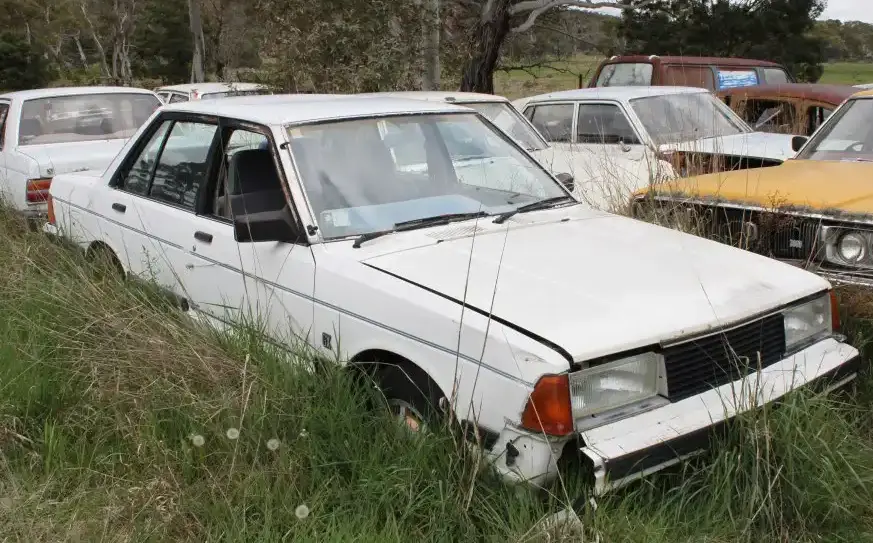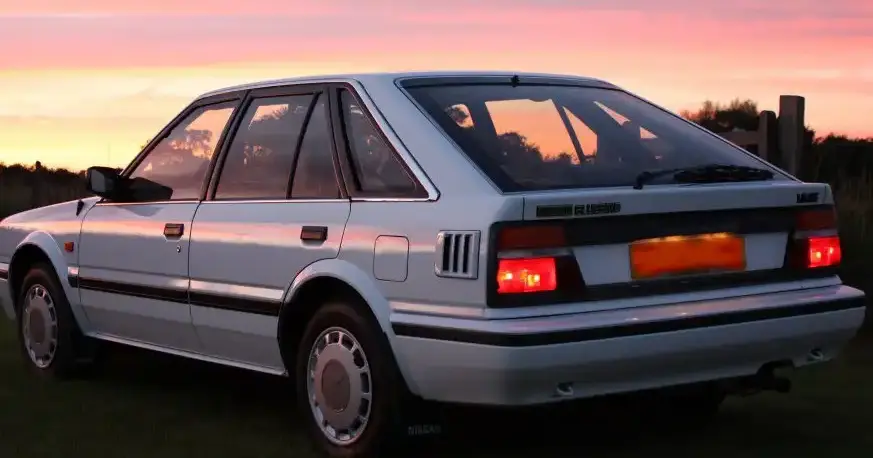
The Nissan Bluebird U13, produced between 1991 and 1995, represented a significant evolution of Nissan’s long-running Bluebird lineage. This generation, sold primarily in Japan, Australia, and select Asian markets, aimed to blend comfort, practicality, and a degree of sporting appeal. The 1.8i variant, equipped with a 125 horsepower engine and a four-speed automatic transmission, occupied a middle ground within the U13 lineup, offering a balance between affordability and refinement. It was positioned as a step up from the base 1.6L models, but below the more powerful 2.0L options, targeting family buyers and commuters seeking a comfortable and reliable sedan.
Technical Specifications
| Brand | Nissan |
| Model | Bluebird |
| Generation | Bluebird (U13) |
| Type | 1.8i (125 Hp) Automatic |
| Start of production | 1991 |
| End of production | 1995 |
| Powertrain Architecture | Internal Combustion engine |
| Body type | Sedan |
| Seats | 5 |
| Doors | 4 |
| Fuel Type | Petrol (Gasoline) |
| Weight-to-power ratio | 9.4 kg/Hp, 105.9 Hp/tonne |
| Weight-to-torque ratio | 7.5 kg/Nm, 133.1 Nm/tonne |
| Power | 125 Hp @ 6000 rpm |
| Power per litre | 68 Hp/l |
| Torque | 157 Nm @ 4800 rpm (115.8 lb.-ft. @ 4800 rpm) |
| Engine layout | Front, Transverse |
| Engine displacement | 1838 cm3 (112.16 cu. in.) |
| Number of cylinders | 4 |
| Engine configuration | Inline |
| Cylinder Bore | 82.5 mm (3.25 in.) |
| Piston Stroke | 86 mm (3.39 in.) |
| Compression ratio | 10:1 |
| Number of valves per cylinder | 4 |
| Fuel injection system | Multi-port manifold injection |
| Engine aspiration | Naturally aspirated engine |
| Kerb Weight | 1180 kg (2601.45 lbs.) |
| Fuel tank capacity | 60 l (15.85 US gal | 13.2 UK gal) |
| Length | 4585 mm (180.51 in.) |
| Width | 1695 mm (66.73 in.) |
| Height | 1405 mm (55.31 in.) |
| Wheelbase | 2620 mm (103.15 in.) |
| Front track | 1465 mm (57.68 in.) |
| Rear track | 1455 mm (57.28 in.) |
| Ride height (ground clearance) | 145 mm (5.71 in.) |
| Drivetrain Architecture | The Internal combustion engine (ICE) drives the front wheels of the vehicle. |
| Drive wheel | Front wheel drive |
| Number of gears and type of gearbox | 4 gears, automatic transmission |
| Front brakes | Ventilated discs |
| Rear brakes | Drum |
| Steering type | Steering rack and pinion |
Powertrain & Engine Architecture
The heart of the Bluebird 1.8i Automatic was Nissan’s GA16DE engine, a 1.8-liter inline-four cylinder powerplant. This engine utilized a cast iron block with an aluminum cylinder head, a common configuration for the era balancing durability and weight. The GA16DE featured multi-port fuel injection, contributing to improved fuel efficiency and smoother power delivery compared to earlier carbureted designs. The engine’s valvetrain employed two valves per cylinder (two intake, two exhaust) operated by a single overhead camshaft. The four-speed automatic transmission, typically a Jatco unit, was chosen for its ease of use and suitability for the target market. While not known for its sportiness, this transmission provided smooth shifts and adequate performance for everyday driving. The engine code is often found as GA16DE, and it was a relatively common engine in many Nissan vehicles of the early 1990s.
Driving Characteristics
The 125 horsepower and 157 Nm (115.8 lb-ft) of torque produced by the GA16DE in the U13 Bluebird provided adequate, but not exhilarating, performance. Acceleration was respectable for the time, but noticeably slower than the 2.0L variants. The automatic transmission, while smooth, did contribute to some power loss. Gear ratios were tuned for fuel economy and comfortable cruising rather than aggressive acceleration. In real-world driving, the 1.8i Automatic felt most at home in city traffic and on highway journeys. Compared to the available manual transmission, the automatic resulted in a slight decrease in fuel economy and a less engaging driving experience. However, it catered to drivers prioritizing convenience and ease of operation.
Equipment & Trim Levels
The 1.8i Automatic trim level of the U13 Bluebird typically included features such as power steering, central locking, and an AM/FM radio. Air conditioning was often standard, or available as an option. Interior upholstery was generally cloth, with a relatively simple and functional dashboard layout. Higher trim levels within the 1.8i range might have included features like power windows, upgraded audio systems, and alloy wheels. Optional extras could include a sunroof, upgraded interior trim, and anti-lock brakes (ABS), depending on the specific market and year of production.
Chassis & Braking
The U13 Bluebird utilized a front-engine, front-wheel-drive layout. Suspension consisted of MacPherson struts at the front and a twist-beam rear axle. This setup provided a comfortable ride, although it wasn’t particularly sporty. The front brakes were ventilated discs, offering adequate stopping power, while the rear brakes were typically drum brakes, a cost-saving measure common in this class of vehicle. Stabilizer bars were fitted to both the front and rear axles to reduce body roll during cornering. The chassis was designed to prioritize comfort and practicality over outright handling performance.
Market Reception & Comparison
The Nissan Bluebird U13 1.8i Automatic was generally well-received as a practical and reliable family sedan. Critics praised its comfortable ride, spacious interior, and fuel efficiency. However, it was often criticized for its lack of sporting character and somewhat bland styling. Compared to competitors like the Toyota Corolla and Honda Accord, the Bluebird offered a similar level of refinement and reliability, but often at a slightly lower price point. The 1.8i Automatic variant was seen as a good compromise between the base 1.6L models and the more expensive 2.0L options. Fuel economy was competitive for the time, and the automatic transmission made it an appealing choice for drivers who preferred not to shift gears manually.
Legacy
The Nissan Bluebird U13, particularly the 1.8i Automatic variant, has proven to be a relatively durable and reliable vehicle. The GA16DE engine is known for its longevity, and the Jatco automatic transmission is generally robust. Today, these cars are becoming increasingly rare, but well-maintained examples can still be found. In the used car market, they are often valued for their simplicity, affordability, and classic 1990s styling. While not a particularly sought-after collector’s item, the U13 Bluebird represents a significant chapter in Nissan’s history and remains a testament to the brand’s commitment to building practical and dependable vehicles.