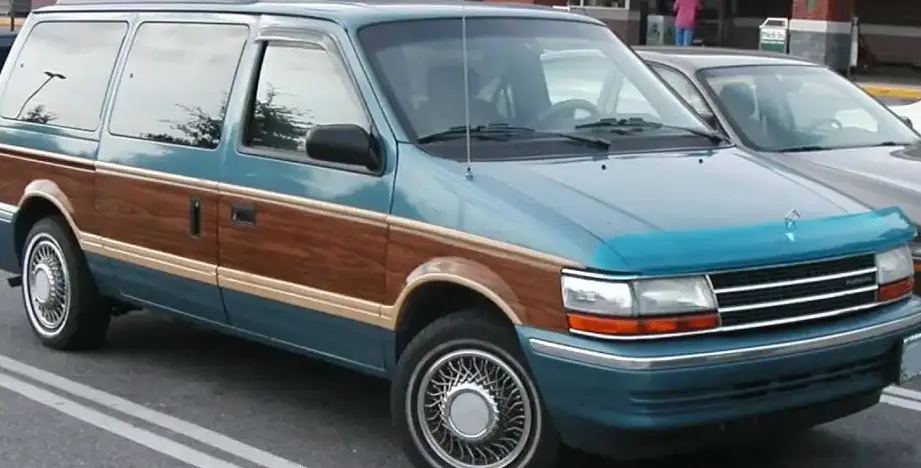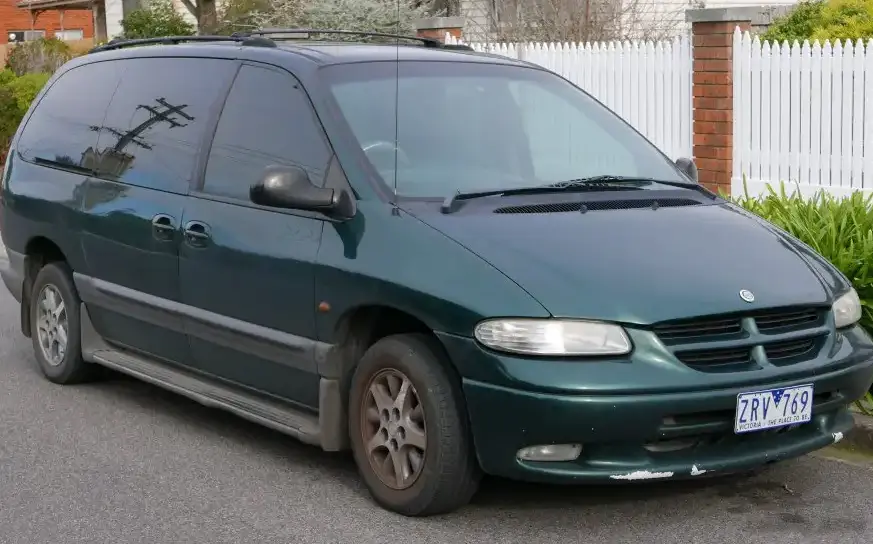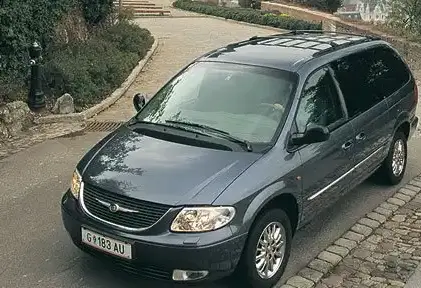
The Chrysler Grand Voyager IV 3.8 i V6 (218 Hp) represents a significant iteration of Chrysler’s popular minivan, produced between 2001 and 2007. Positioned as a mid-to-upper trim level within the fourth generation (NS) Grand Voyager lineup, this variant offered a balance of power, space, and features aimed at families seeking a comfortable and versatile vehicle. It was primarily sold in North America and Europe, competing with models like the Dodge Caravan, Toyota Sienna, and Honda Odyssey. The Grand Voyager, and its Dodge Caravan sibling, were instrumental in popularizing the modern minivan segment, and this generation continued that legacy with improved refinement and available technology.
Technical Specifications
| Brand | Chrysler |
| Model | Voyager |
| Generation | Grand Voyager IV |
| Type (Engine) | 3.8 i V6 (218 Hp) |
| Start of production | 2001 |
| End of production | 2007 |
| Powertrain Architecture | Internal Combustion engine |
| Body type | Minivan |
| Seats | 7 |
| Doors | 4 |
| Fuel consumption (urban) | 18 l/100 km (13.1 US mpg) |
| Fuel consumption (extra urban) | 10 l/100 km (23.5 US mpg) |
| Fuel Type | Petrol (Gasoline) |
| Acceleration 0 – 100 km/h | 11 sec |
| Acceleration 0 – 62 mph | 11 sec |
| Acceleration 0 – 60 mph | 10.5 sec |
| Maximum speed | 180 km/h (111.85 mph) |
| Weight-to-power ratio | 8.9 kg/Hp |
| Weight-to-torque ratio | 5.9 kg/Nm |
| Power | 218 Hp @ 5000 rpm |
| Power per litre | 57.7 Hp/l |
| Torque | 332 Nm @ 4000 rpm (244.87 lb.-ft. @ 4000 rpm) |
| Engine layout | Front, Transverse |
| Engine Model/Code | EGH |
| Engine displacement | 3778 cm3 (230.55 cu. in.) |
| Number of cylinders | 6 |
| Engine configuration | V-engine |
| Cylinder Bore | 96 mm (3.78 in.) |
| Piston Stroke | 87 mm (3.43 in.) |
| Compression ratio | 9.6:1 |
| Number of valves per cylinder | 2 |
| Fuel injection system | Multi-port manifold injection |
| Engine aspiration | Naturally aspirated engine |
| Engine oil capacity | 4.7 l (4.97 US qt | 4.14 UK qt) |
| Coolant | 12.6 l (13.31 US qt | 11.09 UK qt) |
| Kerb Weight | 1950 kg (4299.01 lbs.) |
| Trunk (boot) space – minimum | 920 l (32.49 cu. ft.) |
| Trunk (boot) space – maximum | 4130 l (145.85 cu. ft.) |
| Fuel tank capacity | 75 l (19.81 US gal | 16.5 UK gal) |
| Length | 5094 mm (200.55 in.) |
| Width | 1997 mm (78.62 in.) |
| Height | 1749 mm (68.86 in.) |
| Wheelbase | 3030 mm (119.29 in.) |
| Front track | 1600 mm (62.99 in.) |
| Rear (Back) track | 1625 mm (63.98 in.) |
| Drivetrain Architecture | The Internal combustion engine (ICE) drives the front wheels of the vehicle. |
| Drive wheel | Front wheel drive |
| Number of gears and type of gearbox | 4 gears, automatic transmission |
| Front suspension | Wishbone |
| Rear suspension | Leaf spring |
| Front brakes | Ventilated discs |
| Rear brakes | Disc |
| Assisting systems | ABS (Anti-lock braking system) |
| Steering type | Steering rack and pinion |
| Power steering | Hydraulic Steering |
| Tires size | 215/60 R16 |
Powertrain & Engine Architecture
The heart of the Grand Voyager IV 3.8 i V6 is the EGH engine, a 3.8-liter (3778 cc) naturally aspirated V6. This engine is a member of Chrysler’s well-established 3.8L V6 family, known for its durability and relatively simple design. It utilizes a 90-degree V-angle, contributing to a smoother engine operation. The engine employs multi-port fuel injection, delivering fuel directly to each intake port for improved combustion efficiency. The valvetrain features two valves per cylinder (OHV), a configuration chosen for its compactness and cost-effectiveness. Paired with this engine is a 4-speed automatic transmission, providing smooth shifts and convenient operation. This transmission was a common choice for Chrysler vehicles of this era, offering a balance between performance and fuel economy. The transmission’s gear ratios were tuned for everyday driving, prioritizing acceleration from a stop and comfortable highway cruising.
Driving Characteristics
The 218 horsepower and 244.87 lb-ft of torque provided by the 3.8L V6 and automatic transmission combination delivered adequate performance for the Grand Voyager IV. Acceleration from 0-60 mph took approximately 10.5 seconds, which was competitive for minivans of the time. While not a sporty vehicle, the Grand Voyager offered sufficient power for merging onto highways and overtaking slower traffic. The automatic transmission, while smooth, did contribute to a slight loss of responsiveness compared to the available manual transmission options in other Grand Voyager trims. The gear ratios were optimized for fuel efficiency and comfortable cruising, rather than outright acceleration. In real-world driving, the 3.8L V6 felt most comfortable at moderate speeds, providing a relaxed and predictable driving experience.
Equipment & Trim Levels
The 3.8 i V6 variant of the Grand Voyager IV typically came equipped with a respectable array of standard features. These included air conditioning, power windows and locks, a CD player, and cloth upholstery. Higher trim levels, often denoted by specific packages, added features such as leather upholstery, upgraded sound systems, power sliding doors, and rear-seat entertainment systems. The dashboard layout was functional and user-friendly, with clearly labeled controls. Optional extras included a sunroof, alloy wheels, and a navigation system. The Grand Voyager was designed with family convenience in mind, offering ample storage compartments and flexible seating configurations.
Chassis & Braking
The Grand Voyager IV utilized a front-wheel-drive layout, contributing to its interior spaciousness and improved traction in inclement weather. The front suspension employed an independent wishbone design, providing a comfortable ride and decent handling. The rear suspension utilized a leaf spring setup, a cost-effective solution that prioritized load-carrying capacity. Braking duties were handled by ventilated discs at the front and solid discs at the rear. An Anti-lock Braking System (ABS) was standard, enhancing safety by preventing wheel lockup during hard braking. The steering system was a hydraulic rack and pinion setup, offering responsive and precise steering feel.
Market Reception & Comparison
The Grand Voyager IV 3.8 i V6 was generally well-received by critics and consumers alike. It was praised for its spacious interior, comfortable ride, and available features. However, some reviewers noted that the 3.8L V6, while adequate, wasn’t as refined or powerful as the engines offered in some competing minivans, such as the Honda Odyssey’s VTEC V6. Fuel economy was also a point of criticism, with the 3.8L V6 returning around 13.1 US mpg in city driving and 23.5 US mpg on the highway. Compared to the lower-powered 3.3L V6 Grand Voyager, the 3.8L offered a noticeable performance improvement. Compared to higher-end trims with more powerful engines, the 3.8L provided a more affordable entry point into the Grand Voyager lineup.
Legacy
The Chrysler Grand Voyager IV 3.8 i V6 has proven to be a relatively reliable powertrain combination. The 3.8L V6 engine is known for its durability, and with proper maintenance, can last for many years. The 4-speed automatic transmission is also generally reliable, although some units may experience issues with solenoid packs or valve body wear over time. In the used car market today, these Grand Voyagers are often available at affordable prices, making them an attractive option for budget-conscious buyers seeking a spacious and versatile vehicle. However, potential buyers should be aware of potential maintenance costs associated with older vehicles, such as suspension components and cooling system parts. Despite its age, the Grand Voyager IV 3.8 i V6 remains a popular choice for families who prioritize space, comfort, and affordability.