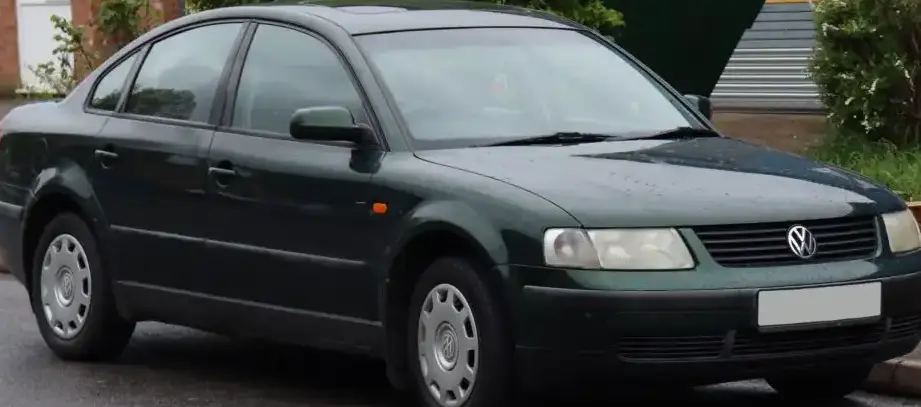
The Volkswagen Passat B5 2.5 TDI, produced between 1998 and 2000, represented a significant step forward for Volkswagen’s mid-size offering. Positioned as a premium diesel option within the B5 Passat range (which spanned 1997-2005), this variant aimed to deliver a blend of performance, fuel efficiency, and refinement. It was a key model in Europe, where diesel engines held a dominant market share, and offered a compelling alternative to gasoline-powered competitors. The B5 generation itself was a crucial model for Volkswagen, moving the Passat into a more sophisticated and modern segment, built on the 1HX0/A3 platform. This particular 2.5 TDI engine, with its 150 horsepower output, was a popular choice for drivers seeking a balance between power and economy.
Technical Specifications
| Brand | Volkswagen |
| Model | Passat |
| Generation | Passat (B5) |
| Type (Engine) | 2.5 TDI (150 Hp) |
| Start of production | 1998 |
| End of production | 2000 |
| Powertrain Architecture | Internal Combustion engine |
| Body type | Sedan |
| Seats | 5 |
| Doors | 4 |
| Fuel consumption (urban) | 11.4 l/100 km (20.6 US mpg) |
| Fuel consumption (extra urban) | 6 l/100 km (39.2 US mpg) |
| Fuel Type | Diesel |
| Acceleration 0 – 100 km/h | 9.9 sec |
| Acceleration 0 – 62 mph | 9.9 sec |
| Acceleration 0 – 60 mph | 9.4 sec |
| Maximum speed | 208 km/h (129.25 mph) |
| Weight-to-power ratio | 10.1 kg/Hp |
| Weight-to-torque ratio | 4.9 kg/Nm |
| Power | 150 Hp @ 4000 rpm |
| Power per litre | 60.1 Hp/l |
| Torque | 310 Nm @ 1500 rpm (228.64 lb.-ft. @ 1500 rpm) |
| Engine layout | Front, Longitudinal |
| Engine Model/Code | AKN, AFB |
| Engine displacement | 2496 cm3 (152.32 cu. in.) |
| Number of cylinders | 6 |
| Engine configuration | V-engine |
| Cylinder Bore | 78.3 mm (3.08 in.) |
| Piston Stroke | 86.4 mm (3.4 in.) |
| Compression ratio | 19.5:1 |
| Number of valves per cylinder | 4 |
| Fuel injection system | Direct injection |
| Engine aspiration | Turbocharger, Intercooler |
| Valvetrain | DOHC |
| Engine oil capacity | 5.4 l (5.71 US qt | 4.75 UK qt) |
| Coolant | 10 l (10.57 US qt | 8.8 UK qt) |
| Kerb Weight | 1510 kg (3328.98 lbs.) |
| Max. weight | 2040 kg (4497.43 lbs.) |
| Max load | 530 kg (1168.45 lbs.) |
| Trunk (boot) space – minimum | 475 l (16.77 cu. ft.) |
| Trunk (boot) space – maximum | 745 l (26.31 cu. ft.) |
| Fuel tank capacity | 62 l (16.38 US gal | 13.64 UK gal) |
| Length | 4703 mm (185.16 in.) |
| Width | 1746 mm (68.74 in.) |
| Height | 1462 mm (57.56 in.) |
| Wheelbase | 2703 mm (106.42 in.) |
| Front track | 1515 mm (59.65 in.) |
| Rear (Back) track | 1515 mm (59.65 in.) |
| Drivetrain Architecture | The Internal combustion engine (ICE) drives the front wheels of the vehicle. |
| Drive wheel | Front wheel drive |
| Number of gears and type of gearbox | 6 gears, manual transmission |
| Front suspension | Double wishbone |
| Rear suspension | Spring Strut |
| Front brakes | Ventilated discs |
| Rear brakes | Disc |
| Assisting systems | ABS (Anti-lock braking system) |
| Steering type | Steering rack and pinion |
| Power steering | Hydraulic Steering |
| Tires size | 205/55 R16 |
| Wheel rims size | 7J x 16 |
Powertrain & Engine Architecture
The heart of the Passat 2.5 TDI was the 2.5-liter, inline-six cylinder diesel engine, designated either AKN or AFB depending on minor variations and market specifications. This engine was a significant departure from the earlier four-cylinder diesel offerings, providing a smoother and more refined driving experience. It featured direct injection technology, a crucial element in maximizing fuel efficiency and reducing emissions. The direct injection system, utilizing high-pressure fuel delivery, allowed for precise control of combustion. The engine also incorporated a turbocharger with an intercooler, boosting power output to 150 horsepower and 310 Nm (228.64 lb-ft) of torque. The DOHC (Double Overhead Camshaft) valvetrain further contributed to the engine’s efficiency and responsiveness. The six-speed manual transmission was standard, providing well-spaced gear ratios to optimize both acceleration and fuel economy. While an automatic transmission was available in some markets, the manual was favored by enthusiasts for its greater control and efficiency.
Driving Characteristics
The 2.5 TDI Passat offered a compelling driving experience, particularly for those accustomed to smaller displacement diesel engines. The 150 horsepower and substantial torque were readily available, providing brisk acceleration and effortless cruising. The six-speed manual transmission allowed drivers to keep the engine in its optimal power band, resulting in responsive performance. Compared to the lower-powered 1.9 TDI variants, the 2.5 TDI offered a noticeable increase in performance, especially during overtaking maneuvers. However, it didn’t possess the outright sportiness of the gasoline-powered VR6 models. The engine’s torque curve was relatively flat, meaning strong pulling power was available across a wide range of engine speeds. The front-wheel-drive configuration provided good traction in most conditions, although torque steer could be noticeable under hard acceleration.
Equipment & Trim Levels
The 2.5 TDI typically occupied a mid-range position within the B5 Passat lineup. Standard equipment generally included power windows, central locking, air conditioning, and an upgraded audio system. Higher trim levels, such as the ‘Comfort’ or ‘Sport’ variants, added features like leather upholstery, alloy wheels, a sunroof, and upgraded interior trim. Optional extras included a navigation system, heated seats, and a premium sound system. The interior design was functional and well-built, reflecting Volkswagen’s reputation for quality. The dashboard layout was straightforward and easy to use, with clearly labeled controls.
Chassis & Braking
The Passat B5 featured a robust chassis designed to provide a comfortable and stable ride. The front suspension utilized a double wishbone setup, while the rear employed a spring strut arrangement. This configuration offered a good balance between ride comfort and handling precision. Braking duties were handled by ventilated discs at the front and solid discs at the rear, providing adequate stopping power for most driving situations. ABS (Anti-lock Braking System) was standard, enhancing safety and control during emergency braking. The steering was rack and pinion, providing precise and responsive steering feel.
Market Reception & Comparison
The Passat 2.5 TDI was generally well-received by automotive critics. It was praised for its refined engine, comfortable ride, and spacious interior. Fuel economy was a major selling point, with the 2.5 TDI achieving impressive mileage for its size and performance. Compared to the 1.9 TDI, the 2.5 TDI offered a noticeable performance upgrade, but at a slightly higher price point. The VR6 gasoline engine provided more outright power, but at the expense of fuel economy. Reliability was generally good, although some owners reported issues with the turbocharger and fuel injection system over the long term.
Legacy
The Volkswagen Passat B5 2.5 TDI remains a popular choice among used car buyers, particularly those seeking a reliable and fuel-efficient diesel sedan. The AKN and AFB engines, while capable of high mileage, require regular maintenance to ensure longevity. Common issues include turbocharger failure, injector problems, and wear on the timing belt. However, with proper care, these engines can provide many years of reliable service. The B5 Passat’s reputation for build quality and durability has ensured its continued presence on roads today, making it a respected and sought-after vehicle in the used car market.