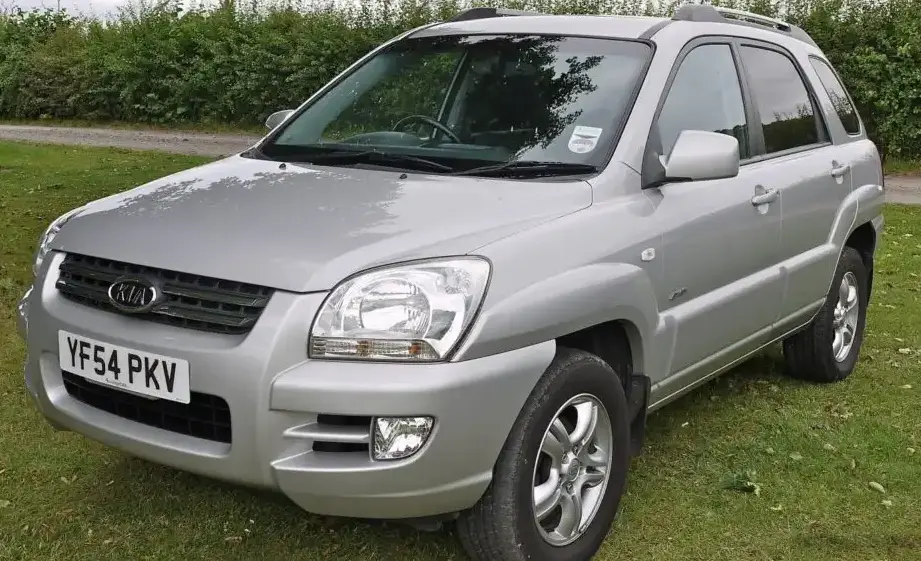
The Kia Sportage II 2.0 CRDi 4WD, produced from 2004 to 2005, represents a significant step forward for Kia in the compact SUV segment. Part of the second generation (2004-2010) of the Sportage, this variant was positioned as a mid-range offering, bridging the gap between the base gasoline models and the more expensive, fully-equipped trims. Built upon the KN platform, the Sportage II aimed to provide a blend of affordability, practicality, and all-weather capability, particularly appealing to buyers in regions requiring four-wheel drive. This model was primarily targeted towards the European and Asian markets, where diesel engines and all-wheel drive systems were highly valued.
Technical Specifications
| Brand | Kia |
| Model | Sportage |
| Generation | Sportage II |
| Type (Engine) | 2.0 CRDi (113 Hp) 4WD |
| Start of production | 2004 |
| End of production | 2005 |
| Powertrain Architecture | Internal Combustion engine |
| Body type | SUV |
| Seats | 5 |
| Doors | 5 |
| Fuel consumption (urban) | 8.9 l/100 km (26.4 US mpg) |
| Fuel consumption (extra urban) | 6.2 l/100 km (37.9 US mpg) |
| Fuel consumption (combined) | 7.1 l/100 km (33.1 US mpg) |
| Fuel Type | Diesel |
| Acceleration 0 – 100 km/h | 13.8 sec |
| Acceleration 0 – 62 mph | 13.8 sec |
| Acceleration 0 – 60 mph | 13.1 sec |
| Maximum speed | 167 km/h (103.77 mph) |
| Weight-to-power ratio | 15.6 kg/Hp |
| Weight-to-torque ratio | 7 kg/Nm |
| Power | 113 Hp @ 4000 rpm |
| Torque | 250 Nm @ 1800-2500 rpm (184.39 lb.-ft.) |
| Engine layout | Front, Transverse |
| Engine Model/Code | D4EA |
| Engine displacement | 1991 cm3 (121.5 cu. in.) |
| Number of cylinders | 4 |
| Engine configuration | Inline |
| Cylinder Bore | 83 mm (3.27 in.) |
| Piston Stroke | 92 mm (3.62 in.) |
| Compression ratio | 17.7:1 |
| Number of valves per cylinder | 4 |
| Fuel injection system | Diesel Commonrail |
| Engine aspiration | Turbocharger, Intercooler |
| Valvetrain | OHC |
| Engine oil capacity | 5.9 l (6.23 US qt | 5.19 UK qt) |
| Coolant capacity | 7.9 l (8.35 US qt | 6.95 UK qt) |
| Kerb Weight | 1758 kg (3875.73 lbs.) |
| Max. weight | 2210 kg (4872.22 lbs.) |
| Max load | 452 kg (996.49 lbs.) |
| Fuel tank capacity | 58 l (15.32 US gal | 12.76 UK gal) |
| Length | 4350 mm (171.26 in.) |
| Width | 1840 mm (72.44 in.) |
| Height | 1730 mm (68.11 in.) |
| Wheelbase | 2630 mm (103.54 in.) |
| Front track | 1550 mm (61.02 in.) |
| Rear track | 1550 mm (61.02 in.) |
| Drive wheel | All wheel drive (4×4) |
| Number of gears | 6 gears, manual transmission |
| Front suspension | Spring Strut |
| Rear suspension | Double wishbone |
| Front brakes | Ventilated discs |
| Rear brakes | Disc |
| Assisting systems | ABS (Anti-lock braking system) |
| Steering type | Steering rack and pinion |
| Tires size | 235/60 R16 |
| Wheel rims size | 6.5 X 16 |
Powertrain & Engine Architecture
The heart of the Sportage II 2.0 CRDi 4WD is the D4EA engine, a 1991cc inline-four cylinder diesel. This engine utilizes a second-generation common-rail direct injection system, delivering fuel at extremely high pressure for improved combustion efficiency and reduced emissions. A turbocharger with an intercooler is employed to boost power output, providing 113 horsepower at 4000 rpm and a respectable 250 Nm (184 lb-ft) of torque between 1800 and 2500 rpm. The engine features an overhead camshaft (OHC) valvetrain with four valves per cylinder. The 6-speed manual transmission was the standard offering for this variant, providing a good balance between fuel economy and drivability. The transmission’s gear ratios were tuned to maximize the engine’s torque output, making it suitable for both on-road cruising and off-road conditions.
Driving Characteristics
The 2.0 CRDi engine, paired with the manual transmission, offered a reasonably responsive driving experience. While not a performance-oriented vehicle, the ample torque allowed for confident acceleration and effortless highway cruising. The 0-60 mph time of around 13.1 seconds reflects its practical, rather than sporty, nature. The all-wheel-drive system provided enhanced traction in slippery conditions, making it a capable vehicle for inclement weather or light off-road use. Compared to the gasoline engine options, the diesel offered significantly better fuel economy and a more relaxed driving experience, particularly at highway speeds. However, it lacked the immediate responsiveness of the gasoline engines and produced more engine noise.
Equipment & Trim Levels
The 2.0 CRDi 4WD trim typically included features such as air conditioning, power windows, central locking, and an AM/FM radio with a CD player. Safety features included ABS brakes and dual front airbags. Higher trim levels offered options like alloy wheels, a sunroof, leather upholstery, and upgraded audio systems. The interior was generally functional and durable, with a focus on practicality rather than luxury. The dashboard layout was straightforward and easy to use, with clearly labeled controls.
Chassis & Braking
The Sportage II utilized a traditional body-on-frame construction, providing robust durability and off-road capability. The front suspension consisted of a MacPherson strut setup, while the rear employed a double wishbone configuration. This suspension setup provided a comfortable ride quality, although it could feel somewhat truck-like on rough roads. The braking system featured ventilated discs on the front wheels and solid discs on the rear, providing adequate stopping power for the vehicle’s weight. The ABS system helped to maintain steering control during emergency braking situations.
Market Reception & Comparison
The Kia Sportage II 2.0 CRDi 4WD was generally well-received by automotive critics as a practical and affordable SUV. Its fuel efficiency and all-wheel-drive capability were particularly praised. Compared to competitors like the Hyundai Tucson and the Honda CR-V, the Sportage offered a more rugged appearance and a lower price point. However, it lacked the refinement and brand prestige of some of its rivals. The diesel engine, while economical, was sometimes criticized for its noise and vibration. Reliability was generally considered good, although some owners reported issues with the turbocharger and fuel injection system.
Legacy
The Kia Sportage II 2.0 CRDi 4WD remains a relatively common sight on used car markets today. The D4EA engine, when properly maintained, is known for its durability and longevity. However, potential buyers should be aware of the potential for turbocharger and fuel injector issues. Parts availability is generally good, and maintenance costs are reasonable. This variant represents a pivotal moment for Kia, demonstrating the brand’s ability to produce a competitive and reliable SUV that appealed to a wide range of buyers. It laid the groundwork for the continued success of the Sportage model line.