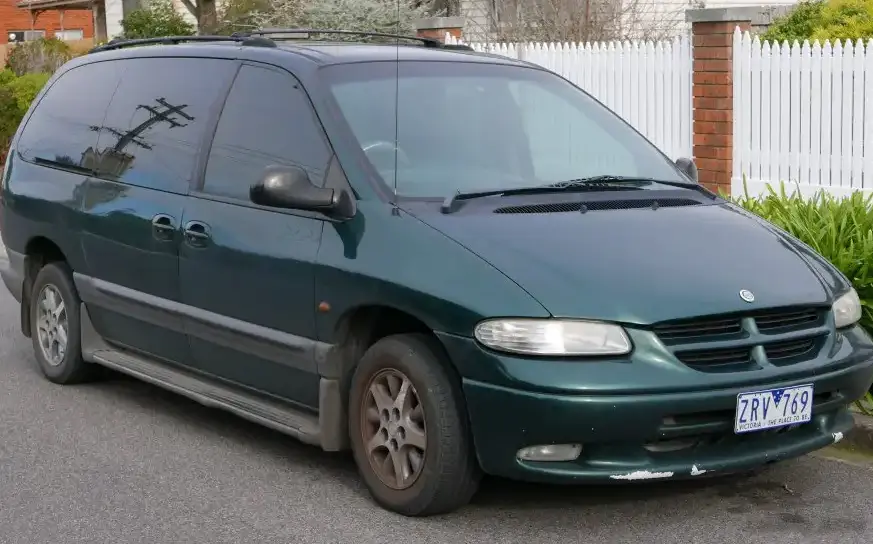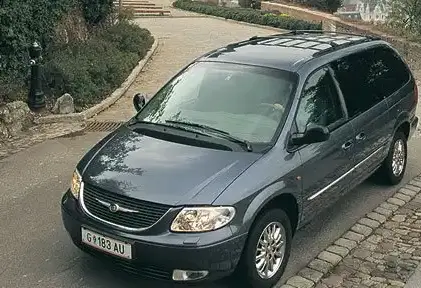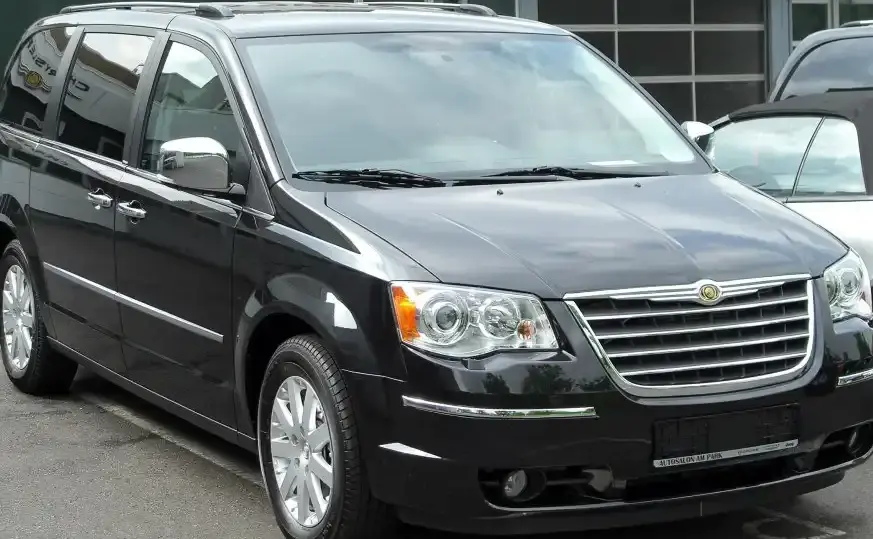
The Chrysler Grand Voyager V 2.8 CRD (150 hp) represents a significant iteration of Chrysler’s popular minivan, produced from 2007 to 2015. Positioned as a diesel-powered option within the fifth generation (Grand Voyager V) of the Voyager line, this variant aimed to provide a balance of fuel efficiency and practicality for European and international markets where diesel engines were favored. It served as a competitor to other large MPVs like the Renault Espace and Volkswagen Sharan, offering a spacious interior and family-oriented features. This particular configuration, with the 2.8-liter CRD engine paired with a four-speed automatic transmission, was a mid-range offering, slotting below the more powerful gasoline engine options and above base-level trims.
Technical Specifications
| Brand | Chrysler |
| Model | Voyager |
| Generation | Grand Voyager V |
| Type (Engine) | 2.8 CRD (150 Hp) |
| Start of production | 2007 |
| End of production | 2015 |
| Powertrain Architecture | Internal Combustion engine |
| Body type | Minivan |
| Seats | 7 |
| Doors | 5 |
| Fuel Type | Diesel |
| Power | 150 Hp @ 3800 rpm |
| Power per litre | 54 Hp/l |
| Torque | 360 Nm @ 1800 rpm / 265.52 lb.-ft. @ 1800 rpm |
| Engine layout | Front, Transverse |
| Engine displacement | 2776 cm3 / 169.4 cu. in. |
| Number of cylinders | 4 |
| Engine configuration | Inline |
| Cylinder Bore | 94 mm / 3.7 in. |
| Piston Stroke | 100 mm / 3.94 in. |
| Compression ratio | 17.5:1 |
| Number of valves per cylinder | 4 |
| Fuel injection system | Diesel Commonrail |
| Engine aspiration | Turbocharger, Intercooler |
| Engine oil capacity | 6.6 l / 6.97 US qt | 5.81 UK qt |
| Coolant | 16.6 l / 17.54 US qt | 14.61 UK qt |
| Trunk (boot) space – minimum | 748 l / 26.42 cu. ft. |
| Trunk (boot) space – maximum | 4550 l / 160.68 cu. ft. |
| Length | 5096 mm / 200.63 in. |
| Width | 1997 mm / 78.62 in. |
| Height | 1803 mm / 70.98 in. |
| Wheelbase | 3030 mm / 119.29 in. |
| Front track | 1600 mm / 62.99 in. |
| Rear (Back) track | 1626 mm / 64.02 in. |
| Drivetrain Architecture | The Internal combustion engine (ICE) drives the front wheels of the vehicle. |
| Drive wheel | Front wheel drive |
| Number of gears and type of gearbox | 4 gears, automatic transmission |
| Front brakes | Ventilated discs |
| Rear brakes | Disc |
| Assisting systems | ABS (Anti-lock braking system) |
| Steering type | Steering rack and pinion |
| Power steering | Hydraulic Steering |
Powertrain & Engine Architecture
The heart of the Grand Voyager V 2.8 CRD is the 2.8-liter inline-four cylinder diesel engine. This engine, often identified by internal codes, utilizes a common rail direct injection (CRDI) system. CRDI technology allows for precise fuel delivery, contributing to improved fuel economy and reduced emissions. The engine is turbocharged and intercooled, enhancing power output and mitigating turbo lag. The 17.5:1 compression ratio is typical for diesel engines, maximizing combustion efficiency. The four-speed automatic transmission, while providing convenience, is a somewhat dated design by modern standards. It features standard torque converter technology and lacks the efficiency of more modern transmissions with higher gear counts. The transmission’s gear ratios are tuned for comfortable cruising and adequate acceleration, but it doesn’t prioritize sporty performance.
Driving Characteristics
The 150 hp and 360 Nm (265 lb-ft) of torque delivered by the 2.8 CRD engine provide adequate, though not exhilarating, performance for the Grand Voyager V. Acceleration from 0 to 60 mph is estimated to be around 11-12 seconds. The engine’s torque curve is relatively flat, providing good pulling power at lower engine speeds, which is beneficial for hauling passengers and cargo. Compared to the gasoline-powered versions of the Grand Voyager, the diesel offers significantly better fuel economy, particularly on long journeys. However, the four-speed automatic transmission can feel sluggish during quick acceleration or when attempting to overtake. Manual transmission versions, where available, offered a more engaging driving experience and slightly improved fuel efficiency. The diesel engine is noticeably louder and exhibits more vibration than the gasoline engines.
Equipment & Trim Levels
The 2.8 CRD variant of the Grand Voyager V typically came equipped with a reasonable level of standard features. These included air conditioning, power windows and locks, a basic audio system, and alloy wheels. Higher trim levels added features such as leather upholstery, a more advanced audio system with navigation, rear entertainment systems (DVD players), and parking sensors. Stow ‘n Go seating, a Chrysler hallmark, was standard, allowing the second and third-row seats to fold flat into the floor, creating a large, flat cargo area. Optional extras included a sunroof, upgraded sound systems, and various convenience packages.
Chassis & Braking
The Grand Voyager V utilizes a front-wheel-drive platform with independent suspension at the front and a twist-beam rear suspension. The front suspension features MacPherson struts, while the rear utilizes a multi-link setup. This configuration provides a comfortable ride, but handling is not particularly sporty. The braking system consists of ventilated discs at the front and solid discs at the rear. Anti-lock Braking System (ABS) is standard. The steering is rack-and-pinion with hydraulic power assistance, providing a reasonably light and responsive feel.
Market Reception & Comparison
The Chrysler Grand Voyager V 2.8 CRD was generally well-received in markets where diesel minivans were popular. Critics praised its spacious interior, comfortable ride, and fuel efficiency. However, the four-speed automatic transmission was often criticized for its lack of responsiveness. Compared to the gasoline-powered versions, the diesel offered superior fuel economy but was more expensive to purchase. The 2.8 CRD engine proved to be relatively reliable, although common rail diesel systems can be susceptible to issues with injectors and the high-pressure fuel pump. Compared to competitors like the Renault Espace and Volkswagen Sharan, the Grand Voyager offered a more American-style interior and a focus on convenience features.
Legacy
The Chrysler Grand Voyager V 2.8 CRD has become a relatively affordable and practical option in the used car market. The 2.8 CRD engine, while not known for being exceptionally powerful, has proven to be reasonably durable with proper maintenance. Common issues include injector failures and wear on the turbocharger. The four-speed automatic transmission, while reliable, is less efficient than more modern transmissions. Overall, the Grand Voyager V 2.8 CRD remains a popular choice for families seeking a spacious, comfortable, and fuel-efficient minivan, particularly in regions where diesel engines are widely accepted and supported.