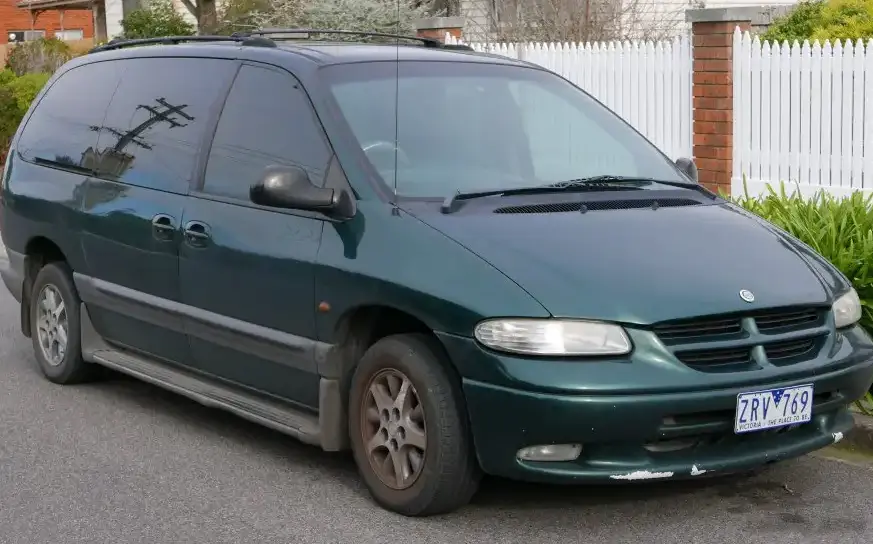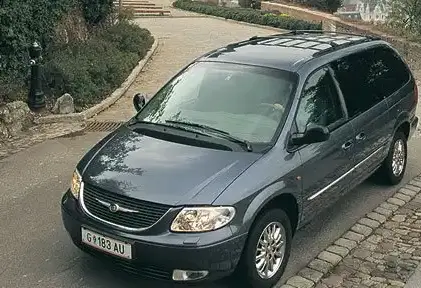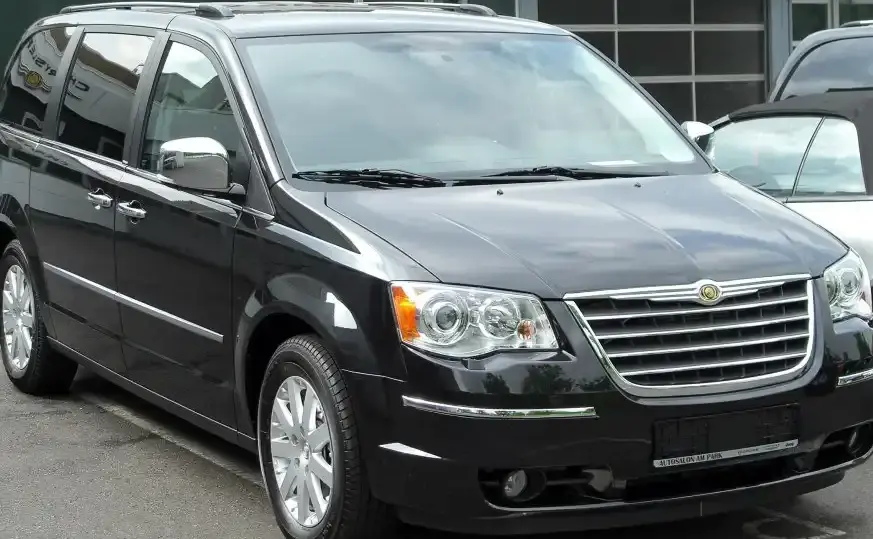
The Chrysler Grand Voyager V 2.8 CRD Automatic, produced between 2008 and 2011, represented a significant offering in the European minivan segment. Part of the fifth generation (Grand Voyager V) of Chrysler’s popular people-mover, this variant was specifically tailored for markets desiring a diesel-powered, automatic transmission option. It occupied a mid-range position within the Grand Voyager lineup, offering a balance between performance, fuel economy, and features, appealing to families and those needing substantial passenger and cargo space. The Grand Voyager, while traditionally a North American vehicle, gained considerable traction in Europe as a practical and spacious alternative to larger MPVs.
Technical Specifications
| Brand | Chrysler |
| Model | Voyager |
| Generation | Grand Voyager V |
| Type (Engine) | 2.8 CRD (163 Hp) Automatic |
| Start of production | 2008 |
| End of production | 2011 |
| Powertrain Architecture | Internal Combustion engine |
| Body type | Minivan |
| Seats | 7 |
| Doors | 5 |
| Fuel consumption (urban) | 11.8 l/100 km (19.9 US mpg, 23.9 UK mpg, 8.5 km/l) |
| Fuel consumption (extra urban) | 7.1 l/100 km (33.1 US mpg, 39.8 UK mpg, 14.1 km/l) |
| Fuel consumption (combined) | 8.8 l/100 km (26.7 US mpg, 32.1 UK mpg, 11.4 km/l) |
| CO2 emissions | 233 g/km |
| Fuel Type | Diesel |
| Acceleration 0 – 100 km/h | 12.8 sec |
| Acceleration 0 – 62 mph | 12.8 sec |
| Acceleration 0 – 60 mph | 12.2 sec |
| Maximum speed | 185 km/h (114.95 mph) |
| Weight-to-power ratio | 12.9 kg/Hp, 77.6 Hp/tonne |
| Weight-to-torque ratio | 5.8 kg/Nm, 171.4 Nm/tonne |
| Power | 163 Hp @ 3800 rpm |
| Power per litre | 58.7 Hp/l |
| Torque | 360 Nm @ 1600-3000 rpm (265.52 lb.-ft. @ 1600-3000 rpm) |
| Engine layout | Front, Transverse |
| Engine Model/Code | ENS |
| Engine displacement | 2777 cm3 (169.46 cu. in.) |
| Number of cylinders | 4 |
| Engine configuration | Inline |
| Fuel injection system | Diesel Commonrail |
| Engine aspiration | Turbocharger, Intercooler |
| Engine oil capacity | 6.6 l (6.97 US qt, 5.81 UK qt) |
| Coolant capacity | 16.6 l (17.54 US qt, 14.61 UK qt) |
| Kerb Weight | 2100-2230 kg (4629.71 – 4916.31 lbs.) |
| Max. weight | 2775 kg (6117.83 lbs.) |
| Max load | 545-675 kg (1201.52 – 1488.12 lbs.) |
| Trunk (boot) space – minimum | 638 l (22.53 cu. ft.) |
| Trunk (boot) space – maximum | 3296 l (116.4 cu. ft.) |
| Fuel tank capacity | 75 l (19.81 US gal, 16.5 UK gal) |
| Permitted trailer load with brakes (12%) | 1600 kg (3527.4 lbs.) |
| Permitted trailer load without brakes | 450 kg (992.08 lbs.) |
| Length | 5143 mm (202.48 in.) |
| Width | 1954 mm (76.93 in.) |
| Height | 1750 mm (68.9 in.) |
| Wheelbase | 3078 mm (121.18 in.) |
| Front track | 1651 mm (65 in.) |
| Rear (Back) track | 1645 mm (64.76 in.) |
| Minimum turning circle | 12 m (39.37 ft.) |
| Drivetrain Architecture | Front wheel drive |
| Number of gears | 6 |
| Gearbox type | Automatic transmission |
| Assisting systems | ABS (Anti-lock braking system) |
| Tires size | 225/65 R16; 225/65 R17 |
| Wheel rims size | 16; 17 |
Powertrain & Engine Architecture
The heart of the Grand Voyager V 2.8 CRD Automatic is the ENS engine, a 2.8-liter inline-four cylinder diesel. This engine utilized a common rail direct injection system, a technology that allowed for precise fuel delivery and improved combustion efficiency. The turbocharger, coupled with an intercooler, boosted power output and reduced turbo lag. The engine produced 163 horsepower at 3800 rpm and a respectable 360 Nm (265.52 lb.-ft.) of torque between 1600 and 3000 rpm. This torque band was particularly useful for hauling passengers and cargo. The engine was transversely mounted in the front of the vehicle. The automatic transmission was a six-speed unit, designed to provide smooth shifts and optimize fuel economy. While not known for being particularly sporty, the transmission was reliable and well-suited to the Grand Voyager’s intended purpose.
Driving Characteristics
The 2.8 CRD Automatic Grand Voyager offered a comfortable, if not exhilarating, driving experience. Acceleration from 0-60 mph took around 12.2 seconds, and top speed was limited to 185 km/h (114.95 mph). Compared to the gasoline-powered versions, the diesel offered significantly better fuel economy and more low-end torque. However, it lacked the responsiveness of the higher-output gasoline engines. The automatic transmission, while smooth, could sometimes feel hesitant during quick overtaking maneuvers. The gear ratios were optimized for cruising and fuel efficiency rather than outright performance. The weight of the vehicle, combined with the relatively modest horsepower, meant that it wasn’t a particularly nimble vehicle, but it provided a stable and predictable ride.
Equipment & Trim Levels
The 2.8 CRD Automatic trim typically included features such as air conditioning, power windows and locks, a basic audio system, and alloy wheels. Higher trim levels added features like leather upholstery, a more advanced audio system with navigation, rear parking sensors, and automatic climate control. Safety features included ABS brakes, front airbags, and side airbags. The Grand Voyager was known for its spacious interior and versatile seating configurations, with the ability to fold or remove seats to maximize cargo space. The interior materials were generally durable and practical, reflecting the vehicle’s family-oriented focus.
Chassis & Braking
The Grand Voyager V utilized a front-wheel-drive layout with an independent suspension system at the front and a twist-beam suspension at the rear. The braking system consisted of ventilated disc brakes at the front and drum brakes at the rear. ABS (Anti-lock Braking System) was standard. The suspension was tuned for comfort, providing a relatively smooth ride even on uneven surfaces. The steering was power-assisted, making it easy to maneuver in tight spaces. Stabilizer bars were fitted to both the front and rear axles to reduce body roll during cornering.
Market Reception & Comparison
The 2.8 CRD Automatic Grand Voyager was generally well-received in Europe, particularly by families who appreciated its spaciousness, practicality, and fuel efficiency. Critics praised the diesel engine’s torque and the automatic transmission’s smoothness. However, some reviewers noted the vehicle’s relatively slow acceleration and its somewhat bulky handling. Compared to other minivans and MPVs in the European market, the Grand Voyager offered a compelling combination of features and value. It was often seen as a more affordable alternative to premium MPVs from European manufacturers. Fuel economy was a strong point, consistently outperforming comparable gasoline-powered vehicles.
Legacy
The Chrysler Grand Voyager V 2.8 CRD Automatic has proven to be a relatively reliable vehicle, with the ENS diesel engine generally holding up well over time. However, like all diesel engines, it’s susceptible to issues related to the fuel injection system and turbocharger. Regular maintenance, including oil changes and filter replacements, is crucial for ensuring long-term reliability. In the used car market, these Grand Voyagers represent a good value for those seeking a spacious and practical family vehicle. While not as popular as some of its European rivals, the Grand Voyager V 2.8 CRD Automatic remains a viable option for those looking for a comfortable and affordable minivan.