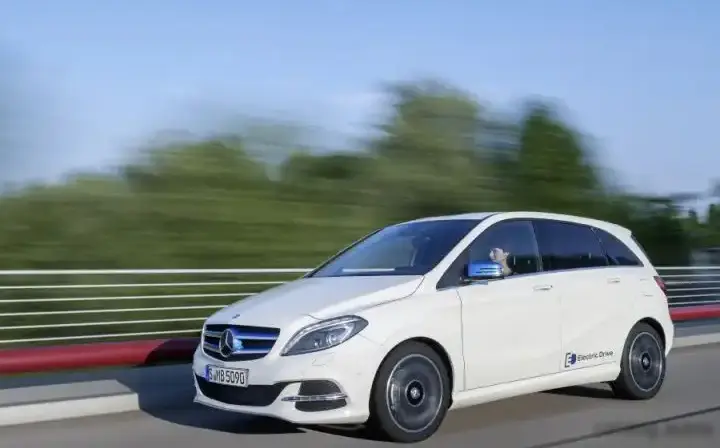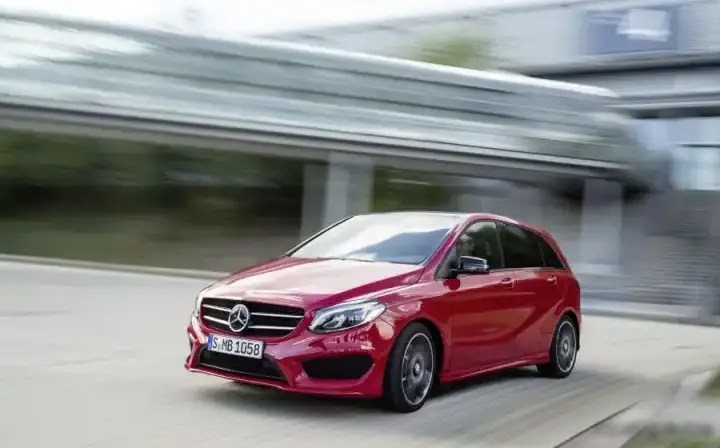
The Mercedes-Benz B-Class (W246 facelift) B 200 CDI, produced from 2014 to 2018, represented a significant iteration of Mercedes-Benz’s compact multi-purpose vehicle (MPV). Positioned as a practical and efficient option within the B-Class range, the B 200 CDI utilized a diesel engine paired with an automatic transmission, targeting buyers seeking fuel economy and comfortable daily driving. This facelifted version of the W246, introduced in 2014, brought styling updates, improved interior materials, and enhanced technology compared to the pre-facelift models. It competed directly with vehicles like the BMW 2 Series Active Tourer, Audi A3 Sportback, and Volkswagen Golf Sportsvan, offering a more premium experience within the compact family vehicle segment.
Technical Specifications
| Brand | Mercedes-Benz |
| Model | B-class |
| Generation | B-class (W246 facelift 2014) |
| Type (Engine) | B 200 CDI (136 Hp) |
| Start of production | 2014 |
| End of production | 2018 |
| Powertrain Architecture | Internal Combustion engine |
| Body type | Hatchback |
| Seats | 5 |
| Doors | 5 |
| Fuel consumption (urban) | 5.5-5.9 l/100 km (42.8 – 39.9 US mpg) |
| Fuel consumption (extra urban) | 3.9-3.6 l/100 km (60.3 – 65.3 US mpg) |
| Fuel consumption (combined) | 4.5-4.3 l/100 km (52.3 – 54.7 US mpg) |
| CO2 emissions | 117-111 g/km |
| Fuel Type | Diesel |
| Acceleration 0 – 100 km/h | 9.9 sec |
| Acceleration 0 – 62 mph | 9.9 sec |
| Acceleration 0 – 60 mph | 9.4 sec |
| Maximum speed | 210 km/h (130.49 mph) |
| Emission standard | Euro 6 |
| Weight-to-power ratio | 10.9 kg/Hp |
| Weight-to-torque ratio | 5 kg/Nm |
| Power | 136 Hp @ 3200-4000 rpm |
| Torque | 300 Nm @ 1400-3000 rpm (221.27 lb.-ft. @ 1400-3000 rpm) |
| Engine layout | Front, Transverse |
| Engine Model/Code | OM 651.930 |
| Engine displacement | 2143 cm3 (130.77 cu. in.) |
| Number of cylinders | 4 |
| Engine configuration | Inline |
| Compression ratio | 16.2:1 |
| Fuel injection system | Diesel Commonrail |
| Engine aspiration | Turbocharger, Intercooler |
| Engine oil capacity | 7 l (7.4 US qt | 6.16 UK qt) |
| Coolant capacity | 9.5 l (10.04 US qt | 8.36 UK qt) |
| Kerb Weight | 1485 kg (3273.86 lbs.) |
| Max. weight | 2025 kg (4464.36 lbs.) |
| Max load | 540 kg (1190.5 lbs.) |
| Trunk (boot) space – minimum | 488 l (17.23 cu. ft.) |
| Trunk (boot) space – maximum | 1547 l (54.63 cu. ft.) |
| Fuel tank capacity | 50 l (13.21 US gal | 11 UK gal) |
| Length | 4393 mm (172.95 in.) |
| Width | 1786 mm (70.31 in.) |
| Height | 1557 mm (61.3 in.) |
| Wheelbase | 2699 mm (106.26 in.) |
| Front track | 1552 mm (61.1 in.) |
| Rear track | 1549 mm (60.98 in.) |
| Ride height (ground clearance) | 98 mm (3.86 in.) |
| Minimum turning circle | 11 m (36.09 ft.) |
| Front suspension | Independent, type McPherson with coil spring and anti-roll bar |
| Rear suspension | Independent coil spring |
| Front brakes | Ventilated discs |
| Rear brakes | Disc |
| Drive wheel | Front wheel drive |
| Number of gears | 6 |
| Gearbox type | Automatic transmission |
| Tires size | 205/55 R16 |
| Wheel rims size | 16 |
INTRODUCTION
The W246 B-Class, and specifically the 2014 facelift, represented a move upmarket for Mercedes-Benz’s compact offerings. The B 200 CDI variant, powered by a 2.1-liter turbocharged diesel engine, was a popular choice in European markets where diesel fuel was prevalent and fuel efficiency was highly valued. This model aimed to provide a blend of practicality, comfort, and relatively low running costs. The facelift brought a more refined interior, updated infotainment systems, and subtle exterior styling changes, enhancing the B-Class’s appeal. It was built on the Mercedes-Benz MRA (Modular Ride Architecture) platform, shared with other compact models like the A-Class.
Powertrain & Engine Architecture
The heart of the B 200 CDI is the OM651.930 2.1-liter inline-four cylinder diesel engine. This engine is a common rail direct injection diesel, meaning fuel is injected directly into the combustion chamber at extremely high pressure. The common rail system allows for precise control over injection timing and quantity, optimizing combustion for both power and efficiency. The engine features a turbocharger with an intercooler, which forces more air into the cylinders, boosting power output. The 136 horsepower and 300 Nm (221 lb-ft) of torque are respectable figures for a compact diesel, providing adequate performance for everyday driving. The B 200 CDI typically came equipped with a 7G-DCT (7-speed dual-clutch transmission), known for its quick and smooth shifts. This transmission contributed to the car’s fuel efficiency and responsive driving experience. The engine also incorporates a diesel particulate filter (DPF) to reduce harmful emissions, meeting stringent Euro 6 standards.
Driving Characteristics
The B 200 CDI with the automatic transmission offers a comfortable and relaxed driving experience. While not particularly sporty, the engine provides sufficient power for merging onto highways and overtaking slower traffic. The 7G-DCT transmission shifts smoothly and efficiently, contributing to a refined feel. Compared to the manual transmission version, the automatic offers greater convenience, especially in urban environments. However, the automatic does slightly diminish acceleration times compared to the more driver-focused manual. The gear ratios are tuned for fuel economy, meaning the engine doesn’t rev as high as some gasoline counterparts. The suspension is tuned for comfort, absorbing bumps and imperfections in the road well, making it a pleasant vehicle for long journeys. Steering is light and precise, but lacks significant feedback.
Equipment & Trim Levels
The B 200 CDI typically came with a good level of standard equipment. This included features like air conditioning, a multi-function steering wheel, power windows, and a basic audio system. The facelifted models benefited from an upgraded infotainment system with a larger display screen and improved connectivity options. Optional extras included features like navigation, leather upholstery, a panoramic sunroof, and advanced driver assistance systems such as lane keeping assist and collision prevention assist. Interior trim levels varied, with higher trims offering more luxurious materials and finishes. The standard upholstery was typically a cloth material, but leather options were available. Dashboard configurations were generally consistent across trims, with a focus on functionality and ease of use.
Chassis & Braking
The B-Class W246 utilizes an independent suspension setup on both the front and rear axles. The front suspension employs McPherson struts with coil springs and an anti-roll bar, while the rear features a multi-link setup, also with coil springs. This configuration provides a good balance between ride comfort and handling. Braking duties are handled by ventilated discs on the front wheels and solid discs on the rear. Anti-lock braking system (ABS) is standard, along with electronic brakeforce distribution (EBD). The chassis is relatively lightweight, contributing to the car’s agility and fuel efficiency. The steering system is a rack and pinion setup, providing precise and responsive steering.
Market Reception & Comparison
The B 200 CDI was generally well-received by automotive critics, who praised its fuel efficiency, comfortable ride, and practical interior. However, some critics noted that the engine could be somewhat noisy and that the driving experience wasn’t particularly engaging. Compared to the higher-powered B 250 models, the B 200 CDI offered significantly lower running costs but lacked the same level of performance. Against competitors like the BMW 2 Series Active Tourer and Audi A3 Sportback, the B 200 CDI offered a more luxurious interior and a more comfortable ride, but was often slightly more expensive. Fuel economy was a key selling point, with the B 200 CDI consistently achieving impressive MPG figures in real-world testing.
Legacy
The OM651 engine family, used in the B 200 CDI, is known for its durability and reliability. With proper maintenance, these engines can reliably exceed 200,000 miles. The 7G-DCT transmission is also generally considered to be a robust unit. However, like all diesel engines, the B 200 CDI requires regular servicing, including oil changes and DPF maintenance. On the used car market, the B 200 CDI remains a popular choice for buyers seeking a practical, fuel-efficient, and comfortable compact MPV. Its reputation for reliability and low running costs continues to make it an attractive option, even as newer models become available.