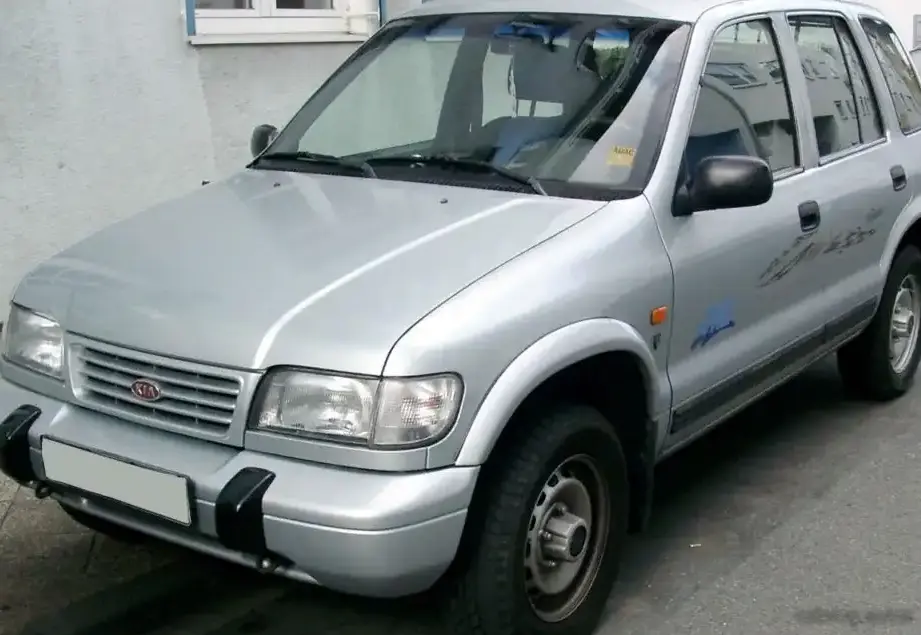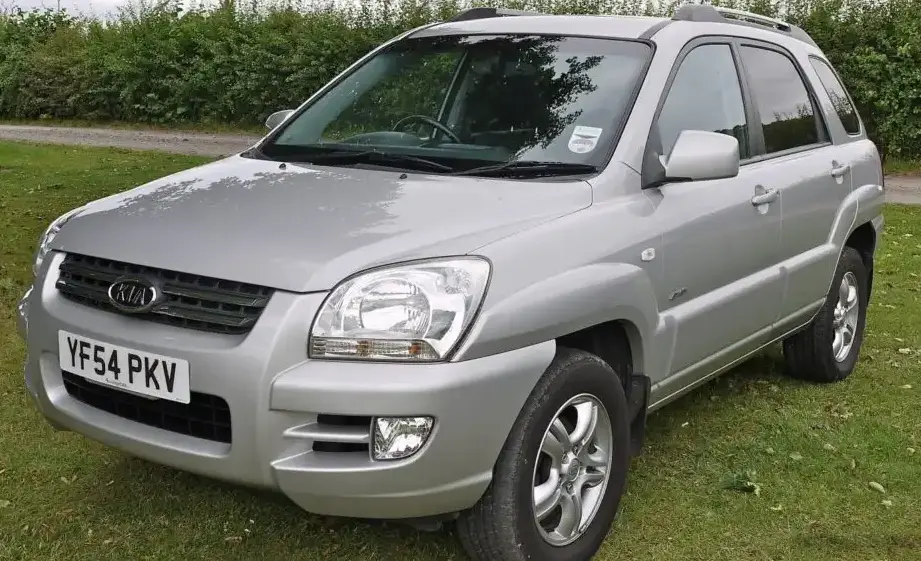
The Kia Sportage II 2.0 CRDi 4WD, produced between 2006 and 2008, represents a significant step forward for the second-generation Sportage (launched in 2004). Positioned as a mid-range offering within the Sportage II lineup, this variant combined a fuel-efficient diesel engine with the added capability of a four-wheel-drive system. It aimed to appeal to buyers seeking a practical and versatile compact SUV with enhanced traction for varied road conditions. The Sportage II, built on the Kia JM platform, was a crucial model for Kia as it sought to establish itself as a mainstream automotive brand, particularly in European and Asian markets. This specific 2.0 CRDi 4WD model was particularly important in regions where diesel engines and all-wheel drive were highly valued.
Technical Specifications
| Brand | Kia |
| Model | Sportage |
| Generation | Sportage II |
| Type (Engine) | 2.0 CRDi (140 Hp) 4WD |
| Start of production | 2006 |
| End of production | 2008 |
| Powertrain Architecture | Internal Combustion engine |
| Body type | SUV |
| Seats | 5 |
| Doors | 5 |
| Fuel consumption (urban) | 8.9 l/100 km (26.4 US mpg) |
| Fuel consumption (extra urban) | 6.2 l/100 km (37.9 US mpg) |
| Fuel Type | Diesel |
| Acceleration 0 – 100 km/h | 11.1 sec |
| Acceleration 0 – 62 mph | 11.1 sec |
| Acceleration 0 – 60 mph | 10.5 sec |
| Maximum speed | 177 km/h (109.98 mph) |
| Weight-to-power ratio | 11.9 kg/Hp |
| Weight-to-torque ratio | 5.4 kg/Nm |
| Power | 140 Hp @ 4000 rpm |
| Torque | 305 Nm @ 1800 rpm (224.96 lb.-ft. @ 1800 rpm) |
| Engine layout | Front, Transverse |
| Engine Model/Code | D4EA |
| Engine displacement | 1991 cm3 (121.5 cu. in.) |
| Number of cylinders | 4 |
| Engine configuration | Inline |
| Cylinder Bore | 83 mm (3.27 in.) |
| Piston Stroke | 92 mm (3.62 in.) |
| Compression ratio | 17.3:1 |
| Number of valves per cylinder | 4 |
| Fuel injection system | Diesel Commonrail |
| Engine aspiration | Turbocharger, Intercooler |
| Valvetrain | OHC |
| Engine oil capacity | 5.9 l (6.23 US qt | 5.19 UK qt) |
| Coolant capacity | 8.7 l (9.19 US qt | 7.65 UK qt) |
| Kerb Weight | 1660 kg (3659.67 lbs.) |
| Max. weight | 2260 kg (4982.45 lbs.) |
| Max load | 600 kg (1322.77 lbs.) |
| Trunk (boot) space – minimum | 667 l (23.55 cu. ft.) |
| Trunk (boot) space – maximum | 1886 l (66.6 cu. ft.) |
| Fuel tank capacity | 58 l (15.32 US gal | 12.76 UK gal) |
| Length | 4350 mm (171.26 in.) |
| Width | 1840 mm (72.44 in.) |
| Height | 1730 mm (68.11 in.) |
| Wheelbase | 2630 mm (103.54 in.) |
| Front track | 1550 mm (61.02 in.) |
| Rear track | 1550 mm (61.02 in.) |
| Drive wheel | All wheel drive (4×4) |
| Number of gears | 6 |
| Gearbox type | Manual transmission |
| Front suspension | Independent, McPherson with coil spring and anti-roll bar |
| Rear suspension | Independent multi-link with stabilizer |
| Front brakes | Ventilated discs |
| Rear brakes | Disc |
| Assisting systems | ABS (Anti-lock braking system) |
| Steering type | Steering rack and pinion |
| Tires size | 235/60 R16 |
Powertrain & Engine Architecture
The heart of the Sportage II 2.0 CRDi 4WD is the Kia D4EA engine, a 1991cc inline-four cylinder diesel. This engine utilizes a second-generation common-rail direct injection system, delivering fuel at extremely high pressure for improved combustion efficiency and reduced emissions. The D4EA is equipped with a turbocharger and intercooler, boosting power output to 140 horsepower at 4000 rpm and 305 Nm (224.96 lb-ft) of torque at a low 1800 rpm. The engine features a single overhead camshaft (OHC) valvetrain with four valves per cylinder. The six-speed manual transmission was the standard offering for this variant, providing a good balance between fuel economy and performance. The transmission’s gear ratios were tuned to maximize the engine’s torque output, providing strong acceleration in everyday driving situations.
Driving Characteristics
The 2.0 CRDi 4WD Sportage offered a noticeably different driving experience compared to the base gasoline engine options. The diesel engine’s abundant low-end torque made it well-suited for hauling passengers and cargo, as well as tackling challenging terrain. While not a particularly fast vehicle – 0-60 mph took around 10.5 seconds – it provided ample power for merging onto highways and overtaking slower traffic. The four-wheel-drive system enhanced traction on slippery surfaces, making it a capable vehicle in inclement weather. Compared to the higher-output 2.0 CRDi variants, this version prioritized fuel efficiency over outright performance. The manual transmission allowed for greater driver control, but required more engagement than the optional automatic transmission available on other trims.
Equipment & Trim Levels
The 2.0 CRDi 4WD Sportage typically came with a reasonable level of standard equipment. This included air conditioning, power windows and locks, a basic audio system, and alloy wheels. Safety features such as ABS and front airbags were also standard. Higher trim levels offered options like leather upholstery, a sunroof, upgraded audio systems, and automatic climate control. The interior design was functional and durable, with a focus on practicality rather than luxury. The dashboard layout was straightforward and easy to use, with clearly labeled controls.
Chassis & Braking
The Sportage II utilized an independent suspension setup at all four wheels. The front suspension employed McPherson struts with coil springs and an anti-roll bar, while the rear suspension featured a multi-link design with a stabilizer bar. This setup provided a comfortable ride quality and good handling characteristics. The braking system consisted of ventilated discs at the front and solid discs at the rear. The ABS system helped to prevent wheel lockup during hard braking, enhancing safety and control.
Market Reception & Comparison
The Kia Sportage II 2.0 CRDi 4WD was generally well-received by automotive critics. It was praised for its fuel efficiency, spacious interior, and capable four-wheel-drive system. However, some reviewers noted that the engine could be somewhat noisy and that the interior materials were not as refined as those found in some of its competitors. Compared to the gasoline-powered Sportage models, the 2.0 CRDi 4WD offered significantly better fuel economy and more torque. It also provided a more robust and capable driving experience, particularly in challenging conditions. Against rivals like the Hyundai Tucson and the Honda CR-V, the Sportage offered a competitive price point and a longer warranty.
Legacy
The Kia Sportage II 2.0 CRDi 4WD has proven to be a relatively reliable vehicle, with the D4EA engine being known for its durability. However, like any diesel engine, it requires regular maintenance, including oil changes and filter replacements. Common issues include turbocharger wear and potential problems with the fuel injection system. In the used car market, these Sportages are often sought after for their affordability, fuel efficiency, and all-wheel-drive capability. They represent a good value for buyers looking for a practical and versatile compact SUV. The Sportage II played a key role in establishing Kia as a credible competitor in the global automotive market, paving the way for the brand’s continued success.