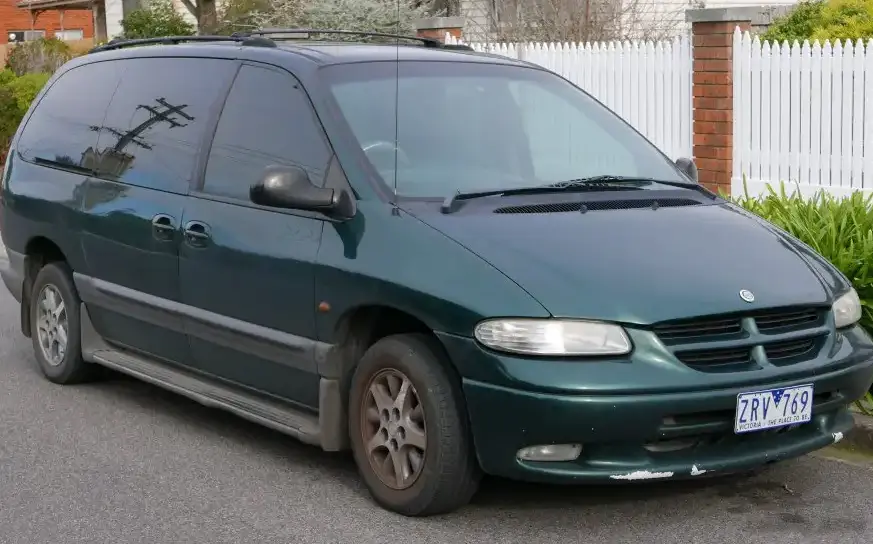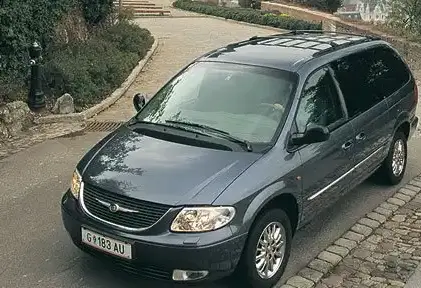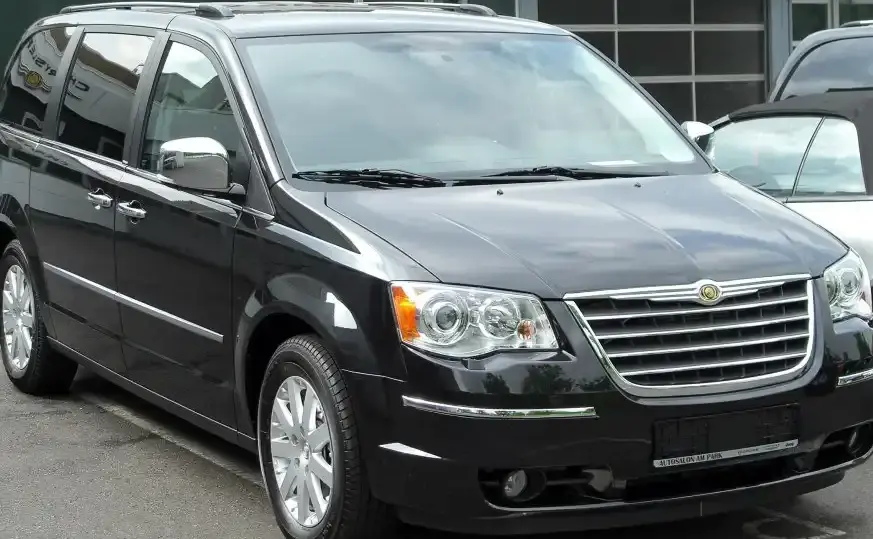
The Chrysler Grand Voyager V 3.3i V6, produced from 2007 to 2015, represents the fifth generation of Chrysler’s popular minivan. This variant, powered by a 3.3-liter V6 engine producing 172 horsepower, occupied a middle ground in the Grand Voyager lineup, offering a balance between affordability and capability. It was primarily marketed towards families seeking a spacious and comfortable vehicle for everyday transportation. The Grand Voyager, and its Dodge Caravan counterpart, were key models for Chrysler in the North American market, competing directly with the Honda Odyssey, Toyota Sienna, and other full-size minivans.
Technical Specifications
| Brand | Chrysler |
| Model | Voyager |
| Generation | Grand Voyager V |
| Type (Engine) | 3.3i V6 (172 Hp) |
| Start of production | 2007 |
| End of production | 2015 |
| Powertrain Architecture | Internal Combustion engine |
| Body type | Minivan |
| Seats | 7 |
| Doors | 5 |
| Fuel consumption (urban) | 13.8 l/100 km (17 US mpg, 20.5 UK mpg) |
| Fuel consumption (extra urban) | 9.8 l/100 km (24 US mpg, 28.8 UK mpg) |
| Fuel Type | Petrol (Gasoline) |
| Power | 172 Hp @ 5100 rpm |
| Torque | 278 Nm @ 4000 rpm (205.04 lb.-ft. @ 4000 rpm) |
| Engine layout | Front, Transverse |
| Engine displacement | 3301 cm3 (201.44 cu. in.) |
| Number of cylinders | 6 |
| Engine configuration | V-engine |
| Cylinder Bore | 93 mm (3.66 in.) |
| Piston Stroke | 81 mm (3.19 in.) |
| Compression ratio | 8.9:1 |
| Number of valves per cylinder | 2 |
| Fuel injection system | Multi-port manifold injection |
| Engine aspiration | Naturally aspirated engine |
| Engine oil capacity | 4.7 l (4.97 US qt | 4.14 UK qt) |
| Coolant capacity | 12.6 l (13.31 US qt | 11.09 UK qt) |
| Trunk (boot) space – minimum | 748 l (26.42 cu. ft.) |
| Trunk (boot) space – maximum | 4550 l (160.68 cu. ft.) |
| Length | 5096 mm (200.63 in.) |
| Width | 1997 mm (78.62 in.) |
| Height | 1803 mm (70.98 in.) |
| Wheelbase | 3030 mm (119.29 in.) |
| Front track | 1600 mm (62.99 in.) |
| Rear track | 1626 mm (64.02 in.) |
| Drivetrain | Front wheel drive |
| Number of gears | 4 |
| Gearbox type | Automatic transmission |
| Front brakes | Ventilated discs |
| Rear brakes | Disc |
| Assisting systems | ABS (Anti-lock braking system) |
| Steering type | Steering rack and pinion |
| Power steering | Hydraulic Steering |
Powertrain & Engine Architecture
The heart of the Grand Voyager V 3.3i is the Chrysler 3.3L EER V6 engine. This engine, internally designated as the EGJ, is a 60-degree V6 featuring a cast iron block and aluminum cylinder heads. It utilizes a multi-port fuel injection system, delivering fuel directly to each intake port for improved combustion efficiency. The engine employs a single overhead camshaft (SOHC) design with two valves per cylinder. The 3.3L V6 was known for its relatively simple design, contributing to its overall reliability. Paired with this engine is a four-speed automatic transmission, providing smooth and convenient gear changes. This transmission was a common choice for Chrysler minivans during this period, prioritizing ease of use over outright performance. The transmission’s gear ratios were tuned for comfortable cruising and adequate acceleration, rather than sporty driving.
Driving Characteristics
The 172 horsepower and 205 lb-ft of torque produced by the 3.3L V6, when coupled with the four-speed automatic, resulted in adequate, but not exhilarating, performance. Acceleration from 0 to 60 mph was typically in the 9-10 second range. Compared to the more powerful 3.8L V6 option available on the Grand Voyager, the 3.3L felt noticeably less responsive, particularly when fully loaded with passengers and cargo. The automatic transmission, while smooth, lacked the responsiveness of a manual gearbox or more modern automatic transmissions with additional gears. However, for typical family driving – commuting, school runs, and highway trips – the 3.3L V6 provided sufficient power and a comfortable driving experience. The focus was on practicality and ease of use, rather than sporty handling.
Equipment & Trim Levels
The 3.3i V6 Grand Voyager typically came standard with features such as air conditioning, power windows and locks, a basic audio system, and cloth upholstery. Higher trim levels, such as the Touring and Limited, added features like leather upholstery, upgraded audio systems, power sliding doors, and rear-seat entertainment systems. The base model offered a functional and affordable option for families, while the higher trims provided a more luxurious and feature-rich experience. Optional extras included a sunroof, navigation system, and various convenience packages.
Chassis & Braking
The Grand Voyager V utilized a front-wheel-drive platform with an independent front suspension and a multi-link rear suspension. The suspension was tuned for a comfortable ride, prioritizing passenger comfort over sporty handling. Braking duties were handled by ventilated discs at the front and solid discs at the rear. Anti-lock braking system (ABS) was standard, enhancing safety during emergency braking situations. The chassis was designed to maximize interior space and provide a stable and predictable driving experience, even when fully loaded.
Market Reception & Comparison
The 3.3L V6 Grand Voyager was generally well-received by critics as a practical and affordable family minivan. However, it was often criticized for its lack of power compared to competitors and the more powerful engine options within the Grand Voyager lineup. Fuel economy was considered average for its class. Compared to the 3.8L V6, the 3.3L offered better fuel efficiency but significantly less performance. The 3.3L was often seen as the entry-level choice, appealing to budget-conscious buyers who prioritized space and practicality over performance.
Legacy
The Chrysler Grand Voyager V 3.3i V6, while not the most powerful or technologically advanced minivan of its era, remains a popular choice in the used car market. The 3.3L V6 engine is generally considered reliable, although regular maintenance is crucial to prevent issues such as oil leaks and coolant system failures. The four-speed automatic transmission is also relatively durable, but may exhibit signs of wear and tear at higher mileage. Overall, the Grand Voyager V 3.3i represents a solid and dependable family vehicle that continues to provide affordable transportation for many years after its production ended.