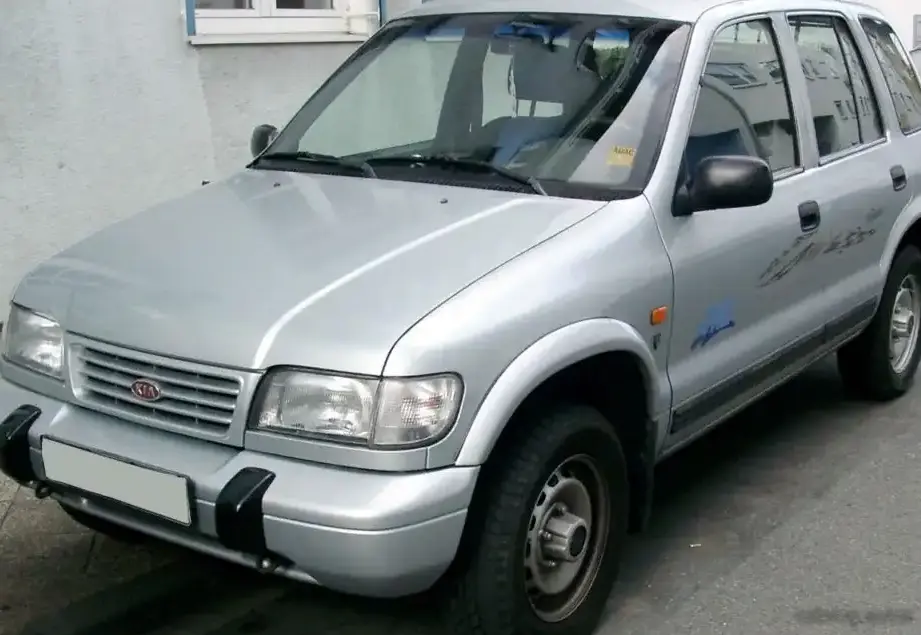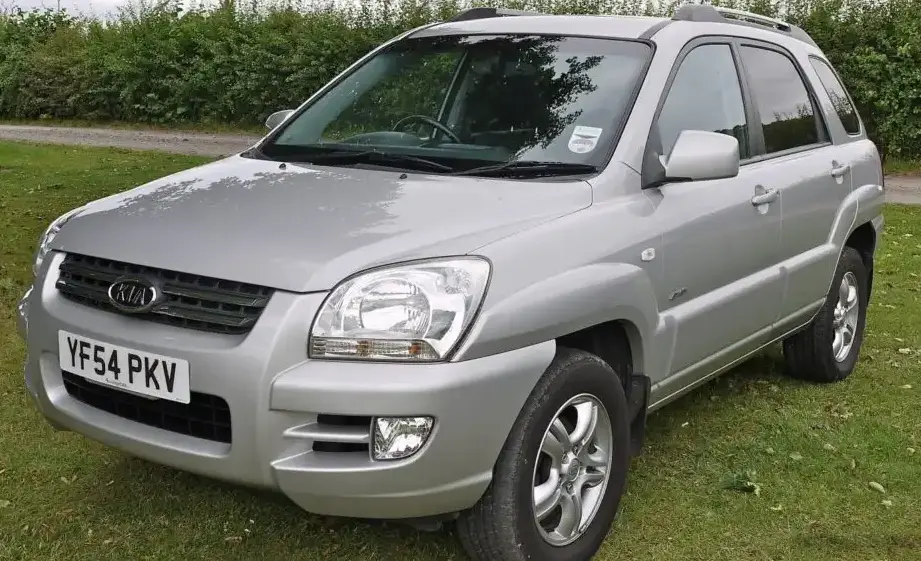
The Kia Sportage II 2.0i 16V 4WD Automatic, produced between 2004 and 2008, represents a significant step forward for Kia in the compact SUV segment. Part of the second generation (codename: JE), this variant aimed to offer a blend of affordability, practicality, and all-weather capability to buyers. Positioned as a mid-range offering within the Sportage II lineup, it sat between the base 2.0-liter front-wheel-drive models and the more powerful 2.7-liter V6 options. The Sportage II, in general, was Kia’s attempt to establish a stronger foothold in the European and North American markets, offering a compelling alternative to established Japanese and European competitors.
Technical Specifications
| Brand | Kia |
| Model | Sportage |
| Generation | Sportage II |
| Type (Engine) | 2.0 i 16V (141 Hp) 4WD Automatic |
| Start of production | 2004 |
| End of production | 2008 |
| Powertrain Architecture | Internal Combustion engine |
| Body type | SUV |
| Seats | 5 |
| Doors | 5 |
| Fuel consumption (urban) | 10.6 l/100 km (22.2 US mpg) |
| Fuel consumption (extra urban) | 6.8 l/100 km (34.6 US mpg) |
| Fuel Type | Petrol (Gasoline) |
| Acceleration 0 – 100 km/h | 11.3 sec |
| Acceleration 0 – 62 mph | 11.3 sec |
| Acceleration 0 – 60 mph | 10.7 sec |
| Maximum speed | 176 km/h (109.36 mph) |
| Weight-to-power ratio | 10.8 kg/Hp |
| Weight-to-torque ratio | 8.3 kg/Nm |
| Power | 141 Hp @ 6000 rpm |
| Torque | 184 Nm @ 4500 rpm (135.71 lb.-ft. @ 4500 rpm) |
| Engine layout | Front, Transverse |
| Engine Model/Code | G4GC |
| Engine displacement | 1975 cm3 (120.52 cu. in.) |
| Number of cylinders | 4 |
| Engine configuration | Inline |
| Cylinder Bore | 82 mm (3.23 in.) |
| Piston Stroke | 93.5 mm (3.68 in.) |
| Compression ratio | 10.1:1 |
| Number of valves per cylinder | 4 |
| Fuel injection system | Multi-port manifold injection |
| Engine aspiration | Naturally aspirated engine |
| Valvetrain | OHC |
| Engine oil capacity | 4 l (4.23 US qt | 3.52 UK qt) |
| Coolant capacity | 7 l (7.4 US qt | 6.16 UK qt) |
| Kerb Weight | 1525 kg (3362.05 lbs.) |
| Max. weight | 2140 kg (4717.89 lbs.) |
| Max load | 615 kg (1355.84 lbs.) |
| Trunk (boot) space – minimum | 667 l (23.55 cu. ft.) |
| Trunk (boot) space – maximum | 1886 l (66.6 cu. ft.) |
| Fuel tank capacity | 58 l (15.32 US gal | 12.76 UK gal) |
| Length | 4350 mm (171.26 in.) |
| Width | 1840 mm (72.44 in.) |
| Height | 1730 mm (68.11 in.) |
| Wheelbase | 2630 mm (103.54 in.) |
| Front track | 1550 mm (61.02 in.) |
| Rear (Back) track | 1550 mm (61.02 in.) |
| Drive wheel | All wheel drive (4×4) |
| Number of gears and type of gearbox | 4 gears, automatic transmission |
| Front suspension | Independent, type McPherson with coil spring and anti-roll bar |
| Rear suspension | Independent multi-link spring suspension with stabilizer |
| Front brakes | Ventilated discs |
| Rear brakes | Disc |
| Assisting systems | ABS (Anti-lock braking system) |
| Steering type | Steering rack and pinion |
| Tires size | 235/60 R16 |
| Wheel rims size | 16 |
Powertrain & Engine Architecture
The heart of the Sportage II 2.0i 4WD Automatic is the Kia-developed G4GC engine, a 1.975-liter (120.52 cubic inches) inline-four cylinder gasoline engine. This engine utilizes a single overhead camshaft (SOHC) valvetrain with four valves per cylinder, contributing to reasonable power output for its displacement. Fuel delivery is managed by a multi-point fuel injection system, a common setup for engines of this era. The G4GC engine produces 141 horsepower at 6000 rpm and 184 Nm (135.71 lb-ft) of torque at 4500 rpm. Paired with this engine is a four-speed automatic transmission, designed to provide smooth and convenient shifting. This transmission was not known for being particularly sporty or fuel-efficient compared to later designs, but it offered a comfortable driving experience for the target demographic.
Driving Characteristics
The 2.0-liter engine and four-speed automatic combination in the Sportage II delivered adequate, but not exhilarating, performance. Acceleration from 0 to 60 mph took around 10.7 seconds, and top speed was limited to 109.36 mph. The automatic transmission’s gear ratios were geared more towards fuel economy and everyday drivability than outright performance. Compared to the manual transmission versions of the same engine, the automatic resulted in a noticeable decrease in responsiveness. The all-wheel-drive system provided enhanced traction in slippery conditions, making it a suitable choice for drivers in regions with inclement weather. However, the AWD system did add weight, slightly impacting fuel economy and handling compared to front-wheel-drive models.
Equipment & Trim Levels
The 2.0i 4WD Automatic trim typically included features such as air conditioning, power windows and locks, and a basic audio system. Interior upholstery was generally cloth, with options for upgraded materials available. Depending on the market and optional packages, features like alloy wheels, a sunroof, and upgraded audio systems could be added. Safety features included ABS (Anti-lock Braking System) as standard equipment. The dashboard layout was functional and straightforward, prioritizing usability over aesthetic flair.
Chassis & Braking
The Sportage II utilized an independent suspension setup at all four wheels. The front suspension employed a McPherson strut design with coil springs and an anti-roll bar, while the rear featured a multi-link suspension with a stabilizer bar. This setup aimed to provide a comfortable ride and reasonable handling characteristics. Braking duties were handled by ventilated discs at the front and solid discs at the rear. The braking system, while adequate for everyday driving, wasn’t particularly powerful compared to more modern SUVs.
Market Reception & Comparison
The Kia Sportage II 2.0i 4WD Automatic was generally well-received as a value-oriented SUV. Critics praised its affordability and practicality, but noted that its performance and refinement were not on par with some of its more established competitors. Compared to the 2.7-liter V6 models, the 2.0-liter offered better fuel economy but significantly less power. The 2.0-liter front-wheel-drive versions were even more fuel-efficient but lacked the all-weather capability of the 4WD model. Reliability was generally considered good, although some owners reported minor issues with the automatic transmission over time.
Legacy
The Kia Sportage II played a crucial role in establishing Kia as a credible player in the SUV market. The 2.0i 4WD Automatic variant, while not the most powerful or refined option, offered a compelling combination of affordability, practicality, and all-weather capability. Today, these vehicles can be found on the used car market at very affordable prices. The G4GC engine is known for its relative durability, but potential buyers should be aware of the possibility of age-related issues with the automatic transmission and suspension components. Overall, the Sportage II 2.0i 4WD Automatic remains a decent option for those seeking a budget-friendly and capable compact SUV.