
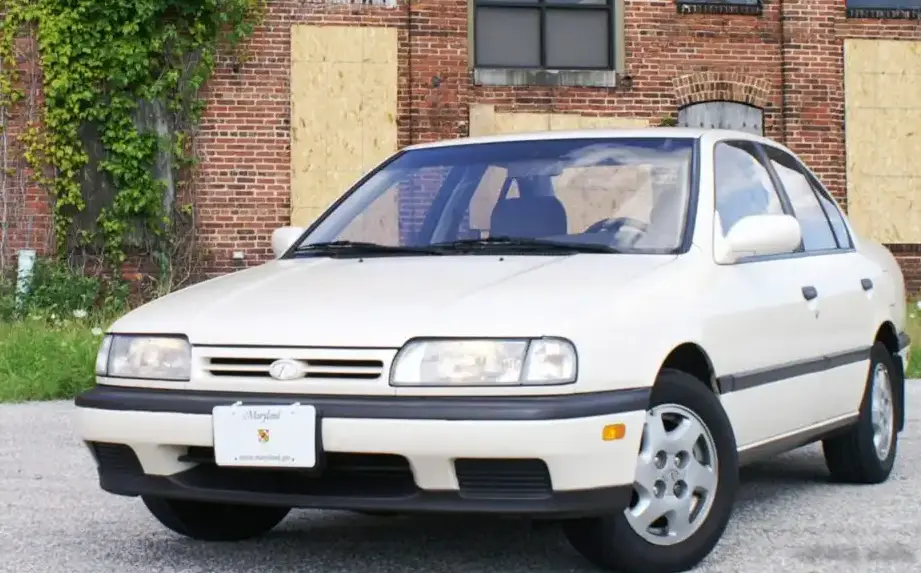
The Infiniti G20 2.0i, produced between 1991 and 1996, represented Infiniti’s entry-level offering in the compact luxury sedan segment. Positioned below the larger Q45, the G20 aimed to attract buyers seeking a blend of Japanese reliability, sporty handling, and a more affordable price point. It was based on the Nissan Bluebird Sylphy, a popular model in Japan, and was specifically tailored for the North American market. The G20 was a key component in establishing the Infiniti brand in the United States, offering a compelling alternative to European and domestic competitors.
Technical Specifications
| Brand | Infiniti |
| Model | G |
| Generation | G20 |
| Type (Engine) | 2.0 i (140 Hp) |
| Start of production | 1991 |
| End of production | 1996 |
| Powertrain Architecture | Internal Combustion engine |
| Body type | Sedan |
| Seats | 5 |
| Doors | 4 |
| Fuel consumption (combined) | 8.7 l/100 km (27 US mpg, 32.5 UK mpg, 11.5 km/l) |
| Fuel Type | Petrol (Gasoline) |
| Maximum speed | 209 km/h (129.87 mph) |
| Weight-to-power ratio | 9.3 kg/Hp, 107.2 Hp/tonne |
| Weight-to-torque ratio | 7.3 kg/Nm, 137.8 Nm/tonne |
| Power | 140 Hp @ 6400 rpm |
| Power per litre | 70.1 Hp/l |
| Torque | 180 Nm @ 6400 rpm (132.76 lb.-ft. @ 6400 rpm) |
| Engine layout | Front, Transverse |
| Engine displacement | 1998 cm3 (121.93 cu. in.) |
| Number of cylinders | 4 |
| Engine configuration | Inline |
| Cylinder Bore | 86 mm (3.39 in.) |
| Piston Stroke | 86 mm (3.39 in.) |
| Compression ratio | 10:1 |
| Number of valves per cylinder | 4 |
| Fuel injection system | Multi-port manifold injection |
| Engine aspiration | Naturally aspirated engine |
| Valvetrain | DOHC |
| Kerb Weight | 1306 kg (2879.24 lbs.) |
| Trunk (boot) space – minimum | 470 l (16.6 cu. ft.) |
| Fuel tank capacity | 60 l (15.85 US gal | 13.2 UK gal) |
| Length | 4450 mm (175.2 in.) |
| Width | 1700 mm (66.93 in.) |
| Height | 1395 mm (54.92 in.) |
| Wheelbase | 2550 mm (100.39 in.) |
| Front track | 1470 mm (57.87 in.) |
| Rear (Back) track | 1460 mm (57.48 in.) |
| Drivetrain Architecture | The Internal combustion engine (ICE) drives the front wheels of the vehicle. |
| Drive wheel | Front wheel drive |
| Number of gears and type of gearbox | 5 gears, manual transmission |
| Front suspension | Coil spring |
| Rear suspension | Coil spring |
| Front brakes | Ventilated discs |
| Rear brakes | Disc |
| Assisting systems | ABS (Anti-lock braking system) |
| Steering type | Steering rack and pinion |
| Power steering | Hydraulic Steering |
| Tires size | 195/65 R14 H |
Powertrain & Engine Architecture
The heart of the G20 was the GA20DE, a 2.0-liter inline-four cylinder engine. This engine featured a double overhead camshaft (DOHC) valvetrain with four valves per cylinder, contributing to its relatively high output for its displacement. The GA20DE utilized multi-port fuel injection, a common technology at the time, to deliver fuel directly into the intake ports. The engine’s 10:1 compression ratio was a balance between performance and fuel efficiency. The 140 horsepower peak was achieved at 6400 rpm, while the 180 Nm (132.76 lb-ft) of torque peaked at the same engine speed. The engine was transversely mounted in the front of the vehicle, driving the front wheels. The standard transmission was a smooth-shifting 5-speed manual, although a 4-speed automatic transmission was also available.
Driving Characteristics
The G20 2.0i with the manual transmission offered a reasonably engaging driving experience. While not a performance car, the engine provided adequate power for everyday driving and even some spirited acceleration. The 5-speed manual allowed drivers to keep the engine in its optimal power band. The automatic transmission, while convenient, noticeably dulled the car’s responsiveness. Gear ratios were tuned for fuel economy and smooth cruising rather than outright acceleration. Compared to potential upgrades like the later G20 with the SR20DE engine (found in the Nissan Sentra SE-R), the 2.0i felt less powerful, but it offered a more refined and comfortable ride. The front-wheel-drive configuration provided predictable handling, although it lacked the all-weather capability of an all-wheel-drive system.
Equipment & Trim Levels
The G20 was relatively well-equipped for its price point. Standard features typically included air conditioning, power windows and locks, a tilt steering wheel, and an AM/FM stereo. Upholstery was generally cloth, with leather available as an option. Higher trim levels, though not extensively differentiated, might include features like a sunroof, upgraded audio systems, and alloy wheels. The interior design was functional and understated, reflecting the car’s focus on practicality and value. Optional extras included a CD player and upgraded sound systems.
Chassis & Braking
The G20 utilized a relatively simple suspension setup, with coil springs and independent struts in the front and coil springs with a multi-link rear suspension. This configuration provided a comfortable ride quality, although it wasn’t particularly sporty. Braking duties were handled by ventilated discs in the front and solid discs in the rear. Anti-lock brakes (ABS) were standard, enhancing safety. The G20’s chassis was designed to balance ride comfort with handling stability. Stabilizer bars were included to reduce body roll during cornering.
Market Reception & Comparison
The Infiniti G20 was generally well-received by automotive critics. It was praised for its reliability, comfortable ride, and relatively affordable price. However, some reviewers noted that the engine lacked the power of its European competitors. Fuel economy was considered good for its class, averaging around 27 mpg in combined driving. Compared to other trims in the G20 lineup (none existed, as it was the sole trim), the 2.0i represented the base model, prioritizing value and fuel efficiency over performance. It competed directly with entry-level luxury sedans from Acura, Lexus, and BMW.
Legacy
The Infiniti G20 established a foothold for the brand in the US market and laid the groundwork for future models. The GA20DE engine proved to be remarkably durable and reliable, with many examples exceeding 200,000 miles with proper maintenance. Today, the G20 is considered a classic by many enthusiasts, particularly those who appreciate its simplicity and reliability. Used examples are relatively affordable, making them an attractive option for those seeking a vintage luxury sedan. While parts availability can be a concern, the G20’s Nissan origins mean that many components are still readily accessible. The G20 remains a testament to the early days of Infiniti and its commitment to providing a compelling alternative in the luxury car market.
