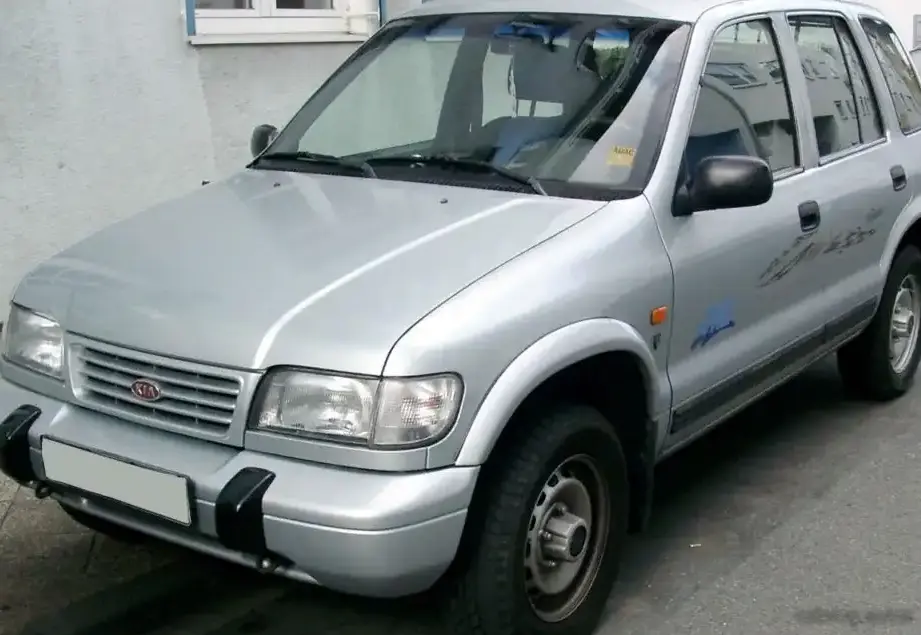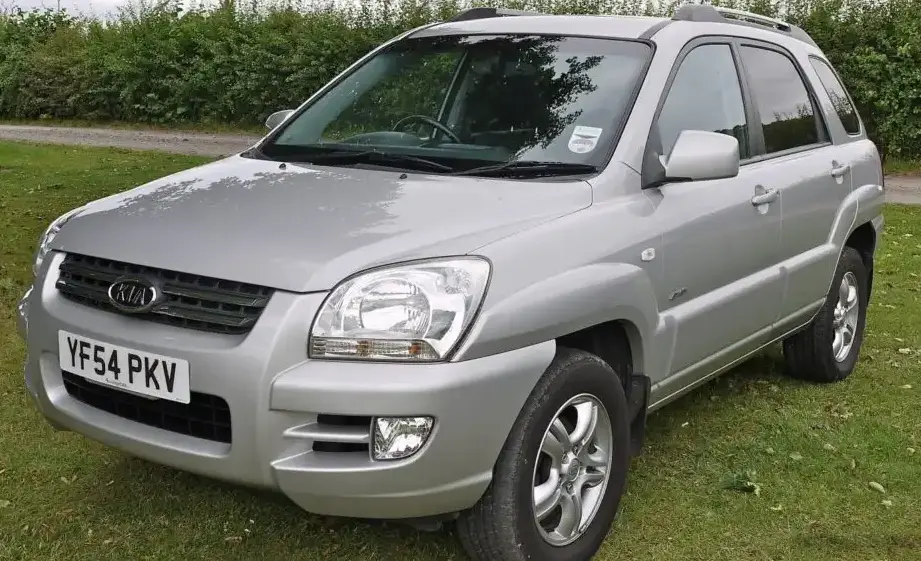
The Kia Sportage II, produced between 2004 and 2008, represented a significant step forward for the South Korean automaker in the increasingly competitive compact SUV segment. This second generation, known internally as the JE, aimed to broaden Kia’s appeal beyond its value-focused reputation, offering a more refined and capable vehicle. The 2.7-liter V6 engine paired with a four-speed automatic transmission and four-wheel drive was a mid-range offering within the Sportage II lineup, positioned above the base 2.0-liter inline-four but below the later introduced 2.0-liter diesel variants in European markets. It was primarily targeted at American and Canadian buyers seeking a comfortable, all-weather SUV with a respectable level of performance.
Technical Specifications
| Brand | Kia |
| Model | Sportage |
| Generation | Sportage II |
| Type (Engine) | 2.7 i V6 (175 Hp) 4WD |
| Start of production | 2004 |
| End of production | 2008 |
| Powertrain Architecture | Internal Combustion engine |
| Body type | SUV |
| Seats | 5 |
| Doors | 5 |
| Fuel consumption (urban) | 13.2 l/100 km (17.8 US mpg) |
| Fuel consumption (extra urban) | 8.2 l/100 km (28.7 US mpg) |
| Fuel consumption (combined) | 10 l/100 km (23.5 US mpg) |
| Fuel Type | Petrol (Gasoline) |
| Acceleration 0 – 100 km/h | 10.5 sec |
| Acceleration 0 – 62 mph | 10.5 sec |
| Acceleration 0 – 60 mph | 10 sec |
| Maximum speed | 180 km/h (111.85 mph) |
| Weight-to-power ratio | 10 kg/Hp |
| Weight-to-torque ratio | 7.2 kg/Nm |
| Power | 175 Hp @ 6000 rpm |
| Torque | 241 Nm @ 4000 rpm (177.75 lb.-ft. @ 4000 rpm) |
| Engine layout | Front, Transverse |
| Engine Model/Code | Delta / G6BA |
| Engine displacement | 2656 cm3 (162.08 cu. in.) |
| Number of cylinders | 6 |
| Engine configuration | V-engine |
| Cylinder Bore | 86.7 mm (3.41 in.) |
| Piston Stroke | 75 mm (2.95 in.) |
| Compression ratio | 10.1:1 |
| Number of valves per cylinder | 4 |
| Fuel injection system | Multi-port manifold injection |
| Engine aspiration | Naturally aspirated engine |
| Valvetrain | DOHC |
| Engine oil capacity | 4.5 l (4.76 US qt | 3.96 UK qt) |
| Coolant capacity | 7 l (7.4 US qt | 6.16 UK qt) |
| Kerb Weight | 1743 kg (3842.66 lbs.) |
| Max. weight | 2170 kg (4784.03 lbs.) |
| Max load | 427 kg (941.37 lbs.) |
| Fuel tank capacity | 58 l (15.32 US gal | 12.76 UK gal) |
| Length | 4350 mm (171.26 in.) |
| Width | 1840 mm (72.44 in.) |
| Height | 1730 mm (68.11 in.) |
| Wheelbase | 2630 mm (103.54 in.) |
| Front track | 1550 mm (61.02 in.) |
| Rear track | 1550 mm (61.02 in.) |
| Drive wheel | All wheel drive (4×4) |
| Number of gears | 4 |
| Gearbox type | automatic transmission |
| Front suspension | Spring Strut |
| Rear suspension | Double wishbone |
| Front brakes | Ventilated discs |
| Rear brakes | Disc |
| Assisting systems | ABS (Anti-lock braking system) |
| Steering type | Steering rack and pinion |
| Tires size | 235/60 R16 |
| Wheel rims size | 6.5 X 16 |
Powertrain & Engine Architecture
The heart of this Sportage variant is the Kia-developed 2.7-liter Delta engine, designated G6BA. This naturally aspirated V6 utilizes a 60-degree V-angle, contributing to a relatively smooth power delivery. The engine employs multi-point fuel injection and a double overhead camshaft (DOHC) valvetrain with four valves per cylinder. This configuration allowed for a reasonable balance of power and efficiency for its time. The 2.7L Delta engine was known for its durability, though not particularly groundbreaking in terms of performance. The four-speed automatic transmission, while adequate, was a somewhat dated design by the mid-2000s, lacking the efficiency and responsiveness of newer transmissions with more gears. It was a conventional torque converter automatic, prioritizing smooth shifts over outright performance.
Driving Characteristics
The 175 horsepower and 177.75 lb-ft of torque provided by the 2.7L V6 and automatic transmission combination resulted in adequate, but not exhilarating, performance. Acceleration from 0-60 mph took around 10 seconds, making it competitive with other compact SUVs of the era. The automatic transmission’s gear ratios were tuned for comfortable cruising rather than aggressive acceleration. The four-wheel drive system provided enhanced traction in inclement weather, making it a practical choice for drivers in regions with snow or rain. Compared to the base 2.0L four-cylinder, the V6 offered significantly more power and a smoother driving experience, but at the cost of fuel economy. Manual transmission versions, when available, offered slightly quicker acceleration and better fuel efficiency, but the automatic was favored by many buyers for its convenience.
Equipment & Trim Levels
The 2.7L V6 4WD Sportage typically came with a reasonable level of standard equipment. This included air conditioning, power windows and locks, a CD player, and alloy wheels. Higher trim levels added features such as a sunroof, leather upholstery, heated seats, and upgraded audio systems. Interior materials were generally durable, though not luxurious. The dashboard layout was functional and straightforward, prioritizing ease of use over aesthetic flair. Optional extras included a tow package, allowing for light towing duties.
Chassis & Braking
The Sportage II utilized a body-on-frame construction, a traditional SUV design that provided robustness and off-road capability. The front suspension consisted of a MacPherson strut setup, while the rear employed a multi-link double wishbone design. This combination aimed to balance ride comfort with handling stability. Braking duties were handled by ventilated discs at the front and solid discs at the rear. Anti-lock Braking System (ABS) was standard, enhancing safety during emergency braking situations. The suspension tuning was geared towards comfort, resulting in a relatively soft ride quality.
Market Reception & Comparison
The Kia Sportage II 2.7L V6 4WD received generally positive reviews, particularly for its value proposition. Critics praised its spacious interior, comfortable ride, and standard features. However, the four-speed automatic transmission was often criticized for being somewhat sluggish and lacking the refinement of newer transmissions. Fuel economy was also a point of concern, falling short of some competitors. Compared to rivals like the Honda CR-V and Toyota RAV4, the Sportage offered a lower price point but lacked the same level of brand recognition and resale value. The 2.0L four-cylinder versions were more fuel-efficient but lacked the power of the V6, while the later diesel variants (primarily in Europe) offered better fuel economy and torque but were not available in the North American market.
Legacy
The Kia Sportage II, particularly the 2.7L V6 4WD variant, has proven to be a relatively reliable vehicle in the used car market. The Delta engine is known for its durability, and the automatic transmission, while not the most advanced, is generally dependable with proper maintenance. Common issues include minor oil leaks and wear on suspension components. Today, these Sportages represent an affordable and practical option for buyers seeking a capable and spacious SUV. While not a performance standout, the 2.7L V6 provided a comfortable and reliable driving experience, solidifying Kia’s position as a growing force in the automotive industry.