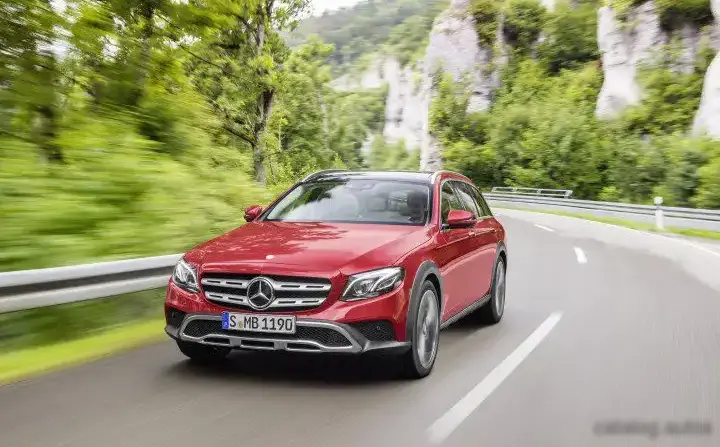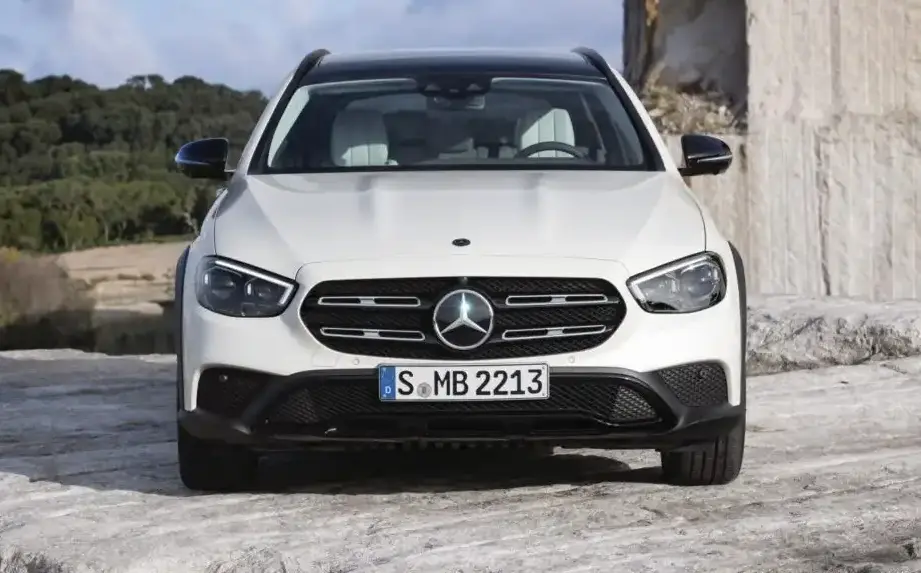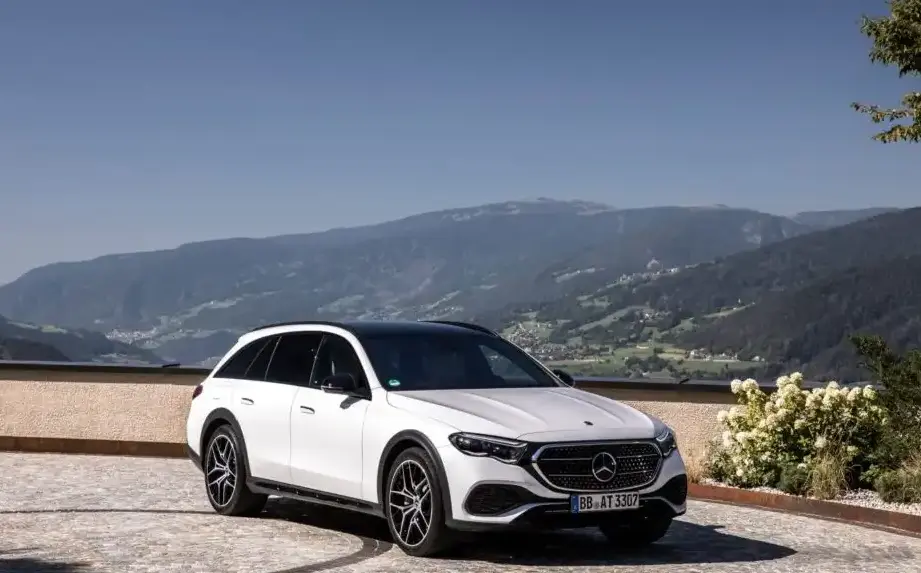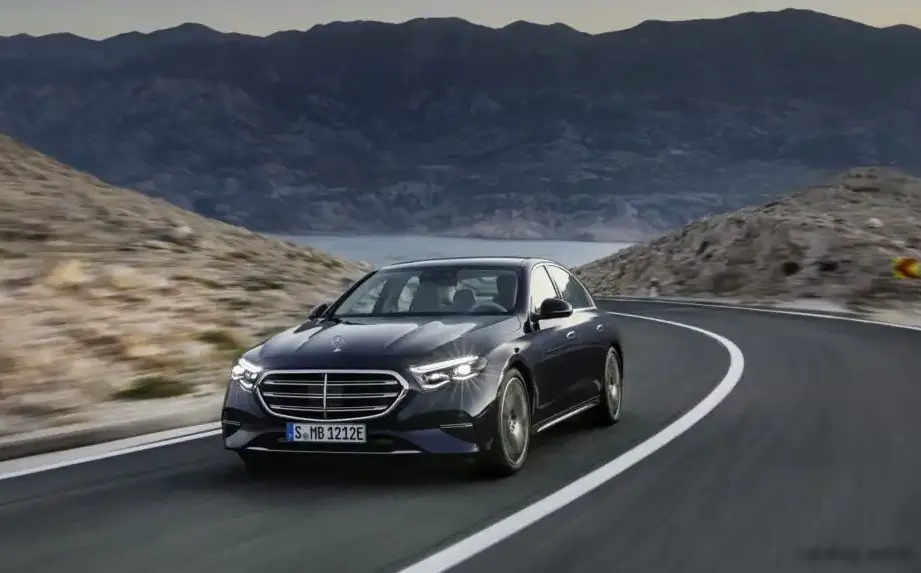
The Mercedes-Benz E 300e (W214), introduced in April 2023, represents the latest iteration of the E-Class’s plug-in hybrid offering. Positioned as a mid-range option within the W214 E-Class lineup, it bridges the gap between the conventionally powered models and the more performance-focused AMG variants. This model is primarily aimed at the European and increasingly North American markets, catering to drivers seeking a blend of luxury, efficiency, and reduced emissions. The E 300e is built upon the W214 platform, sharing its core architecture with other E-Class models but distinguished by its electrified powertrain.
Technical Specifications
| Brand | Mercedes-Benz |
| Model | E-class |
| Generation | E-class (W214) |
| Type | E 300e (313 Hp) Plug-in Hybrid 9G-TRONIC |
| Start of production | April, 2023 |
| Powertrain Architecture | PHEV (Plug-in Hybrid Electric Vehicle) |
| Body type | Sedan |
| Seats | 5 |
| Doors | 4 |
| Combined fuel consumption (WLTP) | 0.5-0.8 l/100 km (470.4 – 294 US mpg, 565 – 353.1 UK mpg, 200 – 125 km/l) |
| CO2 emissions (WLTP) | 12-18 g/km |
| Fuel Type | Petrol / electricity |
| Acceleration 0 – 100 km/h | 6.4 sec |
| Acceleration 0 – 62 mph | 6.4 sec |
| Acceleration 0 – 60 mph | 6.1 sec |
| Maximum speed | 236 km/h (146.64 mph) |
| Emission standard | Euro 6 |
| Weight-to-power ratio | 7.1 kg/Hp, 141.6 Hp/tonne |
| Weight-to-torque ratio | 4 kg/Nm, 248.9 Nm/tonne |
| Gross battery capacity | 25.4 kWh |
| Battery technology | Lithium-ion (Li-Ion) |
| All-electric range (WLTP) | 97-115 km (60.27 – 71.46 mi) |
| Average Energy consumption (WLTP) | 18.4-20.7 kWh/100 km (29.61 – 33.31 kWh/100 mi, 114 – 101 MPGe, 5.4 – 4.8 km/kWh, 3.4 – 3 mi/kWh) |
| Max speed (electric) | 140 km/h (86.99 mph) |
| Electric motor power | 129 Hp |
| Electric motor Torque | 440 Nm (324.53 lb.-ft.) |
| System power | 313 Hp |
| System torque | 550 Nm (405.66 lb.-ft.) |
| Engine Power | 204 Hp @ 6100 rpm |
| Engine Torque | 320 Nm @ 2000-4000 rpm (236.02 lb.-ft. @ 2000-4000 rpm) |
| Engine layout | Front, Longitudinal |
| Engine Model/Code | M 254 |
| Engine displacement | 1999 cm3 (121.99 cu. in.) |
| Number of cylinders | 4 |
| Engine configuration | Inline |
| Compression ratio | 10:1 |
| Number of valves per cylinder | 4 |
| Fuel injection system | Direct injection |
| Engine oil capacity | 5.3 l (5.6 US qt | 4.66 UK qt) |
| Kerb Weight | 2210 kg (4872.22 lbs.) |
| Max. weight | 2805 kg (6183.97 lbs.) |
| Max load | 595 kg (1311.75 lbs.) |
| Trunk (boot) space – minimum | 370 l (13.07 cu. ft.) |
| Fuel tank capacity | 50 l (13.21 US gal | 11 UK gal) |
| Length | 4949 mm (194.84 in.) |
| Width | 1880 mm (74.02 in.) |
| Height | 1480 mm (58.27 in.) |
| Wheelbase | 2961 mm (116.57 in.) |
| Front track | 1620 mm (63.78 in.) |
| Rear (Back) track | 1603 mm (63.11 in.) |
| Minimum turning circle | 11.6 m (38.06 ft.) |
| Drive wheel | Rear wheel drive |
| Number of gears | 9 |
| Gearbox type | automatic transmission G-TRONIC |
Powertrain & Engine Architecture
The E 300e utilizes a sophisticated plug-in hybrid powertrain. At its heart lies a 2.0-liter inline-four cylinder engine, designated M 254, producing 204 horsepower and 320 Nm (236 lb-ft) of torque. This engine features direct fuel injection and is turbocharged for enhanced performance. Integrated with the internal combustion engine is a 129 horsepower electric motor, delivering 440 Nm (324.53 lb-ft) of torque. The combined system output reaches 313 horsepower and 550 Nm (405.66 lb-ft). Power is delivered to the rear wheels via a 9G-TRONIC nine-speed automatic transmission, optimized for smooth and efficient operation. The 25.4 kWh lithium-ion battery pack provides an all-electric range of 97-115 km (60-71 miles) under WLTP testing. The battery can be charged via a standard charging port, offering flexibility in refueling options.
Driving Characteristics
The E 300e offers a refined and versatile driving experience. In electric mode, it provides near-silent operation and instant torque, making it ideal for urban commuting. The transition between electric and gasoline power is seamless, managed by the vehicle’s intelligent hybrid control system. While not as overtly sporty as some of its higher-powered siblings, the E 300e delivers respectable acceleration, achieving 0-60 mph in approximately 6.1 seconds. The 9G-TRONIC transmission provides smooth gear changes, contributing to a comfortable ride. The rear-wheel drive configuration offers balanced handling, although it may not provide the same level of grip as all-wheel drive models in adverse conditions. The gear ratios are tuned for efficiency, prioritizing fuel economy during highway cruising.
Equipment & Trim Levels
The E 300e typically comes well-equipped as standard. Interior features generally include premium upholstery, a modern dashboard layout with a large central touchscreen display, and advanced infotainment systems. Standard safety features include automatic emergency braking, lane keeping assist, and adaptive cruise control. Optional extras often include a panoramic sunroof, upgraded audio systems, and various driver assistance packages. Trim levels may vary by market, but generally offer increasing levels of luxury and technology. The E 300e often sits in the middle of the E-Class range, offering a balance between affordability and features.
Chassis & Braking
The E 300e utilizes a sophisticated chassis design. The front suspension features coil springs and an independent multi-link setup with a transverse stabilizer, while the rear suspension employs an independent multi-link configuration with coil springs and a transverse stabilizer. This setup provides a comfortable ride and responsive handling. Braking duties are handled by ventilated discs on all four wheels, ensuring strong stopping power. Anti-lock braking system (ABS) is standard, enhancing safety and control. The vehicle’s weight, approximately 2210 kg (4872 lbs), is managed effectively by the suspension system, providing a stable and controlled driving experience.
Market Reception & Comparison
The E 300e has been generally well-received by automotive critics. Its fuel efficiency and all-electric range are frequently praised, making it an attractive option for environmentally conscious buyers. Compared to the conventionally powered E-Class models, the E 300e offers significantly lower running costs, particularly for those who can regularly utilize the electric charging infrastructure. Compared to the higher-performance E-Class variants, the E 300e prioritizes efficiency and comfort over outright speed. Reliability reports are still emerging, but Mercedes-Benz has a generally strong reputation for build quality and durability.
Legacy
The E 300e represents a significant step in Mercedes-Benz’s electrification strategy. The powertrain, while relatively new, is based on proven technology and is expected to offer good long-term reliability. The availability of a plug-in hybrid option broadens the appeal of the E-Class, attracting a wider range of buyers. On the used car market, the E 300e is likely to hold its value well, particularly as demand for electric and hybrid vehicles continues to grow. The combination of luxury, efficiency, and advanced technology positions the E 300e as a compelling choice in the premium mid-size sedan segment.