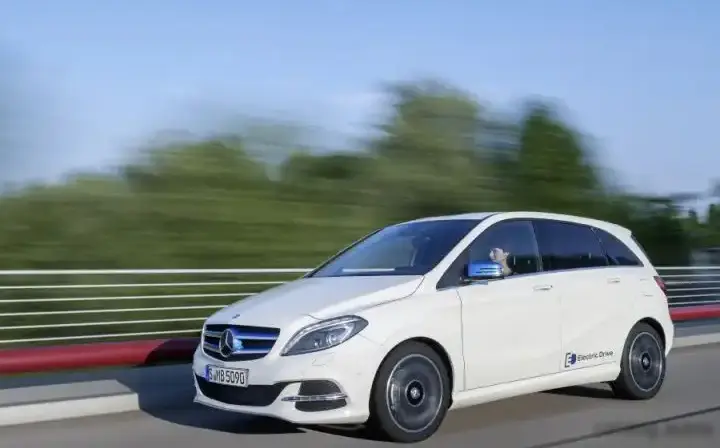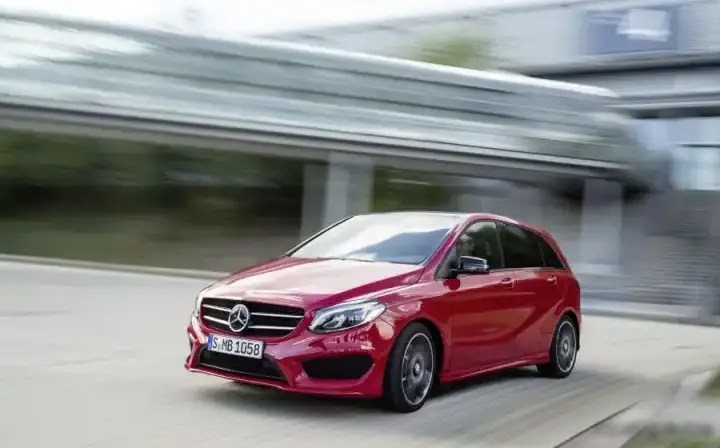
The Mercedes-Benz B-Class (W246 facelift) B 250, produced from 2014 to 2018, represented a significant step forward in the compact luxury hatchback segment. This variant, equipped with a 2.0-liter turbocharged engine producing 211 horsepower and a 7-speed dual-clutch transmission (DCT), occupied the upper-mid-range position within the W246 facelift lineup, slotting above the B 200 and B 220 models but below potential AMG-tuned versions (which were not widely offered for this generation). The W246 B-Class, and particularly the B 250, aimed to blend practicality, comfort, and a degree of performance appealing to buyers seeking a more premium alternative to traditional compact hatchbacks.
Technical Specifications
| Brand | Mercedes-Benz |
| Model | B-class |
| Generation | B-class (W246 facelift 2014) |
| Type (Engine) | B 250 (211 Hp) DCT |
| Start of production | 2014 |
| End of production | 2018 |
| Powertrain Architecture | Internal Combustion engine |
| Body type | Hatchback |
| Seats | 5 |
| Doors | 5 |
| Fuel consumption (urban) | 8.6-8.5 l/100 km (27.4 – 27.7 US mpg) |
| Fuel consumption (extra urban) | 4.7-4.6 l/100 km (50 – 51.1 US mpg) |
| Fuel consumption (combined) | 6.1 l/100 km (38.6 US mpg) |
| CO2 emissions | 143-141 g/km |
| Fuel Type | Petrol (Gasoline) |
| Acceleration 0 – 100 km/h | 6.8 sec |
| Acceleration 0 – 62 mph | 6.8 sec |
| Acceleration 0 – 60 mph | 6.5 sec |
| Maximum speed | 240 km/h (149.13 mph) |
| Emission standard | Euro 6 |
| Weight-to-power ratio | 6.9 kg/Hp |
| Weight-to-torque ratio | 4.2 kg/Nm |
| Power | 211 Hp @ 5500 rpm |
| Torque | 350 Nm @ 1200-4000 rpm (258.15 lb.-ft. @ 1200-4000 rpm) |
| Engine layout | Front, Transverse |
| Engine Model/Code | M 270.920 |
| Engine displacement | 1991 cm3 (121.5 cu. in.) |
| Number of cylinders | 4 |
| Engine configuration | Inline |
| Compression ratio | 9.8:1 |
| Fuel injection system | Direct injection |
| Engine aspiration | Turbocharger, Intercooler |
| Engine oil capacity | 5.6 l (5.92 US qt | 4.93 UK qt) |
| Coolant capacity | 7 l (7.4 US qt | 6.16 UK qt) |
| Kerb Weight | 1465 kg (3229.77 lbs.) |
| Max. weight | 1990 kg (4387.2 lbs.) |
| Max load | 525 kg (1157.43 lbs.) |
| Trunk (boot) space – minimum | 488 l (17.23 cu. ft.) |
| Trunk (boot) space – maximum | 1547 l (54.63 cu. ft.) |
| Fuel tank capacity | 50 l (13.21 US gal | 11 UK gal) |
| Length | 4393 mm (172.95 in.) |
| Width | 1786 mm (70.31 in.) |
| Height | 1557 mm (61.3 in.) |
| Wheelbase | 2699 mm (106.26 in.) |
| Front track | 1552 mm (61.1 in.) |
| Rear track | 1549 mm (60.98 in.) |
| Ride height (ground clearance) | 98 mm (3.86 in.) |
| Minimum turning circle | 11 m (36.09 ft.) |
| Drivetrain Architecture | Front wheel drive |
| Number of gears and type of gearbox | 7 gears, automatic transmission G-DCT |
| Front suspension | Independent, type McPherson with coil spring and anti-roll bar |
| Rear suspension | Independent coil spring |
| Front brakes | Ventilated discs |
| Rear brakes | Disc |
| Tires size | 225/45 R17 |
| Wheel rims size | 17 |
Powertrain & Engine Architecture
The heart of the B 250 is the M 270.920 2.0-liter inline-four cylinder engine. This engine is a key member of Mercedes-Benz’s modular engine family, characterized by its all-aluminum construction, direct fuel injection, and a single turbocharger with an intercooler. The direct injection system, operating at pressures up to 200 bar, ensures precise fuel delivery for optimal combustion and efficiency. The engine utilizes a timing chain for durability and reduced maintenance compared to timing belts. The 7-speed G-DCT (Getriebe Doppelkupplungsgetriebe) dual-clutch transmission is a crucial component, offering rapid and smooth gear changes. This transmission features two separate clutches, one for even-numbered gears and one for odd-numbered gears, allowing for pre-selection of the next gear and minimizing interruption in power delivery.
Driving Characteristics
The B 250’s powertrain delivers a noticeably more engaging driving experience than the lower-powered variants. The 211 horsepower and 350 Nm (258 lb-ft) of torque provide brisk acceleration, with a 0-60 mph time of around 6.5 seconds. The DCT transmission contributes to this responsiveness, offering quick shifts and a generally sporty feel. While not a dedicated performance model, the B 250 provides ample power for everyday driving and highway overtaking. The G-DCT transmission’s gear ratios are tuned for a balance between acceleration and fuel efficiency. Compared to the manual transmission options available on other B-Class models, the DCT offers convenience and quicker shifts, but some enthusiasts might find it less involving. The B 250’s power delivery is relatively linear, with the turbocharger providing a noticeable boost in mid-range torque.
Equipment & Trim Levels
The B 250 typically came standard with features such as automatic climate control, a multi-function steering wheel, power windows and locks, and an infotainment system with a central display screen. Upholstery was generally a combination of fabric and synthetic leather, with optional upgrades to full leather available. Common optional extras included a panoramic sunroof, navigation system, premium sound system, and various driver-assistance features like parking assist and collision prevention. Trim levels within the B 250 could vary depending on the market, but generally offered packages that bundled together popular options for convenience. The interior design prioritized functionality and a modern aesthetic, with a focus on user-friendly controls and a comfortable cabin environment.
Chassis & Braking
The W246 B-Class utilizes an independent suspension setup at all four corners, with McPherson struts at the front and a multi-link arrangement at the rear. This configuration provides a good balance between ride comfort and handling. The B 250, being a higher-spec variant, often featured slightly stiffer suspension tuning compared to the base models. Braking duties are handled by ventilated discs at the front and solid discs at the rear. Anti-lock braking system (ABS) and electronic stability control (ESP) are standard safety features. The steering system employs a rack-and-pinion setup with electric power assistance. The B 250’s chassis is designed to provide a stable and predictable driving experience, prioritizing comfort and safety over outright sportiness.
Market Reception & Comparison
The B 250 was generally well-received by automotive critics, who praised its refined engine, responsive transmission, and comfortable ride. It was often seen as a more compelling alternative to traditional compact hatchbacks, offering a more premium experience. Compared to the B 200 and B 220 models, the B 250 offered a significant performance upgrade, making it a more enjoyable car to drive. However, its fuel economy was slightly lower than the lower-powered variants. Reliability reports suggest that the M 270 engine and G-DCT transmission are generally reliable, but preventative maintenance, such as regular oil changes and transmission fluid services, is crucial.
Legacy
The W246 B-Class B 250 has established itself as a solid and dependable used car option. The M 270 engine, while requiring regular maintenance, has proven to be relatively durable. The G-DCT transmission, if properly maintained, can provide years of smooth and reliable operation. Today, the B 250 offers a good value proposition for buyers seeking a practical, comfortable, and reasonably well-equipped compact hatchback with a touch of luxury. Its blend of performance, efficiency, and features continues to make it an attractive option in the used car market.