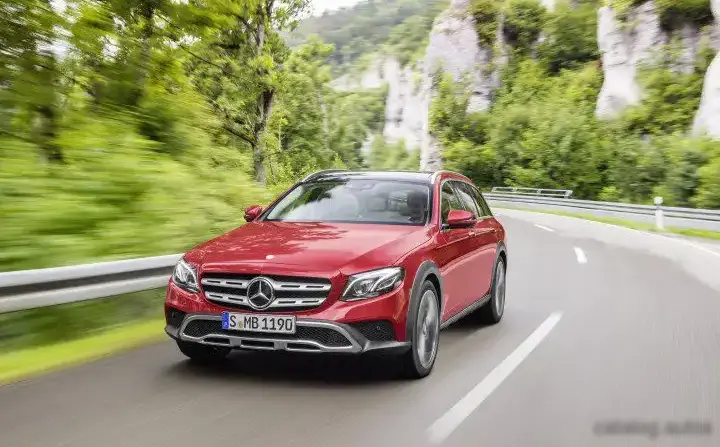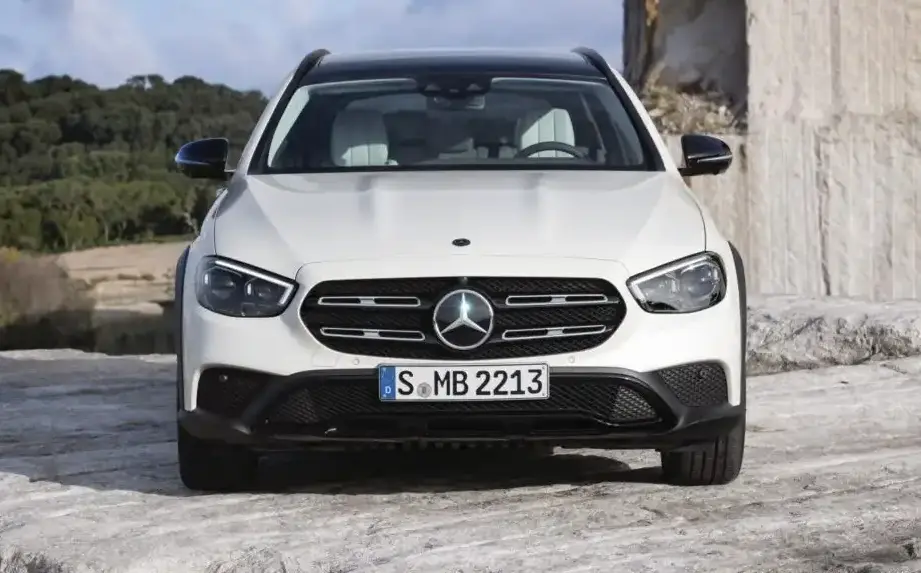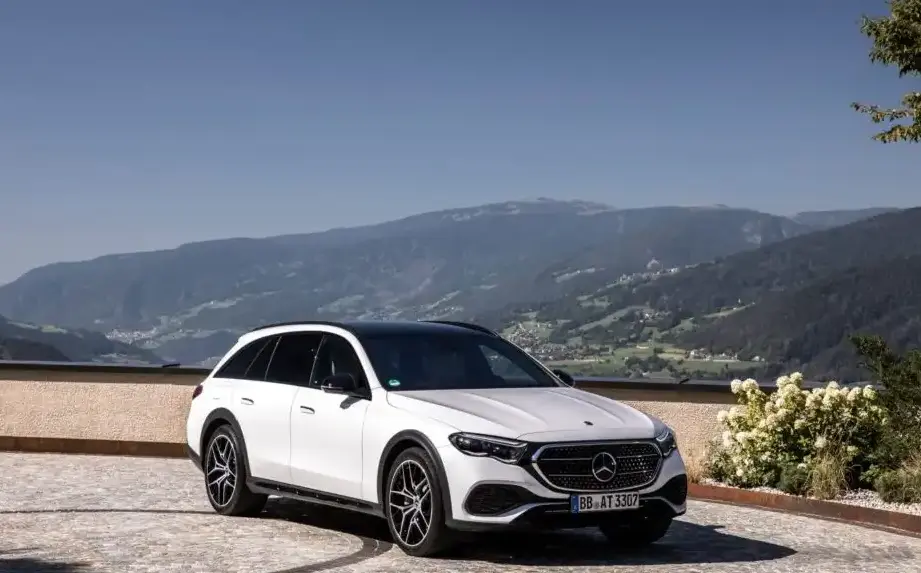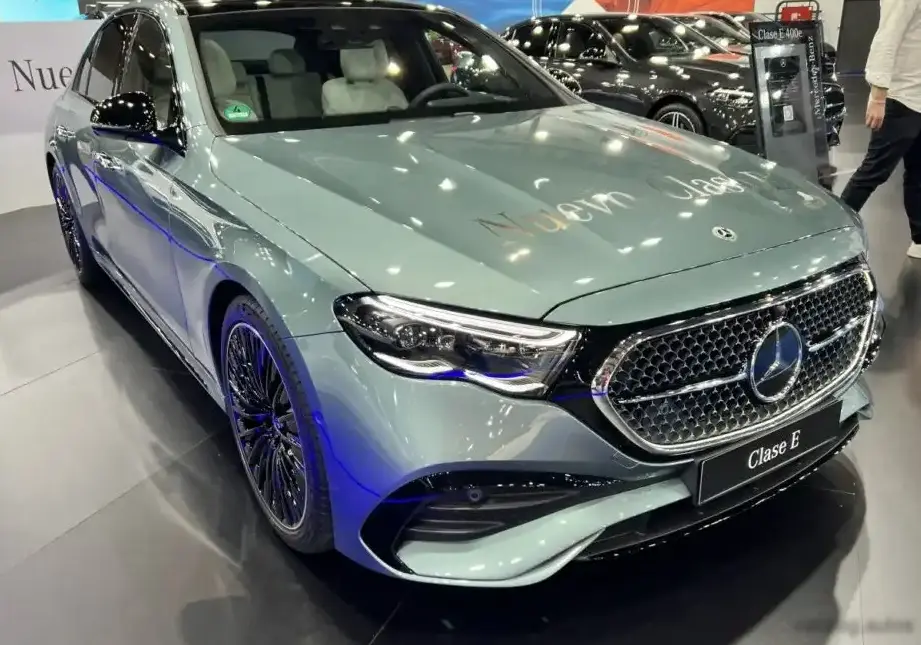
The Mercedes-Benz E 400e 4MATIC, introduced in April 2023 as part of the W214 E-Class generation, represents a significant step in the brand’s plug-in hybrid (PHEV) technology. Positioned as a mid-to-premium trim within the E-Class lineup, it offers a blend of performance and efficiency, appealing to buyers seeking a luxurious sedan with reduced emissions. The E 400e builds upon the foundation of the W214 platform, sharing its chassis and overall design with other E-Class variants but distinguished by its electrified powertrain. It is designed to compete with other luxury PHEV sedans such as the BMW 530e and Audi A6 50 TFSI e.
Technical Specifications
| Brand | Mercedes-Benz |
| Model | E-class |
| Generation | E-class (W214) |
| Type | E 400e (381 Hp) Plug-in Hybrid 4MATIC 9G-TRONIC |
| Start of production | April, 2023 |
| Powertrain Architecture | PHEV (Plug-in Hybrid Electric Vehicle) |
| Body type | Sedan |
| Seats | 5 |
| Doors | 4 |
| Combined fuel consumption (WLTP) | 0.6-8 l/100 km (392 – 29.4 US mpg, 470.8 – 35.3 UK mpg, 166.7 – 12.5 km/l) |
| CO2 emissions (WLTP) | 14-21 g/km |
| Fuel Type | Petrol / electricity |
| Acceleration 0 – 100 km/h | 5.3 sec |
| Acceleration 0 – 62 mph | 5.3 sec |
| Acceleration 0 – 60 mph | 5 sec |
| Maximum speed | 250 km/h (155.34 mph) |
| Emission standard | Euro 6e |
| Weight-to-power ratio | 5.7 kg/Hp, 175.6 Hp/tonne |
| Weight-to-torque ratio | 3.3 kg/Nm, 299.5 Nm/tonne |
| Gross battery capacity | 25.4 kWh |
| Net (usable) battery capacity | 19.53 kWh |
| Battery technology | Lithium-ion (Li-Ion) |
| Battery location | Under the trunk |
| All-electric range (WLTP) | 90-109 km (55.92 – 67.73 mi) |
| Average Energy consumption (WLTP) | 19.2-23 kWh/100 km (30.9 – 37.01 kWh/100 mi, 109 – 91 MPGe, 5.2 – 4.3 km/kWh, 3.2 – 2.7 mi/kWh) |
| Max speed (electric) | 140 km/h (86.99 mph) |
| Electric motor power | 129 Hp |
| Electric motor Torque | 440 Nm (324.53 lb.-ft.) |
| Electric motor location | Between the combustion engine and the transmission |
| Electric motor type | Synchronous |
| System power | 381 Hp |
| System torque | 650 Nm (479.42 lb.-ft.) |
| Power | 252 Hp @ 5800 rpm (126.1 Hp/l) |
| Torque | 400 Nm @ 3200-4000 rpm (295.02 lb.-ft. @ 3200-4000 rpm) |
| Engine layout | Front, Longitudinal |
| Engine Model/Code | M 254.920 |
| Engine displacement | 1999 cm3 (121.99 cu. in.) |
| Number of cylinders | 4 |
| Engine configuration | Inline |
| Cylinder Bore | 83 mm (3.27 in.) |
| Piston Stroke | 92.38 mm (3.64 in.) |
| Compression ratio | 10:1 |
| Number of valves per cylinder | 4 |
| Fuel injection system | Direct injection |
| Engine aspiration | Turbocharger, Intercooler |
| Valvetrain | DOHC |
| Engine oil capacity | 5.3 l (5.6 US qt | 4.66 UK qt) |
| Kerb Weight | 2170-2190 kg (4784.03 – 4828.12 lbs.) |
| Max. weight | 2830-2860 kg (6239.08 – 6305.22 lbs.) |
| Max load | 660-670 kg (1455.05 – 1477.1 lbs.) |
| Trunk (boot) space – minimum | 370 l (13.07 cu. ft.) |
| Fuel tank capacity | 50 l (13.21 US gal | 11 UK gal) |
| Max. roof load | 100 kg (220.46 lbs.) |
| Permitted trailer load with brakes (12%) | 2100 kg (4629.71 lbs.) |
| Permitted trailer load without brakes | 750 kg (1653.47 lbs.) |
| Length | 4949 mm (194.84 in.) |
| Width | 1880 mm (74.02 in.) |
| Height | 1480 mm (58.27 in.) |
| Wheelbase | 2961 mm (116.57 in.) |
| Front track | 1620 mm (63.78 in.) |
| Rear (Back) track | 1603 mm (63.11 in.) |
| Front overhang | 848 mm (33.39 in.) |
| Rear overhang | 1140 mm (44.88 in.) |
| Minimum turning circle (turning diameter) | 12 m (39.37 ft.) |
| Front brakes | Ventilated discs, 370 mm |
| Rear brakes | Ventilated discs, 360 mm |
| Number of gears and type of gearbox | 9 gears, automatic transmission G-TRONIC |
Powertrain & Engine Architecture
The E 400e utilizes a sophisticated plug-in hybrid system. At its core is a 2.0-liter inline-four cylinder engine, internally designated M 254.920, featuring a turbocharger and direct fuel injection. This engine produces 252 horsepower at 5800 rpm and 400 Nm (295 lb-ft) of torque between 3200 and 4000 rpm. Complementing the internal combustion engine is a 129 horsepower electric motor, integrated between the engine and the 9G-TRONIC nine-speed automatic transmission. The electric motor delivers 440 Nm (325 lb-ft) of torque. The combined system output is a substantial 381 horsepower and 650 Nm (479 lb-ft) of torque. The 25.4 kWh lithium-ion battery pack, located under the trunk floor, provides an all-electric range of 90-109 km (56-68 miles) according to WLTP standards. The battery can be charged via a standard household outlet or a dedicated charging station.
Driving Characteristics
The E 400e offers a refined and responsive driving experience. In electric mode, the vehicle operates silently and provides brisk acceleration for urban driving. Switching to hybrid mode seamlessly blends the power of the combustion engine and electric motor, delivering strong performance for highway cruising and overtaking. The 9G-TRONIC transmission provides smooth and efficient gear changes, contributing to the overall driving comfort. While the added weight of the battery pack slightly impacts handling compared to non-hybrid E-Class models, the 4MATIC all-wheel-drive system ensures excellent traction and stability in various conditions. The gear ratios are optimized for both fuel efficiency and performance, with a focus on maximizing electric driving range.
Equipment & Trim Levels
The E 400e typically comes well-equipped, reflecting its position as a premium trim level. Standard features include Mercedes-Benz’s MBUX infotainment system with a large touchscreen display, premium upholstery, automatic climate control, and a comprehensive suite of safety features. Optional extras include advanced driver-assistance systems, such as adaptive cruise control and lane-keeping assist, as well as upgraded audio systems and interior trim options. The interior design emphasizes luxury and technology, with high-quality materials and a modern aesthetic.
Chassis & Braking
The E 400e utilizes a sophisticated chassis design featuring a four-link front suspension and a multi-link rear suspension, both incorporating coil springs and transverse stabilizers. This setup provides a comfortable ride and precise handling. The braking system consists of ventilated discs on all four wheels, with larger discs at the front (370mm) compared to the rear (360mm). The vehicle is equipped with ABS (Anti-lock Braking System) and other electronic stability control systems to ensure safe and controlled braking performance.
Market Reception & Comparison
The E 400e has been generally well-received by automotive critics, praised for its blend of performance, efficiency, and luxury. Compared to other E-Class variants, the E 400e offers significantly improved fuel economy and reduced emissions, particularly for drivers who frequently commute in urban areas. However, the higher purchase price and the added weight of the battery pack are potential drawbacks. Against competitors like the BMW 530e and Audi A6 50 TFSI e, the E 400e offers a competitive combination of features, performance, and range.
Legacy
The W214 E 400e represents a key step in Mercedes-Benz’s commitment to electrification. The powertrain, while relatively new, is expected to demonstrate good long-term reliability, benefiting from Mercedes-Benz’s engineering expertise. On the used car market, the E 400e is likely to hold its value well, appealing to buyers seeking a luxurious and efficient plug-in hybrid sedan. The integration of a substantial battery pack and advanced hybrid technology positions this variant as a forward-looking model within the E-Class lineage.