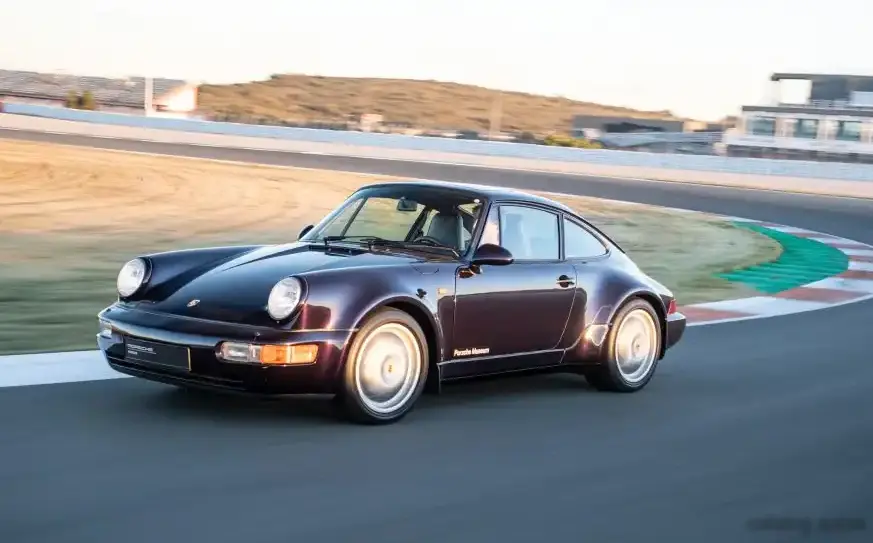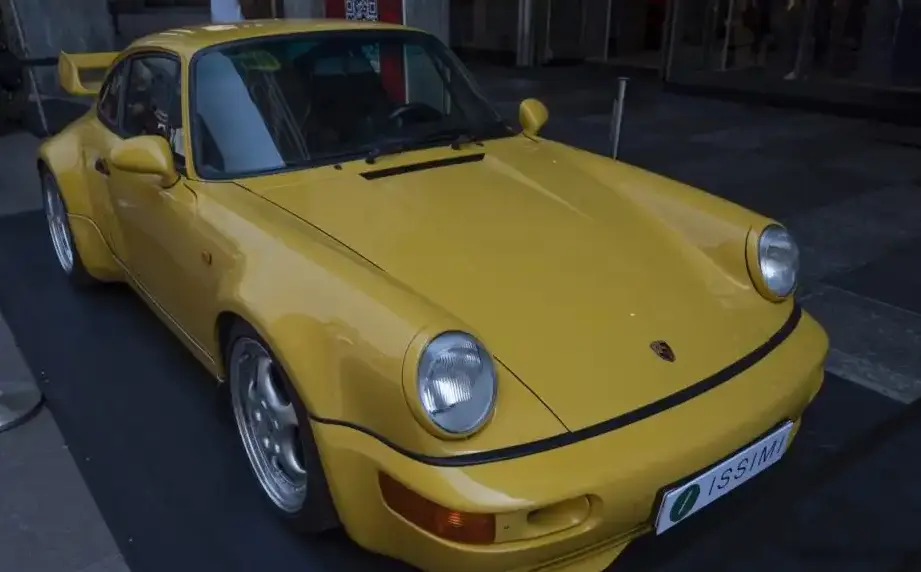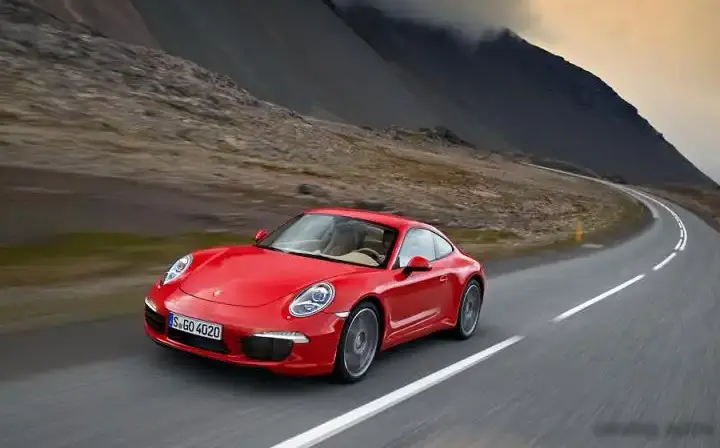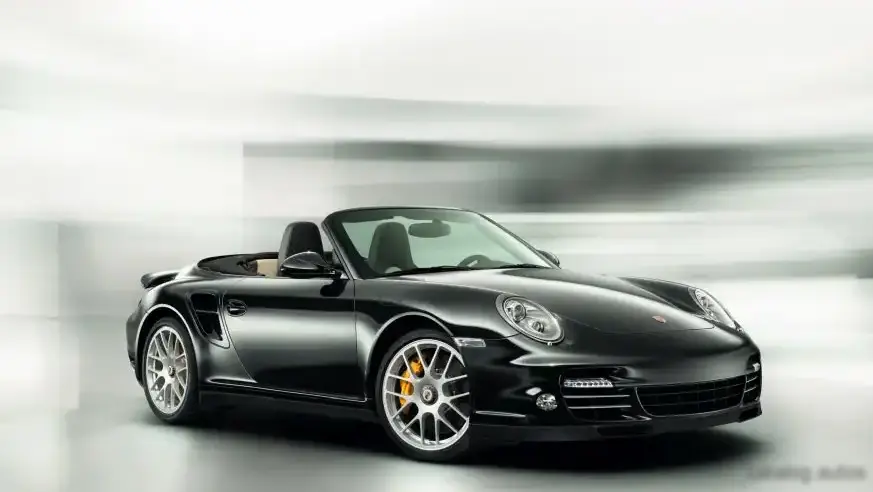
The Porsche 911 Carrera 4 GTS Cabriolet, produced from 2010 to 2011, represents a high-performance variant within the 997 generation (facelift) of Porsche’s iconic sports car. Positioned as a step above the standard Carrera 4 Cabriolet, the GTS model aimed to bridge the gap between the Carrera and the more track-focused GT3, offering a blend of everyday usability and exhilarating performance. This particular iteration featured a 3.8-liter flat-six engine paired with Porsche’s innovative PDK (Porsche Doppelkupplung) seven-speed dual-clutch transmission and an all-wheel-drive system. It was a premium offering within the 997.2 range, appealing to drivers seeking a more engaging and powerful open-top experience.
Technical Specifications
| Brand | Porsche |
| Model | 911 |
| Generation | 911 Cabriolet (997, facelift 2008) |
| Type (Engine) | Carrera 4 GTS 3.8 (408 Hp) PDK |
| Start of production | 2010 |
| End of production | 2011 |
| Powertrain Architecture | Internal Combustion engine |
| Body type | Cabriolet |
| Seats | 4 |
| Doors | 2 |
| Fuel consumption (economy) – urban | 16.1 l/100 km (14.6 US mpg, 17.5 UK mpg, 6.2 km/l) |
| Fuel consumption (economy) – extra urban | 7.7 l/100 km (30.5 US mpg, 36.7 UK mpg, 13 km/l) |
| Fuel consumption (economy) – combined | 10.7 l/100 km (22 US mpg, 26.4 UK mpg, 9.3 km/l) |
| CO2 emissions | 251 g/km |
| Fuel Type | Petrol (Gasoline) |
| Acceleration 0 – 100 km/h | 4.4-4.6 sec |
| Acceleration 0 – 62 mph | 4.4-4.6 sec |
| Acceleration 0 – 60 mph | 4.2 sec |
| Maximum speed | 300 km/h (186.41 mph) |
| Emission standard | Euro 5 |
| Weight-to-power ratio | 3.9 kg/Hp, 255.8 Hp/tonne |
| Weight-to-torque ratio | 3.8 kg/Nm, 263.3 Nm/tonne |
| Power | 408 Hp @ 7300 rpm |
| Power per litre | 107.4 Hp/l |
| Torque | 420 Nm @ 4200 rpm (309.78 lb.-ft. @ 4200 rpm) |
| Engine layout | Rear, Longitudinal |
| Engine Model/Code | MA1.01S |
| Engine displacement | 3800 cm3 (231.89 cu. in.) |
| Number of cylinders | 6 |
| Engine configuration | Boxer |
| Compression ratio | 12.5:1 |
| Fuel injection system | Direct injection |
| Engine oil capacity | 7.5 l (7.93 US qt, 6.6 UK qt) |
| Coolant | 28.9 l (30.54 US qt, 25.43 UK qt) |
| Kerb Weight | 1595 kg (3516.37 lbs) |
| Max. weight | 1970 kg (4343.11 lbs) |
| Max load | 375 kg (826.73 lbs) |
| Trunk (boot) space – maximum | 105 l (3.71 cu. ft.) |
| Fuel tank capacity | 67 l (17.7 US gal, 14.74 UK gal) |
| Length | 4435 mm (174.61 in) |
| Width | 1852 mm (72.91 in) |
| Height | 1300 mm (51.18 in) |
| Wheelbase | 2350 mm (92.52 in) |
| Drag coefficient (Cd) | 0.31 |
| Minimum turning circle | 10.9 m (35.76 ft) |
| Drive wheel | All wheel drive (4×4) |
| Number of gears and type of gearbox | 7 gears, automatic transmission PDK |
| Front suspension | Independent type McPherson |
| Rear suspension | Independent multi-link suspension |
| Front brakes | Ventilated discs, 330 mm |
| Rear brakes | Ventilated discs, 330 mm |
| Assisting systems | ABS (Anti-lock braking system) |
| Steering type | Steering rack and pinion |
| Power steering | Hydraulic Steering |
| Tires size | 235/35 ZR19; 305/30 ZR19 |
| Wheel rims size | 8.5J x 19; 11J x 19 |
Powertrain & Engine Architecture
At the heart of the 911 Carrera 4 GTS Cabriolet lies the MA1.01S engine, a 3.8-liter naturally aspirated flat-six. This engine builds upon the 3.6-liter found in earlier 997 models, benefiting from an increased bore and stroke. Direct fuel injection (DFI) is a key feature, optimizing combustion efficiency and contributing to the engine’s power output. The engine produces 408 horsepower at 7,300 rpm and 420 Nm (309.78 lb-ft) of torque at 4,200 rpm. The flat-six configuration, also known as a boxer engine, provides a low center of gravity, enhancing handling and stability. The engine is longitudinally mounted at the rear of the vehicle, a defining characteristic of the 911. Paired with the engine is Porsche’s seven-speed PDK transmission. The PDK isn’t a traditional automatic; it’s a dual-clutch system that offers incredibly fast and smooth gear changes, both in automatic and manual modes. This transmission significantly contributes to the car’s acceleration and responsiveness.
Driving Characteristics
The combination of the 3.8-liter engine and the PDK transmission delivers a thrilling driving experience. Acceleration from 0 to 60 mph takes approximately 4.2 seconds, and the car can reach a top speed of 300 km/h (186 mph). The PDK transmission allows for precise control, and the driver can select different driving modes – including Sport and Sport Plus – to adjust the shift points and throttle response. Compared to the standard Carrera 4 Cabriolet, the GTS offers noticeably more power and a more aggressive character. While the standard car is perfectly capable, the GTS provides a more visceral and engaging experience. Compared to a manual transmission equipped model, the PDK offers quicker shifts and easier operation, particularly in traffic, but some purists may prefer the greater driver involvement of a manual gearbox. The all-wheel-drive system provides excellent traction, especially in inclement weather, making the GTS a usable sports car year-round.
Equipment & Trim Levels
The Carrera 4 GTS Cabriolet came standard with a generous array of features. Interior appointments included leather upholstery, sport seats, and a three-spoke steering wheel. Standard equipment also included Porsche’s Communication Management (PCM) system with navigation, a Bose sound system, and automatic climate control. The GTS also featured unique exterior styling cues, including a sport design package with wider rear fenders and a rear spoiler. Optional extras included adaptive sport seats, carbon fiber interior trim, and a lift system for the front axle, which raised the car’s ride height to help navigate speed bumps and steep driveways. Paint options were extensive, allowing buyers to personalize their vehicles.
Chassis & Braking
The 997.2 generation 911 benefited from a revised chassis compared to its predecessor. The Carrera 4 GTS Cabriolet featured Porsche Active Suspension Management (PASM), which allowed the driver to adjust the damper settings for a more comfortable or more sporty ride. The braking system consisted of ventilated discs on all four wheels, providing ample stopping power. The front brakes measured 330 mm in diameter, while the rear brakes were also 330 mm. ABS (Anti-lock Braking System) was standard. The all-wheel-drive system utilizes a viscous coupling to distribute power between the front and rear axles, providing optimal traction in various conditions.
Market Reception & Comparison
The 911 Carrera 4 GTS Cabriolet was well-received by automotive critics. Reviewers praised its powerful engine, responsive handling, and luxurious interior. The PDK transmission was also lauded for its speed and smoothness. Compared to the standard Carrera 4 Cabriolet, the GTS offered a significant performance upgrade for a relatively modest price increase. Fuel economy, however, was not a strong point, with combined fuel consumption of around 22 US mpg. Reliability was generally good, although some owners reported issues with the intermediate shaft (IMS) bearing, a common concern for some 997-generation 911s. However, the GTS engine, being a later-generation design, was considered less prone to IMS failure than earlier engines.
Legacy
The 911 Carrera 4 GTS Cabriolet remains a desirable sports car in the used market. Its combination of performance, luxury, and open-top driving enjoyment continues to appeal to enthusiasts. Well-maintained examples command a premium price. The MA1.01S engine is considered robust and reliable, although regular maintenance is essential. The PDK transmission has also proven to be durable, provided it is serviced according to Porsche’s recommendations. The 997.2 generation 911, and particularly the GTS models, are often seen as the sweet spot in the 911 lineage, offering a blend of classic 911 character and modern technology.