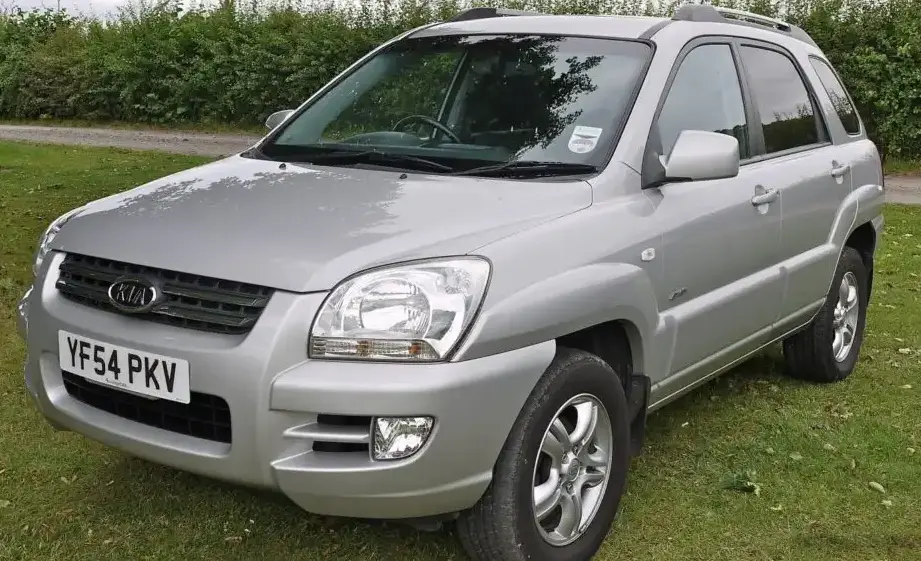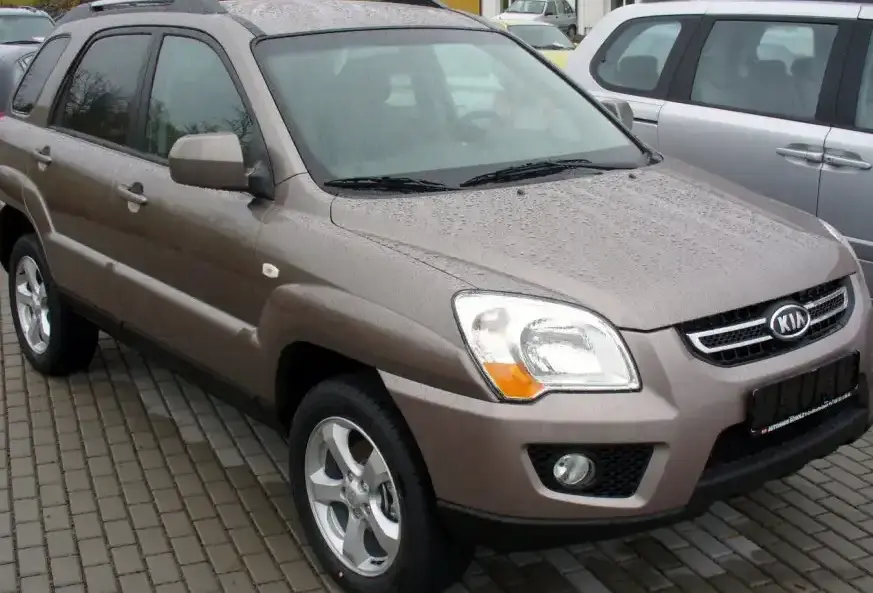
The Kia Sportage II, specifically the facelifted version released in 2008, represented a significant step forward for the South Korean automaker in the competitive compact SUV segment. This iteration, produced through 2010, aimed to broaden the Sportage’s appeal with updated styling, improved interior appointments, and a range of engine options. Among these, the 2.7-liter V6 engine paired with a four-speed automatic transmission and four-wheel drive (4WD) offered a compelling combination of power and all-weather capability, positioning itself as a mid-range offering within the Sportage lineup. This variant was primarily targeted towards buyers seeking a comfortable and capable SUV for family use, with a preference for the refinement of a V6 engine over the fuel economy of smaller displacement options.
Technical Specifications
| Brand | Kia |
| Model | Sportage |
| Generation | Sportage II (facelift, 2008) |
| Type (Engine) | 2.7 V6 (175 Hp) 4WD Automatic |
| Start of production | 2008 |
| End of production | 2010 |
| Powertrain Architecture | Internal Combustion engine |
| Body type | SUV |
| Seats | 5 |
| Doors | 5 |
| Fuel consumption (urban) | 13.2 l/100 km (17.8 US mpg, 21.4 UK mpg, 7.6 km/l) |
| Fuel consumption (extra urban) | 8.2 l/100 km (28.7 US mpg, 34.4 UK mpg, 12.2 km/l) |
| Fuel consumption (combined) | 10 l/100 km (23.5 US mpg, 28.2 UK mpg, 10 km/l) |
| CO2 emissions | 237 g/km |
| Fuel Type | Petrol (Gasoline) |
| Acceleration 0 – 100 km/h | 10.5 sec |
| Acceleration 0 – 62 mph | 10.5 sec |
| Acceleration 0 – 60 mph | 10 sec |
| Maximum speed | 180 km/h (111.85 mph) |
| Emission standard | Euro 4 |
| Weight-to-power ratio | 9 kg/Hp, 111.5 Hp/tonne |
| Weight-to-torque ratio | 6.5 kg/Nm, 153.5 Nm/tonne |
| Power | 175 Hp @ 6000 rpm |
| Power per litre | 65.9 Hp/l |
| Torque | 241 Nm @ 4000 rpm (177.75 lb.-ft. @ 4000 rpm) |
| Engine layout | Front, Transverse |
| Engine Model/Code | Delta / G6BA |
| Engine displacement | 2657 cm3 (162.14 cu. in.) |
| Number of cylinders | 6 |
| Engine configuration | V-engine |
| Number of valves per cylinder | 4 |
| Fuel injection system | Multi-port manifold injection |
| Engine aspiration | Naturally aspirated engine |
| Engine oil capacity | 4.5 l (4.76 US qt | 3.96 UK qt) |
| Coolant capacity | 7 l (7.4 US qt | 6.16 UK qt) |
| Kerb Weight | 1570 kg (3461.26 lbs.) |
| Max. weight | 2170 kg (4784.03 lbs.) |
| Max load | 600 kg (1322.77 lbs.) |
| Trunk (boot) space – minimum | 391 l (13.81 cu. ft.) |
| Length | 4351 mm (171.3 in.) |
| Width | 1801 mm (70.91 in.) |
| Height | 1694 mm (66.69 in.) |
| Wheelbase | 2629 mm (103.5 in.) |
| Front track | 1539 mm (60.59 in.) |
| Rear (Back) track | 1539 mm (60.59 in.) |
| Ride height (ground clearance) | 196 mm (7.72 in.) |
| Drag coefficient (Cd) | 0.40 |
| Minimum turning circle | 10.8 m (35.43 ft.) |
| Drive wheel | All wheel drive (4×4) |
| Number of gears | 4 |
| Gearbox type | automatic transmission |
| Front brakes | Ventilated discs |
| Rear brakes | Disc |
| Assisting systems | ABS (Anti-lock braking system) |
| Steering type | Steering rack and pinion |
| Tires size | 215/65 R16 |
| Wheel rims size | 16 |
Powertrain & Engine Architecture
The heart of this Sportage variant is the Kia-developed 2.7-liter (2657 cc) Delta engine, internally designated as the G6BA. This naturally aspirated V6 engine features a 60-degree V-angle and utilizes a cast iron block with an aluminum cylinder head. It employs a multi-port fuel injection (MPI) system, delivering fuel directly into the intake ports just before the intake valves. The engine is equipped with four valves per cylinder (two intake and two exhaust), operated by dual overhead camshafts (DOHC). This configuration contributes to a relatively broad torque curve and a respectable power output for its displacement. The four-speed automatic transmission, while not the most modern unit by contemporary standards, was chosen for its reliability and smooth operation. It features electronically controlled shifts and a torque converter for enhanced drivability. The 4WD system is a part-time system, typically operating in front-wheel drive until wheel slip is detected, at which point it engages the rear wheels for added traction.
Driving Characteristics
The 2.7-liter V6 and four-speed automatic combination in the Sportage offered a noticeable step up in performance compared to the base 2.0-liter four-cylinder engine. While not a sports car, the V6 provided adequate acceleration for everyday driving and highway merging, with a 0-60 mph time of around 10 seconds. The automatic transmission, while smooth, lacked the responsiveness of a manual gearbox, and the limited number of gears meant the engine could sometimes feel strained during aggressive acceleration. The 4WD system provided enhanced stability and traction in inclement weather conditions, making it a suitable choice for drivers in regions with snow or rain. The gear ratios were tuned for comfortable cruising rather than outright performance, prioritizing fuel efficiency and a relaxed driving experience.
Equipment & Trim Levels
The 2.7 V6 4WD Automatic trim typically included a generous array of standard features. These commonly included air conditioning, power windows and locks, a CD player with AM/FM radio, and basic cloth upholstery. Higher trim levels, often denoted by specific packages, added features such as leather seats, a sunroof, alloy wheels, and upgraded audio systems. Safety features such as ABS (Anti-lock Braking System) were standard across the range. Optional extras could include a navigation system, heated seats, and a rear parking sensor system.
Chassis & Braking
The Sportage II utilized a conventional body-on-frame construction, providing a robust and durable platform. The suspension consisted of independent front suspension with MacPherson struts and a multi-link rear suspension. This setup aimed to balance ride comfort with handling stability. The braking system featured ventilated discs on the front wheels and solid discs on the rear, providing adequate stopping power for the vehicle’s weight. The steering was a rack-and-pinion system, offering reasonably precise steering feel.
Market Reception & Comparison
The 2.7 V6 Sportage received generally positive reviews, with critics praising its comfortable ride, spacious interior, and capable 4WD system. However, the four-speed automatic transmission was often criticized for being outdated compared to the five or six-speed automatics offered by competitors. Fuel economy was also a concern, with the V6 engine consuming significantly more fuel than the four-cylinder option. Compared to rivals like the Honda CR-V and Toyota RAV4, the Sportage offered a more affordable price point but lacked the same level of refinement and fuel efficiency. The 2.0L engine was more fuel efficient, but lacked the power of the V6. The V6 was a good middle ground for those wanting more power without the cost of a premium SUV.
Legacy
The Kia Sportage II, particularly the 2.7 V6 4WD Automatic variant, has proven to be a relatively reliable vehicle in the used car market. The Delta V6 engine is known for its durability, although regular maintenance is crucial to prevent issues such as oil leaks and timing belt failure. The four-speed automatic transmission is generally robust, but may exhibit signs of wear and tear at higher mileages. Today, these Sportages are often sought after by buyers looking for an affordable and capable SUV with a proven track record. While not a collector’s item, the 2.7 V6 Sportage represents a significant milestone in Kia’s evolution as a mainstream automotive manufacturer.