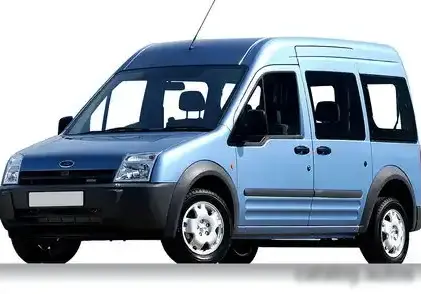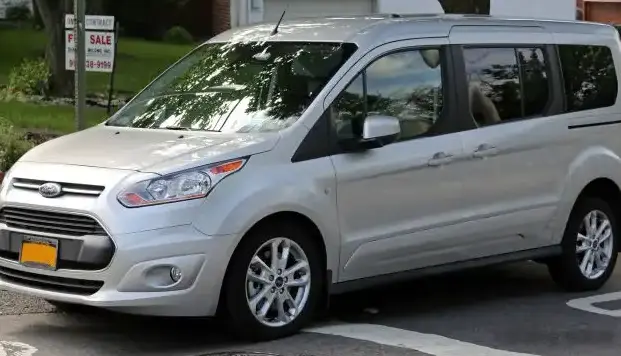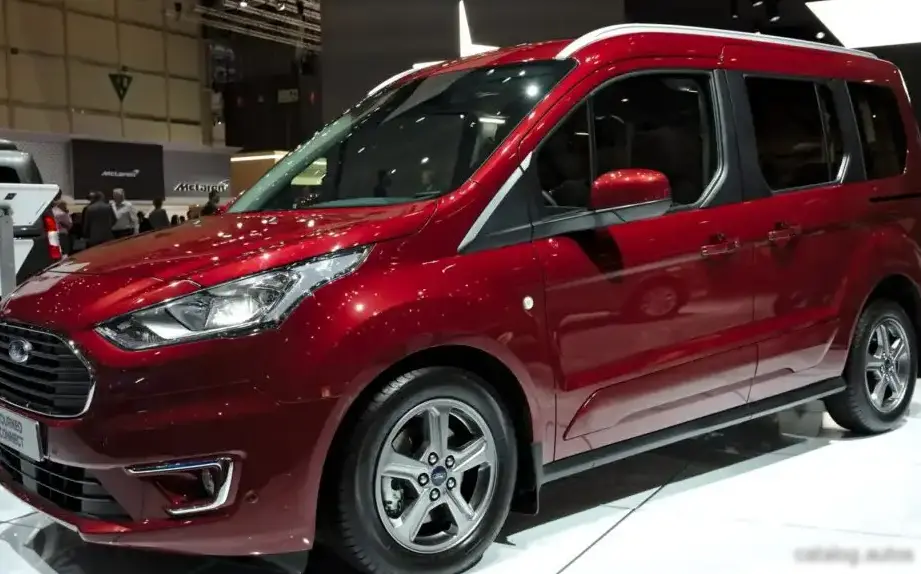
The Ford Tourneo Connect II, particularly the facelifted version introduced in 2018, represented Ford’s entry into the compact leisure activity vehicle (LAV) segment in Europe. Derived from the Ford Transit Connect commercial van, the Tourneo Connect aimed to provide a more family-friendly and versatile alternative to traditional MPVs. The 1.0 EcoBoost 100 horsepower variant, equipped with a six-speed manual transmission, was offered from 2018 through 2019 and served as an entry-level option within the Tourneo Connect lineup. This model aimed to balance affordability with reasonable fuel efficiency and practicality for everyday use.
Technical Specifications
| Brand | Ford |
| Model | Tourneo Connect |
| Generation | Tourneo Connect II (facelift 2018) |
| Type (Engine) | 1.0 EcoBoost (100 Hp) S&S |
| Start of production | 2018 |
| End of production | 2019 |
| Powertrain Architecture | Internal Combustion engine |
| Body type | Minivan |
| Seats | 5 |
| Doors | 5 |
| Fuel consumption (urban) | 6.8-7.1 l/100 km (34.6 – 33.1 US mpg, 41.5 – 39.8 UK mpg, 14.7 – 14.1 km/l) |
| Fuel consumption (extra urban) | 5.5-5.7 l/100 km (42.8 – 41.3 US mpg, 51.4 – 49.6 UK mpg, 18.2 – 17.5 km/l) |
| Fuel consumption (combined) | 5.9-6.2 l/100 km (39.9 – 37.9 US mpg, 47.9 – 45.6 UK mpg, 16.9 – 16.1 km/l) |
| CO2 emissions | 139-135 g/km |
| Fuel Type | Petrol (Gasoline) |
| Acceleration 0 – 100 km/h | 14 sec |
| Acceleration 0 – 62 mph | 14 sec |
| Acceleration 0 – 60 mph | 13.3 sec |
| Maximum speed | 170 km/h (105.63 mph) |
| Emission standard | Euro 6 d-TEMP |
| Weight-to-power ratio | 15.2 kg/Hp, 65.9 Hp/tonne |
| Weight-to-torque ratio | 8.9 kg/Nm, 112.1 Nm/tonne |
| Power | 100 Hp @ 4500 rpm |
| Power per litre | 100.1 Hp/l |
| Torque | 170 Nm @ 1400-4000 rpm (125.39 lb.-ft. @ 1400-4000 rpm) |
| Engine layout | Front, Transverse |
| Engine Model/Code | B3GA |
| Engine displacement | 999 cm3 (60.96 cu. in.) |
| Number of cylinders | 3 |
| Engine configuration | Inline |
| Cylinder Bore | 71.9 mm (2.83 in.) |
| Piston Stroke | 82 mm (3.23 in.) |
| Number of valves per cylinder | 4 |
| Fuel injection system | Direct injection |
| Engine aspiration | Turbocharger, Intercooler |
| Valvetrain | DOHC |
| Engine oil capacity | 4.97 l (5.25 US qt | 4.37 UK qt) |
| Coolant | 5.5 l (5.81 US qt | 4.84 UK qt) |
| Kerb Weight | 1517-1652 kg (3344.41 – 3642.04 lbs.) |
| Max. weight | 2145-2150 kg (4728.92 – 4739.94 lbs.) |
| Max load | 498-628 kg (1097.9 – 1384.5 lbs.) |
| Trunk (boot) space – minimum | 1029 l (36.34 cu. ft.) |
| Trunk (boot) space – maximum | 1838 l (64.91 cu. ft.) |
| Permitted trailer load with brakes (12%) | 1149-1202 kg (2533.11 – 2649.96 lbs.) |
| Permitted trailer load without brakes | 750 kg (1653.47 lbs.) |
| Permitted towbar download | 75 kg (165.35 lbs.) |
| Length | 4425 mm (174.21 in.) |
| Width | 1835 mm (72.24 in.) |
| Width with mirrors folded | 1966 mm (77.4 in.) |
| Width including mirrors | 2137 mm (84.13 in.) |
| Height | 1847 mm (72.72 in.) |
| Wheelbase | 2662 mm (104.8 in.) |
| Minimum turning circle | 11.0 m (36.09 ft.) |
| Drivetrain | Front wheel drive |
| Number of gears and type of gearbox | 6 gears, manual transmission |
| Front suspension | Independent, type McPherson with coil spring and anti-roll bar |
| Rear suspension | Semi-dependent beam with stabilizer lateral stability |
| Front brakes | Ventilated discs |
| Rear brakes | Disc |
| Assisting systems | ABS (Anti-lock braking system) |
| Steering type | Steering rack and pinion |
| Tires size | 205/60 R16 |
| Wheel rims size | 6.5J x 16 |
INTRODUCTION
The Ford Tourneo Connect II, launched in 2013 and receiving a significant facelift in 2018, was a popular choice for families seeking a practical and versatile vehicle. Built on the global B-platform (shared with the Ford Focus and C-Max), the Tourneo Connect offered a spacious interior and a range of efficient engine options. The 1.0 EcoBoost 100 hp variant, introduced with the 2018 refresh, was positioned as the entry point to the range, appealing to buyers prioritizing fuel economy and lower running costs. It was a key offering in the European market, where compact MPVs and LAVs are highly sought after.
Powertrain & Engine Architecture
The heart of this Tourneo Connect variant is the Ford 1.0 EcoBoost engine, specifically the B3GA code. This is a 999cc, three-cylinder turbocharged gasoline engine. It utilizes direct fuel injection, a technology that improves fuel efficiency and reduces emissions by injecting fuel directly into the combustion chamber. The engine features a double overhead camshaft (DOHC) valvetrain with four valves per cylinder, optimizing airflow for improved performance. The turbocharger, coupled with an intercooler, provides a boost in power and torque despite the small displacement. The six-speed manual transmission was the standard offering for this trim, providing a balance between fuel efficiency and driver control. The Start & Stop system, denoted by the “S&S” in the model name, automatically shuts off the engine when the vehicle is stationary (e.g., at traffic lights) to further reduce fuel consumption and emissions.
Driving Characteristics
The 1.0 EcoBoost 100 hp engine in the Tourneo Connect delivers adequate performance for everyday driving. Acceleration from 0-60 mph takes around 13.3 seconds, and top speed is limited to 170 km/h (105.63 mph). While not particularly sporty, the engine provides sufficient torque (170 Nm or 125.39 lb-ft) from 1400-4000 rpm, making it reasonably responsive in urban and highway conditions. Compared to higher-output versions of the Tourneo Connect (such as those with the 1.5 EcoBoost), this variant feels less powerful, especially when fully loaded with passengers and luggage. The six-speed manual transmission allows for precise gear selection, and the gear ratios are well-suited for maintaining fuel efficiency. The relatively light weight of the vehicle (1517-1652 kg) helps to mitigate the effects of the smaller engine.
Equipment & Trim Levels
The 1.0 EcoBoost 100 hp variant of the Tourneo Connect typically came with a reasonable level of standard equipment. This included features such as air conditioning, power windows, central locking, and a basic audio system with USB connectivity. Safety features such as ABS, electronic stability control, and multiple airbags were also standard. Interior upholstery was typically cloth, and the dashboard featured a functional, if somewhat basic, design. Optional extras included alloy wheels, a touchscreen infotainment system with navigation, rear parking sensors, and cruise control. Trim levels varied slightly depending on the market, but this engine was generally offered in the base or mid-range specification.
Chassis & Braking
The Tourneo Connect II utilizes a McPherson strut front suspension with a coil spring and anti-roll bar, providing a comfortable ride and decent handling. The rear suspension employs a semi-dependent beam with a stabilizer, which contributes to stability and load-carrying capacity. The braking system consists of ventilated discs on the front wheels and solid discs on the rear. ABS (Anti-lock Braking System) is standard, enhancing braking performance and safety. The steering is rack and pinion, providing precise and responsive control.
Market Reception & Comparison
The 1.0 EcoBoost 100 hp Tourneo Connect was generally well-received by critics as a practical and economical option. It was praised for its fuel efficiency, spacious interior, and versatility. However, some reviewers noted that the engine could feel underpowered when the vehicle was fully loaded or when driving on steep inclines. Compared to the 1.5 EcoBoost variants, the 1.0 EcoBoost offered lower running costs but sacrificed some performance. The 1.0 EcoBoost also provided better fuel economy than the diesel options available at the time, making it an attractive choice for drivers who primarily cover shorter distances.
Legacy
The 1.0 EcoBoost engine has proven to be a reliable and durable unit, and the Tourneo Connect II, in general, has a good reputation for dependability. The 1.0 EcoBoost variant, while not the most powerful option, offers a good balance of fuel efficiency and practicality. On the used car market, these models represent a relatively affordable entry point into the compact LAV segment. Regular maintenance, including oil changes and timing belt replacements (where applicable), is crucial for ensuring the long-term reliability of the engine. The Tourneo Connect II continues to be a popular choice for families and small businesses seeking a versatile and economical vehicle.