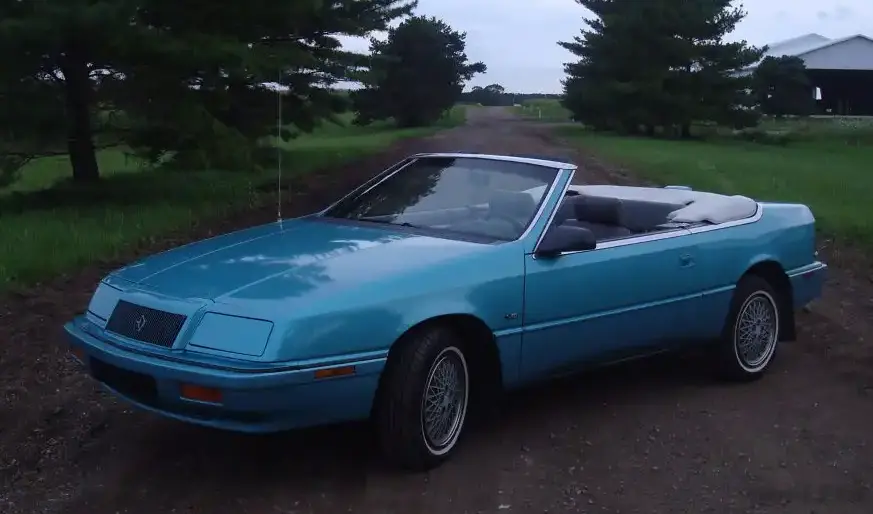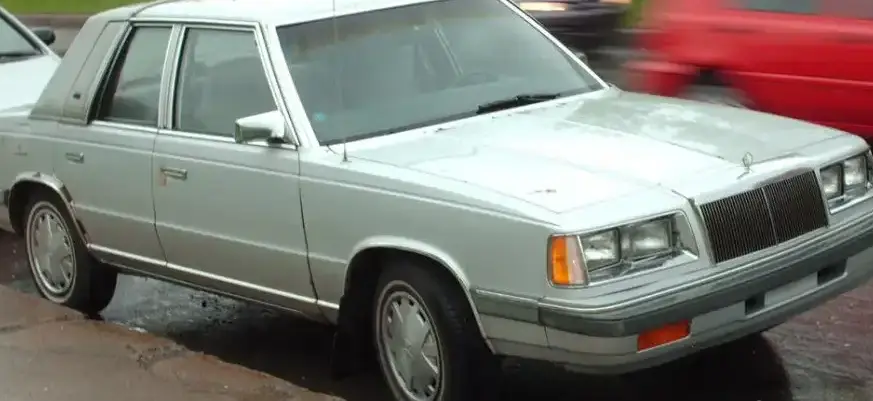
The Chrysler Le Baron 3.0i V6, produced between 1990 and 1994, represented a mid-range offering within the Le Baron lineup during its final generation (1989-1995). Positioned above the base 2.5-liter four-cylinder models, the 3.0i provided a noticeable step up in performance and refinement, appealing to buyers seeking a more comfortable and capable mid-size sedan. This variant was primarily sold in the North American market, where the Le Baron competed with other domestic and import sedans like the Ford Taurus, Chevrolet Lumina, and Toyota Camry. The 3.0i aimed to bridge the gap between affordability and luxury within Chrysler’s portfolio.
Technical Specifications
| Brand | Chrysler |
| Model | Le Baron |
| Generation | Le Baron |
| Type (Engine) | 3.0 i V6 (143 Hp) |
| Start of production | 1990 |
| End of production | 1994 |
| Powertrain Architecture | Internal Combustion engine |
| Body type | Sedan |
| Seats | 5 |
| Doors | 4 |
| Fuel consumption (urban) | 14.2 l/100 km (16.6 US mpg, 19.9 UK mpg, 7 km/l) |
| Fuel consumption (extra urban) | 7.1 l/100 km (33.1 US mpg, 39.8 UK mpg, 14.1 km/l) |
| Fuel consumption (combined) | 9.1 l/100 km (25.8 US mpg, 31 UK mpg, 11 km/l) |
| Fuel Type | Petrol (Gasoline) |
| Acceleration 0 – 100 km/h | 11.1 sec |
| Acceleration 0 – 62 mph | 11.1 sec |
| Acceleration 0 – 60 mph | 10.5 sec |
| Maximum speed | 180 km/h (111.85 mph) |
| Weight-to-power ratio | 9.3 kg/Hp, 107.5 Hp/tonne |
| Weight-to-torque ratio | 5.7 kg/Nm, 174.4 Nm/tonne |
| Power | 143 Hp @ 5000 rpm |
| Power per litre | 48.1 Hp/l |
| Torque | 232 Nm @ 2800 rpm (171.11 lb.-ft. @ 2800 rpm) |
| Engine layout | Front, Transverse |
| Engine Model/Code | 6G72 |
| Engine displacement | 2972 cm3 (181.36 cu. in.) |
| Number of cylinders | 6 |
| Engine configuration | V-engine |
| Cylinder Bore | 91.1 mm (3.59 in.) |
| Piston Stroke | 76 mm (2.99 in.) |
| Compression ratio | 8.9:1 |
| Number of valves per cylinder | 2 |
| Fuel injection system | Multi-port manifold injection |
| Engine aspiration | Naturally aspirated engine |
| Valvetrain | OHC |
| Engine oil capacity | 4.5 l (4.76 US qt | 3.96 UK qt) |
| Coolant capacity | 9.1 l (9.62 US qt | 8.01 UK qt) |
| Kerb Weight | 1330 kg (2932.15 lbs.) |
| Max. weight | 1870 kg (4122.64 lbs.) |
| Max load | 540 kg (1190.5 lbs.) |
| Trunk (boot) space – minimum | 410 l (14.48 cu. ft.) |
| Fuel tank capacity | 61 l (16.11 US gal | 13.42 UK gal) |
| Length | 4640 mm (182.68 in.) |
| Width | 1730 mm (68.11 in.) |
| Height | 1365 mm (53.74 in.) |
| Wheelbase | 2630 mm (103.54 in.) |
| Front track | 1465 mm (57.68 in.) |
| Rear (Back) track | 1455 mm (57.28 in.) |
| Drivetrain Architecture | The Internal combustion engine (ICE) drives the front wheels of the vehicle. |
| Drive wheel | Front wheel drive |
| Number of gears and type of gearbox | 4 gears, automatic transmission |
| Front suspension | Coil spring |
| Rear suspension | Coil spring |
| Front brakes | Ventilated discs |
| Rear brakes | Disc |
| Assisting systems | ABS (Anti-lock braking system) |
| Steering type | Steering rack and pinion |
| Power steering | Hydraulic Steering |
| Tires size | 205/60 R15 |
Powertrain & Engine Architecture
The heart of the Le Baron 3.0i was the 6G72 engine, a 2.97-liter (181.36 cubic inches) naturally aspirated V6. This engine, part of Chrysler’s “third-generation” V6 family, featured a 60-degree V-angle and a single overhead camshaft (OHC) design operating two valves per cylinder. The 6G72 utilized multi-port fuel injection, delivering fuel directly to each intake port for improved efficiency and responsiveness. The engine produced 143 horsepower at 5000 rpm and 171 lb-ft of torque at 2800 rpm. Paired exclusively with a four-speed automatic transmission, the 6G72 offered smooth, if not particularly sporty, shifts. The automatic transmission was a Chrysler A727 derivative, known for its durability but also for its relatively conservative gear ratios, prioritizing comfort over outright acceleration.
Driving Characteristics
The 3.0i Le Baron offered a comfortable and composed driving experience. While not a performance leader, the V6 provided adequate power for everyday driving and highway cruising. Acceleration from 0-60 mph took around 10.5 seconds, which was competitive for its class at the time. The automatic transmission, while smooth, did contribute to a slight feeling of lethargy compared to the available five-speed manual transmission offered with the 2.5-liter engine. The gear ratios were tuned for fuel economy and relaxed cruising, meaning the engine often felt strained during aggressive acceleration. Steering was light and easy, making the Le Baron simple to maneuver in urban environments. The suspension, tuned for comfort, absorbed bumps and road imperfections well, but didn’t offer particularly engaging handling.
Equipment & Trim Levels
The Le Baron 3.0i typically came standard with features such as air conditioning, power windows and locks, a tilt steering wheel, and an AM/FM stereo. Higher trim levels, often denoted by “LX” or “Limited” badges, added features like upgraded upholstery (often velour or leather), a premium sound system, cruise control, and alloy wheels. Optional extras included a sunroof, upgraded interior trim, and a rear window defroster. The interior design was generally conservative, reflecting the Le Baron’s focus on practicality and comfort. Dashboard layouts were straightforward and easy to use, with clearly labeled controls.
Chassis & Braking
The Le Baron 3.0i utilized a front-wheel-drive layout with an independent coil spring suspension in the front and a semi-independent coil spring suspension in the rear. Braking duties were handled by ventilated discs in the front and solid discs in the rear. An anti-lock braking system (ABS) was often included as standard equipment, enhancing safety. The chassis was designed to provide a comfortable ride, prioritizing isolation from road imperfections over sporty handling. The steering system employed a rack-and-pinion setup with hydraulic power assistance, offering light and easy steering feel.
Market Reception & Comparison
The Le Baron 3.0i was generally well-received by automotive critics as a comfortable and practical mid-size sedan. However, it wasn’t often praised for its performance or handling. Compared to the base 2.5-liter models, the 3.0i offered a significant improvement in acceleration and overall driving experience. Fuel economy was reasonable for the time, averaging around 25.8 mpg combined. However, some reviewers noted that the automatic transmission could detract from the engine’s potential. Compared to competitors like the Ford Taurus and Chevrolet Lumina, the Le Baron offered a slightly more upscale interior and a more refined driving experience, but often at a slightly higher price point.
Legacy
The Chrysler Le Baron 3.0i V6, while not a particularly iconic model, remains a relatively affordable and reliable used car option today. The 6G72 engine is known for its durability, and with proper maintenance, can last for many years. The automatic transmission, while not the most exciting, is also generally reliable. However, like many vehicles of this era, the Le Baron is susceptible to age-related issues such as rust and deterioration of rubber components. Finding well-maintained examples is becoming increasingly difficult, but for those seeking a comfortable and affordable classic American sedan, the Le Baron 3.0i represents a viable option.