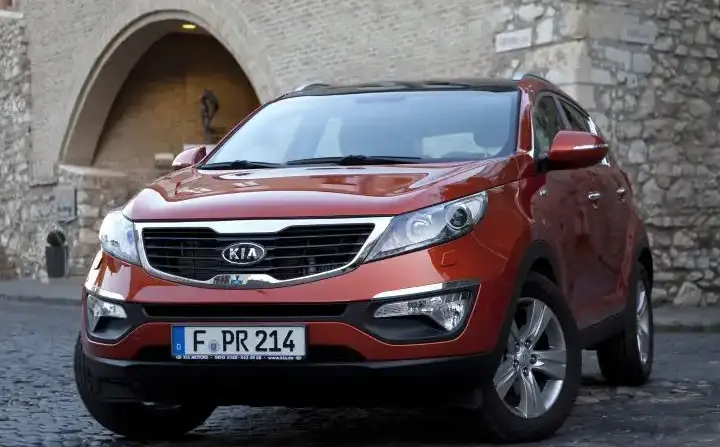
The Kia Sportage III, produced between 2010 and 2014, represented a significant step forward for the South Korean automaker in the highly competitive compact SUV segment. Among the various engine and transmission options offered, the 1.7 CRDI variant producing 115 horsepower was a popular choice, particularly in European markets. This model aimed to balance fuel efficiency with practicality, offering a more economical alternative to the larger displacement gasoline and diesel engines available in the Sportage lineup. It occupied a mid-range position, appealing to buyers seeking a cost-effective and reasonably equipped SUV for daily commuting and family use. This specific configuration was not widely available in the North American market, where Kia focused on larger engine options for the Sportage.
Technical Specifications
| Brand | Kia |
| Model | Sportage |
| Generation | Sportage III |
| Type (Engine) | 1.7 CRDI (115 Hp) |
| Start of production | 2010 |
| End of production | 2014 |
| Powertrain Architecture | Internal Combustion engine |
| Body type | SUV |
| Seats | 5 |
| Doors | 5 |
| Fuel Type | Diesel |
| Emission standard | Euro 5 |
| Power | 115 Hp @ 4000 rpm |
| Power per litre | 68.2 Hp/l |
| Torque | 255 Nm @ 1800 rpm / 188.08 lb.-ft. @ 1800 rpm |
| Engine layout | Front, Transverse |
| Engine Model/Code | U II / D4FD |
| Engine displacement | 1685 cm3 / 102.83 cu. in. |
| Number of cylinders | 4 |
| Engine configuration | Inline |
| Number of valves per cylinder | 4 |
| Fuel injection system | Diesel Commonrail |
| Engine aspiration | Turbocharger, Intercooler |
| Valvetrain | DOHC |
| Engine oil capacity | 5.3 l / 5.6 US qt | 4.66 UK qt |
| Coolant | 8.5 l / 8.98 US qt | 7.48 UK qt |
| Trunk (boot) space – minimum | 564 l / 19.92 cu. ft. |
| Trunk (boot) space – maximum | 1353 l / 47.78 cu. ft. |
| Fuel tank capacity | 58 l / 15.32 US gal | 12.76 UK gal |
| Length | 4440 mm / 174.8 in. |
| Width | 1855 mm / 73.03 in. |
| Height | 1685 mm / 66.34 in. |
| Wheelbase | 2640 mm / 103.94 in. |
| Minimum turning circle | 10.58 m / 34.71 ft. |
| Drivetrain Architecture | Front wheel drive |
| Number of gears | 6 gears, manual transmission |
| Front brakes | Ventilated discs |
| Rear brakes | Disc |
| Tires size | 225/60 R17 |
| Wheel rims size | 17 |
Powertrain & Engine Architecture
The heart of the Sportage III 1.7 CRDI is the U II / D4FD engine, a 1.7-liter inline-four cylinder diesel engine. This engine utilizes a second-generation common rail direct injection system, delivering fuel directly into the combustion chamber at extremely high pressure. This technology, coupled with a turbocharger and intercooler, allows for a good balance of power and fuel efficiency. The engine features a double overhead camshaft (DOHC) valvetrain, optimizing airflow for improved performance. The 115 horsepower output is achieved at 4000 rpm, while the peak torque of 255 Nm (188 lb-ft) is available from just 1800 rpm, providing ample low-end grunt for everyday driving. The engine was designed to meet stringent Euro 5 emission standards, incorporating a diesel particulate filter (DPF) to reduce harmful emissions. The standard transmission for this variant was a six-speed manual gearbox, chosen for its efficiency and driver engagement.
Driving Characteristics
The 1.7 CRDI engine, paired with the six-speed manual transmission, provided a reasonably responsive driving experience. While not a performance-oriented setup, the readily available torque at low engine speeds made it well-suited for urban driving and overtaking maneuvers. The gear ratios were tuned to prioritize fuel economy, meaning the engine needed to be revved slightly higher for quicker acceleration. Compared to the more powerful 2.0-liter diesel variants, the 1.7 CRDI felt less strained on inclines and during highway cruising, but it lacked the outright acceleration of its larger siblings. The front-wheel-drive configuration contributed to a lighter vehicle weight, further enhancing fuel efficiency. The manual transmission allowed for greater driver control, but some drivers may have preferred the convenience of an automatic option, which was available in some markets with different engine configurations.
Equipment & Trim Levels
The 1.7 CRDI variant of the Sportage III typically came with a respectable level of standard equipment. Base models included air conditioning, power windows, central locking, and an audio system with USB connectivity. Safety features such as ABS (Anti-lock Braking System) and front airbags were also standard. Higher trim levels, often designated as ‘Comfort’ or ‘Luxury’, added features like alloy wheels, a more advanced audio system, rear parking sensors, and climate control. Interior upholstery was typically cloth, with options for leather seats on higher-spec models. Dashboard design was functional and modern for its time, with a clear instrument cluster and logically arranged controls. Optional extras included a panoramic sunroof, navigation system, and heated seats.
Chassis & Braking
The Sportage III utilized a front-wheel-drive platform with independent suspension at the front (typically MacPherson strut) and a multi-link suspension at the rear. This setup provided a comfortable ride quality, absorbing bumps and imperfections in the road surface effectively. The front brakes were ventilated discs, offering good stopping power, while the rear brakes were solid discs. The steering system employed a rack and pinion setup, providing precise and responsive steering feel. The 17-inch alloy wheels, fitted with 225/60 R17 tires, contributed to both handling and ride comfort. Stabilizer bars were fitted to both the front and rear axles to reduce body roll during cornering.
Market Reception & Comparison
The Kia Sportage III 1.7 CRDI was generally well-received by automotive critics, particularly for its fuel efficiency and value for money. It was often praised for its spacious interior, comfortable ride, and practical features. However, some reviewers noted that the engine could feel underpowered when fully loaded or driving uphill. Compared to the 2.0-liter diesel variants, the 1.7 CRDI offered significantly better fuel economy, making it an attractive option for drivers prioritizing running costs. In terms of reliability, the 1.7 CRDI engine proved to be generally robust, although the diesel particulate filter (DPF) required regular maintenance to prevent clogging. The Sportage III as a whole offered a compelling alternative to established competitors like the Nissan Qashqai and Hyundai ix35.
Legacy
The Kia Sportage III 1.7 CRDI has established a reputation as a reliable and economical used car. The U II / D4FD engine, while not known for blistering performance, has proven to be durable and relatively easy to maintain. The availability of spare parts is generally good, and repair costs are reasonable. However, potential buyers should be aware of the importance of maintaining the diesel particulate filter (DPF) and ensuring regular servicing. Today, these Sportages represent a good value proposition for buyers seeking a practical and affordable compact SUV, particularly those who prioritize fuel efficiency and low running costs. The model helped solidify Kia’s position as a major player in the European SUV market and paved the way for the continued success of the Sportage line.