
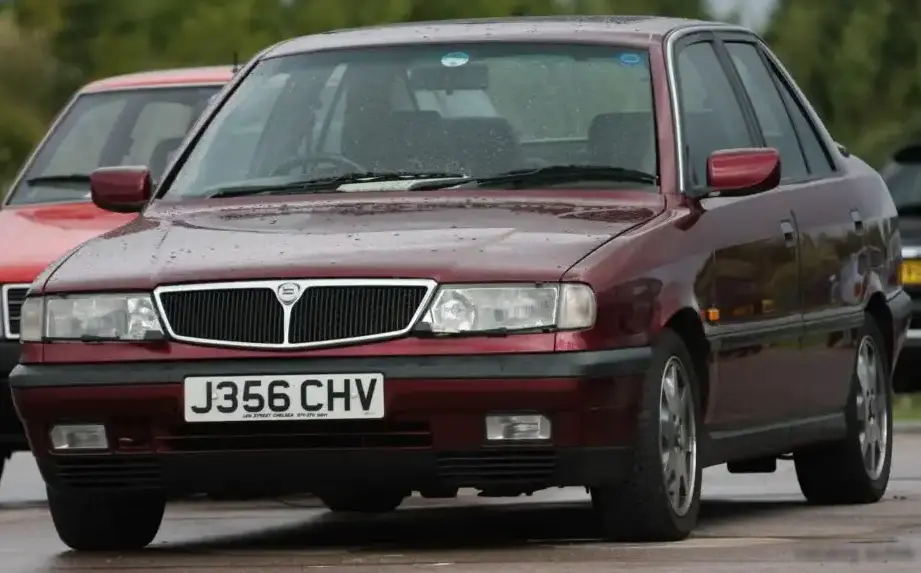
The Lancia Dedra 1.6 i.e. (78 Hp), produced between 1989 and 1993, represents an entry-level offering within the 835 series of the Dedra. Positioned as a practical and affordable family sedan, it served as a key model in Lancia’s lineup during a period of transition. The Dedra, built on the Tipo/Tempra platform (often referred to as the 835 project), aimed to blend Italian styling with a more modern, technically advanced chassis. This particular 1.6-liter variant was designed to appeal to buyers prioritizing fuel efficiency and lower running costs, rather than outright performance. It was a common sight on Italian roads, offering a comfortable and spacious alternative to more mainstream competitors.
Technical Specifications
| Brand | Lancia |
| Model | Dedra |
| Generation | Dedra (835) |
| Type (Engine) | 1.6 i.e. (78 Hp) |
| Start of production | 1989 |
| End of production | 1993 |
| Powertrain Architecture | Internal Combustion engine |
| Body type | Sedan |
| Seats | 5 |
| Doors | 4 |
| Fuel Type | Petrol (Gasoline) |
| Weight-to-power ratio | 14.1 kg/Hp, 70.9 Hp/tonne |
| Weight-to-torque ratio | 8.9 kg/Nm, 112.7 Nm/tonne |
| Power | 78 Hp @ 5800 rpm |
| Power per litre | 49.3 Hp/l |
| Torque | 124 Nm @ 3500 rpm (91.46 lb.-ft. @ 3500 rpm) |
| Engine layout | Front, Transverse |
| Engine Model/Code | 835 A1.046 |
| Engine displacement | 1581 cm3 (96.48 cu. in.) |
| Number of cylinders | 4 |
| Engine configuration | Inline |
| Cylinder Bore | 86.4 mm (3.4 in.) |
| Piston Stroke | 67.4 mm (2.65 in.) |
| Compression ratio | 9.2:1 |
| Number of valves per cylinder | 2 |
| Fuel injection system | Single-point injection |
| Engine aspiration | Naturally aspirated engine |
| Valvetrain | OHC |
| Engine oil capacity | 4.3 l (4.54 US qt | 3.78 UK qt) |
| Coolant | 4.9 l (5.18 US qt | 4.31 UK qt) |
| Kerb Weight | 1100 kg (2425.08 lbs.) |
| Max. weight | 1590 kg (3505.35 lbs.) |
| Max load | 490 kg (1080.27 lbs.) |
| Trunk (boot) space – minimum | 480 l (16.95 cu. ft.) |
| Fuel tank capacity | 63 l (16.64 US gal | 13.86 UK gal) |
| Length | 4343 mm (170.98 in.) |
| Width | 1700 mm (66.93 in.) |
| Height | 1417 mm (55.79 in.) |
| Wheelbase | 2540 mm (100 in.) |
| Front track | 1436 mm (56.54 in.) |
| Rear (Back) track | 1417 mm (55.79 in.) |
| Drivetrain Architecture | The Internal combustion engine (ICE) drives the front wheels of the vehicle. |
| Drive wheel | Front wheel drive |
| Number of gears and type of gearbox | 5 gears, manual transmission |
| Front suspension | Spring Strut |
| Rear suspension | Trailing arm |
| Front brakes | Disc |
| Rear brakes | Disc |
| Assisting systems | ABS (Anti-lock braking system) |
| Steering type | Steering rack and pinion |
| Power steering | Hydraulic Steering |
| Tires size | 175/65 R14 |
Powertrain & Engine Architecture
The Dedra 1.6 i.e. utilizes the Fiat-sourced 835 A1.046 engine, a 1.6-liter inline-four cylinder unit. This engine featured a single overhead camshaft (OHC) design and employed single-point fuel injection, a relatively common technology for the time. While not particularly powerful, the engine was known for its reliability and relatively smooth operation. The 78 horsepower output at 5800 rpm and 124 Nm (91.46 lb-ft) of torque at 3500 rpm were adequate for everyday driving, but didn’t offer significant performance reserves. The engine’s design prioritized fuel economy and low emissions, aligning with the growing environmental concerns of the early 1990s. The five-speed manual transmission was the standard offering, providing a reasonable spread of gears for both urban and highway driving.
Driving Characteristics
The 1.6-liter Dedra, paired with the five-speed manual gearbox, offered a comfortable, if uninspiring, driving experience. Acceleration was modest, requiring drivers to utilize the engine’s rev range to achieve reasonable progress. The gear ratios were well-matched for everyday use, but the lack of significant low-end torque meant frequent downshifts were necessary when overtaking or climbing hills. Compared to the more powerful 1.9-liter or 2.0-liter versions of the Dedra, the 1.6 i.e. felt noticeably slower. However, it offered a lighter steering feel and a more forgiving ride, making it well-suited for city driving. The suspension, while not particularly sporty, provided a decent level of comfort over uneven road surfaces.
Equipment & Trim Levels
The Dedra 1.6 i.e. typically came equipped with a fairly basic level of standard features. These included central locking, power steering, and a basic stereo system. Interior upholstery was typically cloth, with a relatively simple dashboard layout. Optional extras included air conditioning, electric windows, and upgraded audio systems. The trim level was generally considered entry-level, appealing to buyers seeking a practical and affordable family car. The focus was on functionality and durability rather than luxury or advanced features.
Chassis & Braking
The Dedra 835 series utilized a front-wheel-drive chassis with independent front suspension using spring struts and a trailing arm rear suspension. The 1.6 i.e. variant featured disc brakes on all four wheels, a relatively uncommon feature for cars in this price range at the time. An Anti-lock Braking System (ABS) was also often included as standard equipment, enhancing safety. The steering was rack and pinion, providing a reasonably precise and responsive feel. The suspension setup was tuned for comfort, prioritizing ride quality over sporty handling.
Market Reception & Comparison
The Lancia Dedra 1.6 i.e. was generally well-received by critics as a practical and affordable family sedan. However, its performance was often criticized as being underwhelming, particularly when compared to more powerful alternatives. Fuel economy was a strong point, and the car was praised for its comfortable ride and spacious interior. Compared to the higher-spec Dedra models, such as the 2.0 i.e., the 1.6 i.e. offered a more economical option, but at the expense of performance. It competed with other mainstream family sedans of the era, such as the Ford Sierra, Opel/Vauxhall Vectra, and Fiat Tempra.
Legacy
The Lancia Dedra 1.6 i.e. has developed a reputation for being a reliable and durable classic car. The engine, while not particularly powerful, is known for its longevity, and parts availability remains relatively good. Today, the Dedra 1.6 i.e. is a popular choice among enthusiasts seeking a classic Italian sedan that is both affordable and practical. While not a performance icon, it represents a significant chapter in Lancia’s history and offers a unique blend of Italian style and engineering. The simplicity of the 1.6-liter engine and manual transmission makes it a relatively easy car to maintain and repair, contributing to its enduring appeal in the used car market.
