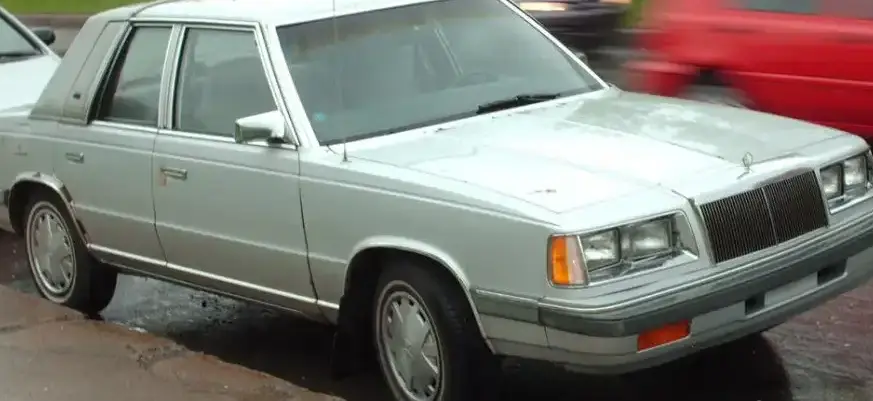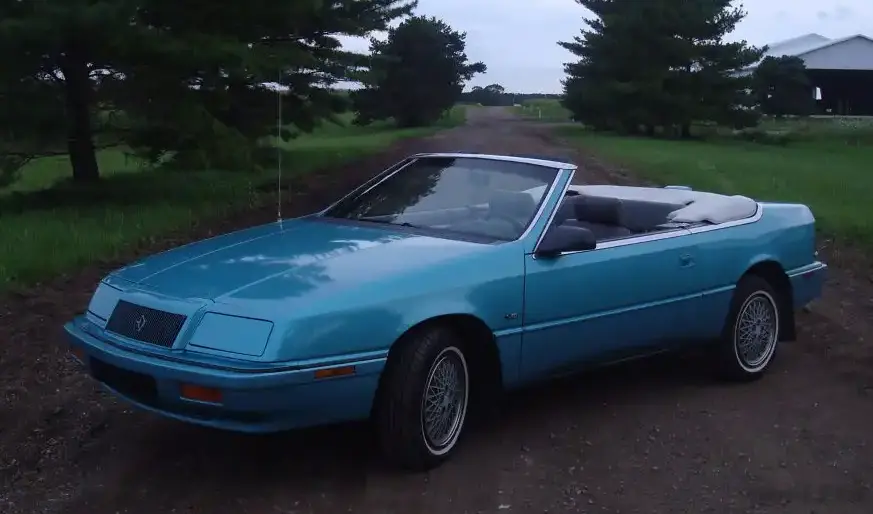
The Chrysler LeBaron Cabriolet 3.0i V6, produced between 1989 and 1995, represented a significant offering in the American convertible market. Positioned as a relatively affordable luxury option, it aimed to capture buyers seeking open-air motoring with a touch of style. This variant, powered by the 6G72 3.0-liter V6 engine producing 136 horsepower, was typically equipped with a 5-speed manual transmission, though an automatic option was also available. It occupied a mid-range position within the LeBaron Cabriolet lineup, offering a step up from the base 2.5-liter four-cylinder models but falling short of the performance offered by potential higher-output V6 configurations that were sometimes offered in other markets.
Technical Specifications
| Brand | Chrysler |
| Model | LE Baron |
| Generation | LE Baron Cabrio |
| Type (Engine) | 3.0 i V6 (136 Hp) |
| Start of production | 1989 |
| End of production | 1995 |
| Powertrain Architecture | Internal Combustion engine |
| Body type | Cabriolet |
| Seats | 4 |
| Doors | 2 |
| Fuel consumption (combined) | 9.8 l/100 km (24 US mpg, 28.8 UK mpg, 10.2 km/l) |
| Fuel Type | Petrol (Gasoline) |
| Acceleration 0 – 100 km/h | 11.2 sec |
| Acceleration 0 – 62 mph | 11.2 sec |
| Acceleration 0 – 60 mph | 10.6 sec |
| Maximum speed | 182 km/h (113.09 mph) |
| Weight-to-power ratio | 11.5 kg/Hp, 86.9 Hp/tonne |
| Weight-to-torque ratio | 6.7 kg/Nm, 148.9 Nm/tonne |
| Power | 136 Hp @ 5200 rpm |
| Power per litre | 45.8 Hp/l |
| Torque | 233 Nm @ 2400 rpm (171.85 lb.-ft. @ 2400 rpm) |
| Engine layout | Front, Transverse |
| Engine Model/Code | 6G72 |
| Engine displacement | 2972 cm3 (181.36 cu. in.) |
| Number of cylinders | 6 |
| Engine configuration | V-engine |
| Cylinder Bore | 91.1 mm (3.59 in.) |
| Piston Stroke | 76 mm (2.99 in.) |
| Compression ratio | 8.9:1 |
| Number of valves per cylinder | 2 |
| Fuel injection system | Multi-port manifold injection |
| Engine aspiration | Naturally aspirated engine |
| Valvetrain | OHC |
| Engine oil capacity | 4.5 l (4.76 US qt | 3.96 UK qt) |
| Coolant capacity | 9.1 l (9.62 US qt | 8.01 UK qt) |
| Kerb Weight | 1565 kg (3450.23 lbs.) |
| Max. weight | 1855 kg (4089.57 lbs.) |
| Max load | 290 kg (639.34 lbs.) |
| Trunk (boot) space – minimum | 292 l (10.31 cu. ft.) |
| Fuel tank capacity | 53 l (14 US gal | 11.66 UK gal) |
| Length | 4696 mm (184.88 in.) |
| Width | 1758 mm (69.21 in.) |
| Height | 1372 mm (54.02 in.) |
| Wheelbase | 2554 mm (100.55 in.) |
| Front track | 1462 mm (57.56 in.) |
| Rear (Back) track | 1464 mm (57.64 in.) |
| Drivetrain Architecture | Front wheel drive |
| Number of gears and type of gearbox | 5 gears, manual transmission |
| Front suspension | Wishbone |
| Rear suspension | Coil spring |
| Front brakes | Ventilated discs |
| Rear brakes | Ventilated discs |
| Assisting systems | ABS (Anti-lock braking system) |
| Steering type | Steering rack and pinion |
| Power steering | Hydraulic Steering |
| Tires size | 205/60 R15 |
Introduction
The Chrysler LeBaron Cabriolet, produced from 1987 to 1995, was a front-wheel-drive convertible that aimed to provide affordable open-top motoring to the American public. The 3.0i V6 variant, available from 1989 onwards, represented a significant upgrade over the base engine options. Built on the Chrysler K-car platform (later evolving into the LH platform), the LeBaron Cabriolet sought to blend style and practicality. The model benefited from a relatively long production run, allowing for refinements and improvements over its lifespan. The 3.0L engine was a Mitsubishi design, known for its reliability and decent power output for its displacement.
Powertrain & Engine Architecture
The heart of the LeBaron Cabriolet 3.0i is the 6G72 3.0-liter V6 engine. This engine, sourced from Mitsubishi, features a 60-degree V-angle and utilizes a single overhead camshaft (SOHC) design with two valves per cylinder. The engine employs multi-port fuel injection, delivering fuel directly to each intake port for improved efficiency and performance. The 6G72 is a non-interference engine, meaning the valves and pistons won’t collide even if the timing belt breaks, which is a significant reliability benefit. The 5-speed manual transmission, when equipped, provided a direct and engaging driving experience. A 3-speed automatic transmission was also offered, catering to drivers prioritizing convenience over outright performance. The automatic transmission, while smooth, did impact acceleration and fuel economy compared to the manual.
Driving Characteristics
The 136-horsepower 3.0-liter V6, coupled with the 5-speed manual transmission, provided adequate, though not exhilarating, performance. Acceleration from 0-60 mph took around 10.6 seconds, making it competitive with other convertibles in its price range. The manual transmission allowed drivers to exploit the engine’s torque, providing reasonable responsiveness in everyday driving situations. The automatic transmission, while offering ease of use, resulted in noticeably slower acceleration. The front-wheel-drive layout contributed to predictable handling, but lacked the dynamic feel of rear-wheel-drive competitors. Steering was light and easy, making it suitable for city driving, but lacked significant feedback. The suspension, tuned for comfort, provided a relatively smooth ride, absorbing bumps and imperfections in the road.
Equipment & Trim Levels
The LeBaron Cabriolet 3.0i typically came standard with features such as power windows, power locks, and a basic sound system. Leather upholstery was often included, adding a touch of luxury. Optional extras included a premium sound system, cruise control, and air conditioning. The interior design was generally functional and straightforward, with a focus on usability. Trim levels varied slightly over the production run, with later models offering more standard features. The dashboard layout was typical of the era, featuring analog gauges and a simple center console.
Chassis & Braking
The LeBaron Cabriolet utilized a front-wheel-drive chassis with an independent front suspension featuring wishbone components and a coil-spring rear suspension. This setup prioritized ride comfort over sporty handling. Braking duties were handled by ventilated disc brakes on all four wheels, providing adequate stopping power. An Anti-lock Braking System (ABS) was included as standard equipment, enhancing safety. The chassis was reinforced to compensate for the lack of a fixed roof, providing acceptable structural rigidity for a convertible of its era. Stabilizer bars were fitted to both the front and rear axles to reduce body roll during cornering.
Market Reception & Comparison
The LeBaron Cabriolet 3.0i was generally well-received by critics as an affordable and stylish convertible. It offered a compelling alternative to more expensive European models. However, some reviewers noted the engine’s lack of outright power and the somewhat uninspired interior design. Compared to the base 2.5-liter four-cylinder models, the 3.0i V6 provided a significant performance boost, making it a more enjoyable driving experience. Fuel economy was reasonable for a vehicle of its type, averaging around 24 mpg in combined driving. Reliability was generally good, although some owners reported issues with the automatic transmission and electrical components.
Legacy
The Chrysler LeBaron Cabriolet 3.0i V6 has become a popular choice among classic car enthusiasts seeking an affordable and enjoyable convertible. The 6G72 engine is known for its durability and relatively simple maintenance requirements. Parts availability is generally good, although some specific trim pieces may be difficult to find. Well-maintained examples command reasonable prices in the used car market. The LeBaron Cabriolet represents a significant chapter in Chrysler’s history, demonstrating the company’s ability to produce stylish and accessible vehicles for the American public. The 3.0L engine and manual transmission combination is particularly sought after by enthusiasts who appreciate its engaging driving experience.