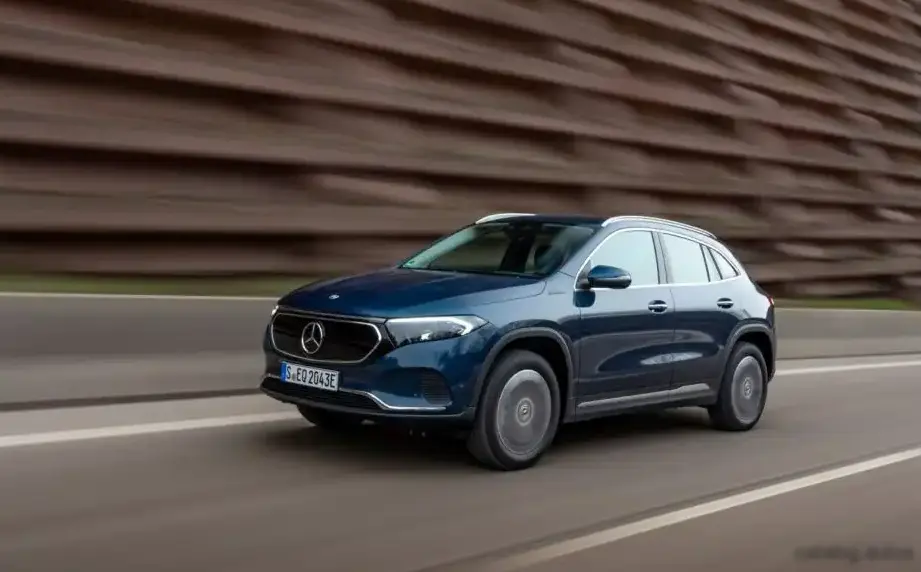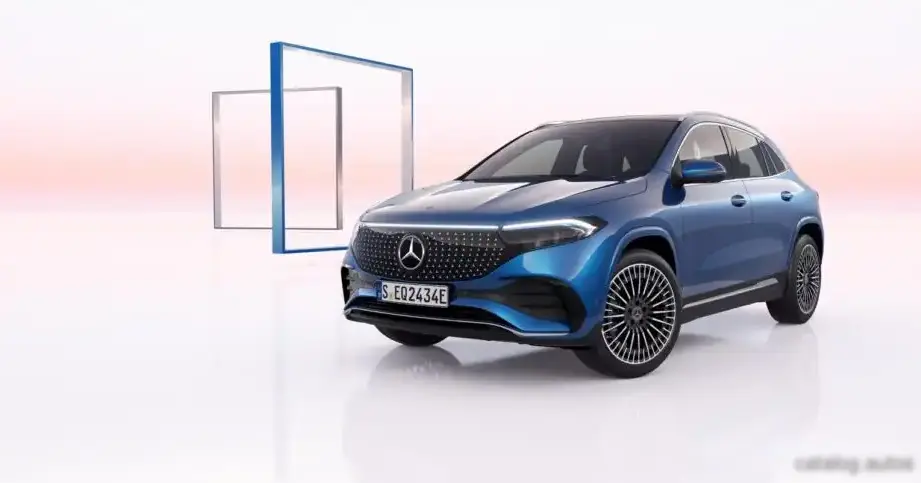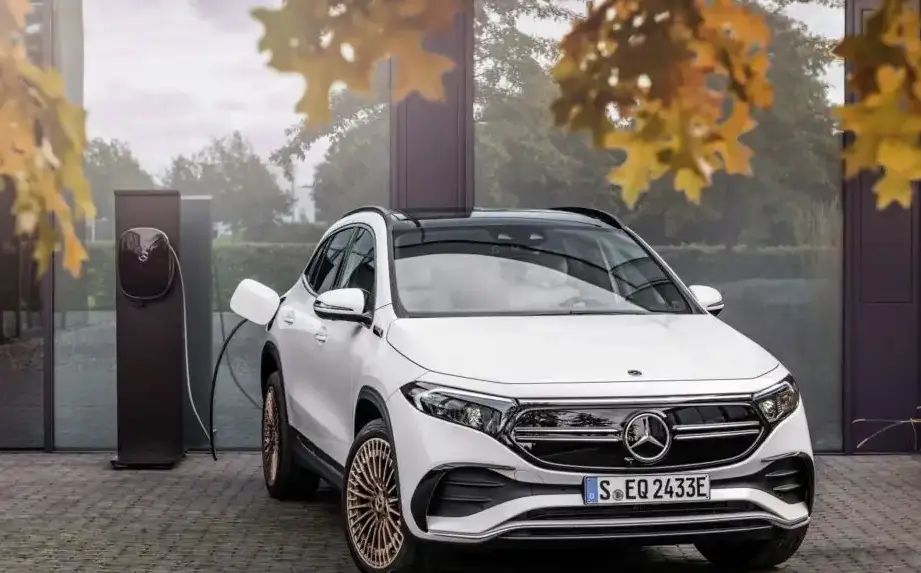
The Mercedes-Benz EQA 250+ 73.9 kWh, produced from 2022 through October 2023, represents Mercedes-Benz’s entry point into the compact luxury all-electric SUV segment. Built on the GLA platform (H243 chassis code), the EQA aimed to broaden the appeal of electric vehicles by offering a familiar SUV body style combined with the prestige of the Mercedes-Benz brand. This particular variant, equipped with a 73.9 kWh battery and a single electric motor producing 190 horsepower, served as the standard model in many markets, offering a balance between range, performance, and price within the EQA lineup. It was positioned as a more accessible alternative to the higher-performance and longer-range EQA 300 and 350 models.
Technical Specifications
| Brand | Mercedes-Benz |
| Model | EQA |
| Generation | EQA (H243) |
| Type (Engine) | EQA 250+ 73.9 kWh (190 Hp) |
| Start of production | 2022 |
| End of production | October, 2023 |
| Powertrain Architecture | BEV (Electric Vehicle) |
| Body type | SUV |
| Seats | 5 |
| Doors | 5 |
| Fuel Type | Electricity |
| Acceleration 0 – 100 km/h | 8.6 sec |
| Acceleration 0 – 62 mph | 8.6 sec |
| Acceleration 0 – 60 mph | 8.2 sec |
| Maximum speed | 160 km/h (99.42 mph) |
| Weight-to-power ratio | 10.4 kg/Hp |
| Weight-to-torque ratio | 5.1 kg/Nm |
| Gross battery capacity | 73.9 kWh |
| Net (usable) battery capacity | 70.5 kWh |
| Battery technology | Lithium-ion (Li-Ion) |
| Battery weight | 395 kg (870.83 lbs) |
| Battery location | Below the floor |
| All-electric range (WLTP) | 490-532 km (304.47 – 330.57 mi) |
| Average Energy consumption (WLTP) | 15.3-16.7 kWh/100 km (24.62 – 26.88 kWh/100 mi) |
| Average Energy consumption (MPGe) | 137 – 125 |
| Average Energy consumption (km/kWh) | 6.5 – 6 |
| Average Energy consumption (mi/kWh) | 4.1 – 3.7 |
| Electric motor power | 190 Hp |
| Electric motor Torque | 385 Nm (283.96 lb.-ft.) |
| Electric motor model/code | EM0026 |
| Electric motor location | Front axle, Transverse |
| Electric motor type | Synchronous |
| System power | 190 Hp |
| System torque | 385 Nm (283.96 lb.-ft.) |
| Kerb Weight | 1970 kg (4343.11 lbs) |
| Max. weight | 2470 kg (5445.42 lbs) |
| Max load | 500 kg (1102.31 lbs) |
| Trunk (boot) space – minimum | 340 l (12.01 cu. ft.) |
| Trunk (boot) space – maximum | 1320 l (46.62 cu. ft.) |
| Max. roof load | 75 kg (165.35 lbs) |
| Permitted trailer load with brakes (12%) | 750 kg (1653.47 lbs) |
| Permitted trailer load without brakes | 750 kg (1653.47 lbs) |
| Permitted towbar download | 80 kg (176.37 lbs) |
| Length | 4463 mm (175.71 in) |
| Width | 1834 mm (72.2 in) |
| Width including mirrors | 2020 mm (79.53 in) |
| Height | 1608 mm (63.31 in) |
| Wheelbase | 2729 mm (107.44 in) |
| Front track | 1588 mm (62.52 in) |
| Rear (Back) track | 1589 mm (62.56 in) |
| Front overhang | 913 mm (35.94 in) |
| Rear overhang | 821 mm (32.32 in) |
| Ride height (ground clearance) | 154 mm (6.06 in) |
| Minimum turning circle (turning diameter) | 11.4 m (37.4 ft) |
| Approach angle | 18.7° |
| Departure angle | 21.8° |
| Ramp-over (brakeover) angle | 14.2° |
| Drivetrain Architecture | One electric motor drives the front wheels. |
| Drive wheel | Front wheel drive |
| Number of gears and type of gearbox | 1 gears, automatic transmission |
| Front suspension | Independent, type McPherson with coil spring and anti-roll bar |
| Rear suspension | Independent multi-link spring suspension with stabilizer |
| Front brakes | Ventilated discs |
| Rear brakes | Disc |
| Assisting systems | ABS (Anti-lock braking system) |
| Steering type | Steering rack and pinion |
| Power steering | Electric Steering |
| Tires size | 215/60 R18; 235/55 R18; 235/50 R19; 235/45 R20 |
| Wheel rims size | 6.5J x 18; 7.5J x 18; 7.5J x 19; 8.5J x 20 |
Powertrain & Engine Architecture
The EQA 250+ utilizes a single electric motor, designated EM0026, positioned transversely on the front axle. This motor is a synchronous design, known for its efficiency and smooth power delivery. The 73.9 kWh (gross) / 70.5 kWh (net) lithium-ion battery pack is located under the vehicle floor, contributing to a low center of gravity and maximizing interior space. The battery is comprised of multiple modules and utilizes liquid cooling to maintain optimal operating temperatures. The EQA 250+ does not employ a traditional multi-speed gearbox; instead, it features a single-speed reduction gear. This simplifies the drivetrain and contributes to efficiency. The car supports DC fast charging, allowing for a significant charge in a relatively short period.
Driving Characteristics
With 190 horsepower and 385 Nm (283.96 lb-ft) of torque, the EQA 250+ offers adequate, though not exhilarating, performance. Acceleration from 0-60 mph takes approximately 8.2 seconds, and the top speed is electronically limited to 99.42 mph. The single-speed transmission provides instant torque delivery, characteristic of electric vehicles, making it responsive in urban driving conditions. Compared to the EQA 300 and 350 variants, the 250+ feels less urgent in acceleration, particularly at higher speeds. The front-wheel-drive configuration provides predictable handling, but it lacks the enhanced traction and stability of the all-wheel-drive models. The regenerative braking system allows for one-pedal driving in certain situations, enhancing efficiency and driver convenience.
Equipment & Trim Levels
The EQA 250+ typically came standard with features such as Mercedes-Benz’s MBUX infotainment system with a dual 10.25-inch display screen, automatic climate control, and a suite of safety features including automatic emergency braking, lane-keeping assist, and adaptive cruise control. Interior upholstery was generally Artico synthetic leather, with options for genuine leather upgrades. Available options included a panoramic sunroof, premium sound system, and various driver assistance packages. Trim levels varied by market, but generally offered packages that added cosmetic enhancements and additional convenience features.
Chassis & Braking
The EQA 250+ utilizes an independent suspension system at all four wheels. The front suspension employs a McPherson strut design with coil springs and an anti-roll bar, while the rear features a multi-link setup with a stabilizer bar. This configuration provides a comfortable ride quality and competent handling. Braking duties are handled by ventilated discs at the front and solid discs at the rear, coupled with an anti-lock braking system (ABS). The suspension tuning is geared towards comfort rather than outright sportiness, prioritizing a smooth and refined driving experience.
Market Reception & Comparison
The EQA 250+ was generally well-received by critics as an accessible entry point into the luxury electric SUV market. Its range, while not class-leading, was sufficient for many daily commutes and errands. Fuel economy, expressed as MPGe, ranged from 125-137, making it highly efficient. Compared to the EQA 300 and 350, the 250+ offered a more affordable price point, but at the expense of performance and range. Competitors included the Audi Q4 e-tron, Volvo XC40 Recharge, and Tesla Model Y.
Legacy
The EQA 250+ has established itself as a reliable and practical electric SUV in the used car market. The electric powertrain is known for its durability, and the battery pack has demonstrated good longevity in early examples. While not the most exciting vehicle in its class, the EQA 250+ offers a compelling combination of luxury, efficiency, and practicality, making it a popular choice for buyers seeking their first electric vehicle. Its relatively simple powertrain design should translate to lower long-term maintenance costs compared to more complex hybrid or internal combustion engine vehicles.