
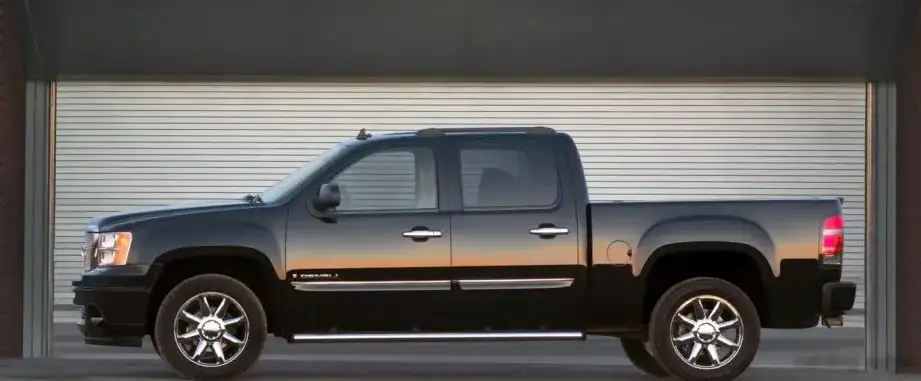
The GMC Sierra 1500 III (GMT900) Crew Cab Short Box Denali 6.2 Vortec V8 (403 Hp) Automatic FlexFuel, produced from 2009 to 2013, represents a high-end offering within the third generation of the Sierra 1500 pickup truck line. Positioned as the flagship Denali trim, this variant combined a powerful V8 engine with a comfortable crew cab configuration and the convenience of a short bed. It was a key model in GMC’s strategy to compete with premium offerings from Ford and Chevrolet, emphasizing luxury and capability in the full-size truck segment. The GMT900 platform, shared with the Chevrolet Silverado, provided a solid foundation for this truck, offering improved ride quality and interior space compared to its predecessor.
Technical Specifications
| Brand | GMC |
| Model | Sierra 1500 |
| Generation | Sierra 1500 III (GMT900) Crew Cab Short Box |
| Type (Engine) | Denali 6.2 Vortec V8 (403 Hp) Automatic FlexFuel |
| Start of production | 2009 |
| End of production | 2013 |
| Powertrain Architecture | Internal Combustion engine |
| Body type | Pick-up |
| Seats | 5 |
| Doors | 4 |
| Fuel consumption (urban) | 18.1 l/100 km (13 US mpg, 15.6 UK mpg, 5.5 km/l) |
| Fuel consumption (extra urban) | 12.4 l/100 km (19 US mpg, 22.8 UK mpg, 8.1 km/l) |
| Fuel Type | Petrol / Ethanol – E85 |
| Power | 403 Hp @ 5700 rpm |
| Power per litre | 65.4 Hp/l |
| Torque | 565 Nm @ 4300 rpm (416.72 lb.-ft. @ 4300 rpm) |
| Maximum engine speed | 6000 rpm |
| Engine layout | Front, Longitudinal |
| Engine Model/Code | L9H |
| Engine displacement | 6162 cm3 (376.03 cu. in.) |
| Number of cylinders | 8 |
| Engine configuration | V-engine |
| Cylinder Bore | 103.25 mm (4.06 in.) |
| Piston Stroke | 92 mm (3.62 in.) |
| Compression ratio | 10.5:1 |
| Number of valves per cylinder | 2 |
| Fuel injection system | Multi-port manifold injection |
| Engine aspiration | Naturally aspirated engine |
| Valvetrain | OHV |
| Engine oil capacity | 5.7 l (6.02 US qt | 5.02 UK qt) |
| Coolant capacity | 11.9 l (12.57 US qt | 10.47 UK qt) |
| Max. weight | 3084 kg (6799.06 lbs.) |
| Trunk (boot) space – maximum | 1506 l (53.18 cu. ft.) |
| Fuel tank capacity | 98 l (25.89 US gal | 21.56 UK gal) |
| Permitted trailer load with brakes (12%) | 4354 kg (9598.93 lbs.) |
| Length | 5844 mm (230.08 in.) |
| Width including mirrors | 2031 mm (79.96 in.) |
| Height | 1875 mm (73.82 in.) |
| Wheelbase | 3645 mm (143.5 in.) |
| Ride height (ground clearance) | 229 mm (9.02 in.) |
| Minimum turning circle (turning diameter) | 14.4 m (47.24 ft.) |
| Approach angle | 15.3° |
| Departure angle | 22.8° |
| Ramp-over (brakeover) angle | 19.3° |
| Drivetrain Architecture | Rear wheel drive |
| Number of gears and type of gearbox | 6 gears, automatic transmission Hydra-Matic |
| Front suspension | Independent coil spring |
| Rear suspension | Rigid axle suspension, Leaf spring |
| Front brakes | Ventilated discs, 330×30 mm |
| Rear brakes | Disc, 343×20 mm |
| Assisting systems | ABS (Anti-lock braking system) |
| Steering type | Steering rack and pinion |
| Power steering | Electric Steering |
| Tires size | 265/65 R18; 275/55 R20 |
| Wheel rims size | 8J x 18; 8.5J x 20 |
Introduction
The 2009-2013 GMC Sierra 1500 Crew Cab Short Box Denali 6.2L V8 represented GMC’s attempt to deliver a premium full-size truck experience. Built on the GMT900 platform, it offered a spacious crew cab, a manageable short bed length, and a powerful 6.2-liter Vortec V8 engine. The Denali trim level, GMC’s highest, added a significant layer of luxury features and upscale styling. This variant aimed to attract buyers who desired the capability of a full-size truck but also appreciated a more refined and comfortable interior than typically found in work-oriented pickups. It competed directly with the Ford F-150 Platinum and the Chevrolet Silverado High Country.
Powertrain & Engine Architecture
At the heart of the Denali was the L9H 6.2-liter Vortec V8 engine. This engine, a member of GM’s small-block family, featured cast iron block with aluminum cylinder heads. It utilized a multi-port fuel injection system and an overhead valve (OHV) valvetrain. The engine was designed for both gasoline and E85 flex-fuel operation, offering drivers a choice at the pump. The 6.2L engine produced 403 horsepower at 5700 rpm and 417 lb-ft of torque at 4300 rpm. This power was delivered through a six-speed Hydra-Matic automatic transmission, known for its smooth shifting and durability. The transmission was calibrated to provide a balance between performance and fuel efficiency, with gear ratios optimized for both towing and everyday driving.
Driving Characteristics
The 6.2L V8 and six-speed automatic combination provided strong acceleration and ample power for towing and hauling. While not as fuel-efficient as smaller engine options available in the Sierra 1500 lineup, the 6.2L delivered a satisfying driving experience. The automatic transmission shifted smoothly and responsively, and the engine provided a broad torque curve, making it easy to maintain speed on the highway or navigate challenging terrain. Compared to the 5.3L V8, the 6.2L offered a noticeable increase in power, particularly when towing. The six-speed transmission also helped to keep the engine in its optimal power band more frequently. However, the larger engine did contribute to a slightly higher curb weight, which could be felt during cornering.
Equipment & Trim Levels
The Denali trim level was exceptionally well-equipped. Standard features included leather upholstery, heated and ventilated front seats, a premium Bose audio system, a navigation system, and tri-zone automatic climate control. Exterior features included chrome accents, unique Denali badging, and available 20-inch alloy wheels. Optional extras included a power sunroof, rear-seat entertainment system, and a trailering package. The interior was designed to provide a luxurious and comfortable experience, with attention paid to detail and material quality. The Denali trim aimed to provide a level of refinement comparable to luxury SUVs.
Chassis & Braking
The Sierra 1500 GMT900 featured an independent coil spring front suspension and a rigid axle leaf spring rear suspension. This setup provided a comfortable ride while maintaining good load-carrying capacity. The Denali trim typically came equipped with heavier-duty suspension components to handle the increased weight of the larger engine and the added features. Braking duties were handled by ventilated disc brakes at all four corners, with ABS standard. The rear brakes were slightly smaller in diameter than the front brakes. The steering system was a rack-and-pinion setup with electric power steering, providing responsive and precise handling.
Market Reception & Comparison
The Sierra 1500 Denali with the 6.2L V8 was generally well-received by critics and consumers. It was praised for its powerful engine, comfortable ride, and luxurious interior. However, its fuel economy was a common criticism, as the 6.2L engine consumed significantly more fuel than the smaller engine options. Compared to the 5.3L V8, the 6.2L offered a substantial performance upgrade but came at a higher price. The Denali trim also commanded a premium price compared to lower trim levels. Against competitors like the Ford F-150 Platinum, the Sierra Denali offered a comparable level of luxury and capability.
Legacy
The L9H 6.2L Vortec V8 proved to be a reliable and durable engine when properly maintained. While not immune to common GM issues like oil consumption in some cases, it generally held up well over time. Today, used examples of the 2009-2013 Sierra 1500 Denali 6.2L are sought after by buyers who appreciate its combination of power, luxury, and capability. The Denali trim remains a popular choice in the full-size truck market, and the GMT900 generation laid the groundwork for the continued success of the Sierra line. These trucks continue to provide dependable service for owners who need a capable and comfortable pickup.

