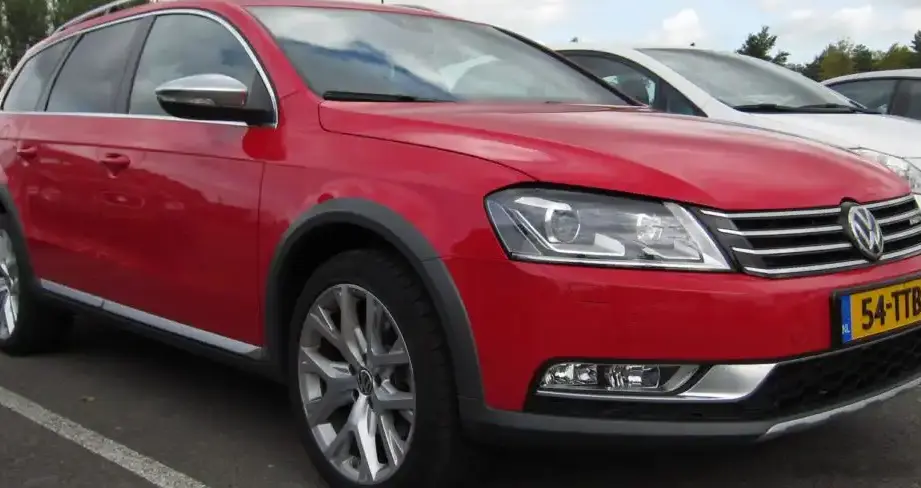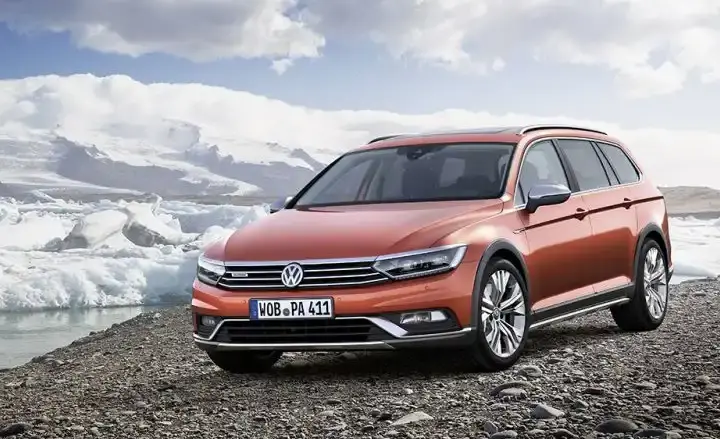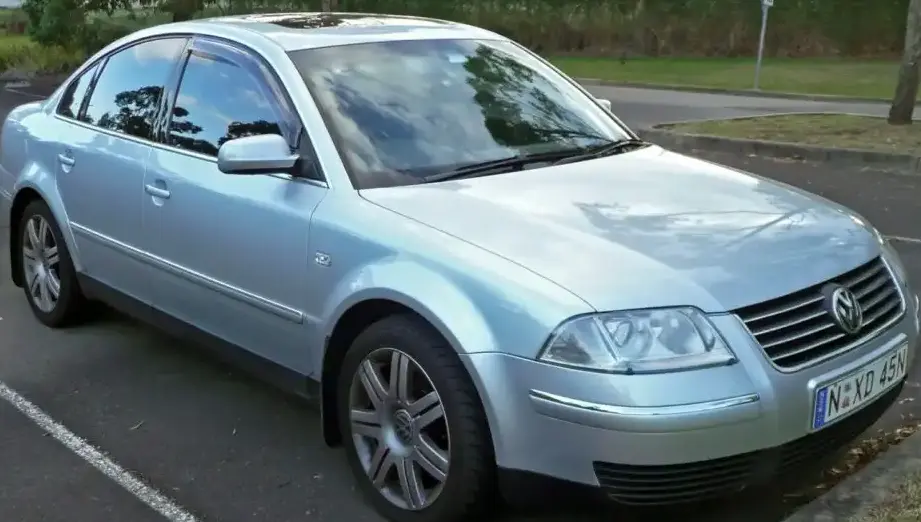
The Volkswagen Passat B5.5 1.9 TDI with 130 horsepower and a six-speed manual transmission represents a significant iteration of Volkswagen’s mid-size offering, produced between 2000 and 2005. This variant was a mainstay in the European market, offering a blend of fuel efficiency, practicality, and respectable performance. It sat within the broader B5.5 generation (internally designated as the 3B platform), which itself was a substantial refresh of the earlier B5 Passat. The 1.9 TDI 130hp model was positioned as a strong mid-range option, appealing to drivers seeking a balance between economy and driving enjoyment, slotting between the lower-powered TDI variants and the more expensive, performance-oriented petrol models.
Technical Specifications
| Brand | Volkswagen |
| Model | Passat |
| Generation | Passat (B5.5) |
| Type (Engine) | 1.9 TDI (130 Hp) Manual 6-speed |
| Start of production | 2000 year |
| End of production | 2005 year |
| Powertrain Architecture | Internal Combustion engine |
| Body type | Sedan |
| Seats | 5 |
| Doors | 4 |
| Fuel consumption (economy) – urban (NEDC) | 7.6 l/100 km (30.9 US mpg, 37.2 UK mpg, 13.2 km/l) |
| Fuel consumption (economy) – extra urban (NEDC) | 4.8 l/100 km (49 US mpg, 58.9 UK mpg, 20.8 km/l) |
| Fuel consumption (economy) – combined (NEDC) | 5.8 l/100 km (40.6 US mpg, 48.7 UK mpg, 17.2 km/l) |
| CO2 emissions (NEDC) | 157 g/km |
| Fuel Type | Diesel |
| Acceleration 0 – 100 km/h | 9.9 sec |
| Acceleration 0 – 62 mph | 9.9 sec |
| Acceleration 0 – 60 mph | 9.4 sec |
| Maximum speed | 208 km/h (129.25 mph) |
| Emission standard | Euro 3 |
| Weight-to-power ratio | 11.6 kg/Hp, 86 Hp/tonne |
| Weight-to-torque ratio | 4.9 kg/Nm, 205.2 Nm/tonne |
| Power | 130 Hp @ 4000 rpm |
| Power per litre | 68.6 Hp/l |
| Torque | 310 Nm @ 1900 rpm (228.64 lb.-ft. @ 1900 rpm) |
| Engine layout | Front, Longitudinal |
| Engine Model/Code | AVF |
| Engine displacement | 1896 cm3 (115.7 cu. in.) |
| Number of cylinders | 4 |
| Engine configuration | Inline |
| Cylinder Bore | 79.5 mm (3.13 in.) |
| Piston Stroke | 95.5 mm (3.76 in.) |
| Compression ratio | 19:1 |
| Number of valves per cylinder | 2 |
| Fuel injection system | Pump-nozzle (Unit Injector) |
| Engine aspiration | Turbocharger, Intercooler |
| Valvetrain | SOHC |
| Engine oil capacity | 4 l (4.23 US qt | 3.52 UK qt) |
| Coolant | 7 l (7.4 US qt | 6.16 UK qt) |
| Kerb Weight | 1511 kg (3331.18 lbs.) |
| Max. weight | 1990 kg (4387.2 lbs.) |
| Max load | 479 kg (1056.01 lbs.) |
| Trunk (boot) space – minimum | 475 l (16.77 cu. ft.) |
| Trunk (boot) space – maximum | 800 l (28.25 cu. ft.) |
| Fuel tank capacity | 62 l (16.38 US gal | 13.64 UK gal) |
| Max. roof load | 100 kg (220.46 lbs.) |
| Permitted trailer load with brakes (12%) | 1500 kg (3306.93 lbs.) |
| Permitted trailer load without brakes | 650 kg (1433 lbs.) |
| Permitted towbar download | 75 kg (165.35 lbs.) |
| Length | 4703 mm (185.16 in.) |
| Width | 1746 mm (68.74 in.) |
| Height | 1462 mm (57.56 in.) |
| Wheelbase | 2703 mm (106.42 in.) |
| Front track | 1515 mm (59.65 in.) |
| Rear (Back) track | 1515 mm (59.65 in.) |
| Minimum turning circle | 11.4 m (37.4 ft.) |
| Drivetrain Architecture | The Internal combustion engine (ICE) drives the front wheels of the vehicle. |
| Drive wheel | Front wheel drive |
| Number of gears and type of gearbox | 6 gears, manual transmission |
| Front suspension | Independent multi-link suspension, Transverse stabilizer |
| Rear suspension | Trailing arm, Torsion |
| Front brakes | Ventilated discs |
| Rear brakes | Disc |
| Assisting systems | ABS (Anti-lock braking system) |
| Steering type | Steering rack and pinion |
| Power steering | Hydraulic Steering |
| Tires size | 195/65 R15 |
| Wheel rims size | 6J x 15 |
INTRODUCTION
The Volkswagen Passat B5.5 1.9 TDI 130hp, produced from 2000 to 2005, was a popular choice for European drivers seeking a practical, economical, and reasonably powerful family car. Building upon the success of the B5 platform, the B5.5 brought subtle but significant styling updates, improved interior refinement, and enhanced mechanical reliability. The 1.9 TDI engine, specifically the AVF code, was a cornerstone of the Passat lineup during this period, known for its robust construction and impressive fuel economy. This particular variant, paired with the six-speed manual transmission, offered a compelling balance for drivers who valued control and efficiency.
Powertrain & Engine Architecture
The heart of this Passat variant is the 1.9-liter, four-cylinder diesel engine, designated as the AVF. This engine utilizes a pump-nozzle (unit injector) fuel injection system, a technology that allowed for precise fuel delivery and contributed to the engine’s efficiency and reduced emissions. The engine features a single overhead camshaft (SOHC) valvetrain operating two valves per cylinder. A turbocharger with an intercooler is employed to boost power output, delivering 130 horsepower at 4000 rpm and a substantial 310 Nm (228.64 lb-ft) of torque at a low 1900 rpm. The six-speed manual transmission, a key feature of this model, provided well-spaced gear ratios, optimizing both fuel economy and acceleration. The transmission’s gear ratios were tuned to take advantage of the engine’s strong low-end torque, making it a comfortable and capable cruiser.
Driving Characteristics
The 1.9 TDI 130hp Passat offered a surprisingly engaging driving experience. While not a sports car, the engine’s ample torque provided brisk acceleration, with a 0-60 mph time of around 9.4 seconds. The six-speed manual transmission allowed drivers to keep the engine in its optimal power band, resulting in responsive performance. Compared to the lower-powered TDI variants, the 130hp model felt noticeably more capable, particularly when overtaking or climbing hills. However, it didn’t possess the outright performance of the petrol-powered Passats, such as those equipped with the 1.8T or VR6 engines. The steering was precise, and the suspension provided a comfortable ride, although it could feel slightly firm on rougher road surfaces.
Equipment & Trim Levels
The Passat B5.5 1.9 TDI 130hp typically came equipped with a respectable level of standard features. These included power windows, central locking, air conditioning, and an integrated stereo system. Interior upholstery was generally cloth, although leather options were available. Trim levels varied depending on the market, but common options included alloy wheels, upgraded audio systems, and a sunroof. Higher trim levels might also feature automatic climate control, heated seats, and parking sensors. The dashboard layout was functional and well-designed, with clear instrumentation and intuitive controls.
Chassis & Braking
The Passat B5.5 featured an independent multi-link front suspension, providing good handling and ride comfort. The rear suspension utilized a trailing arm torsion beam setup, which was cost-effective and provided adequate stability. Braking duties were handled by ventilated discs at the front and solid discs at the rear. Anti-lock Braking System (ABS) was standard, enhancing safety and control during emergency braking. The chassis was well-engineered, providing a stable and predictable driving experience. Stabilizer bars were fitted front and rear to reduce body roll during cornering.
Market Reception & Comparison
The Passat B5.5 1.9 TDI 130hp was generally well-received by automotive critics. It was praised for its fuel efficiency, comfortable ride, and strong performance. Compared to other trims in the Passat lineup, the 1.9 TDI 130hp offered a compelling value proposition, providing a good balance of economy and performance. The lower-powered TDI variants were more economical but lacked the same level of performance, while the petrol-powered models were more expensive to run. Reliability was generally good, although the pump-nozzle injection system could be prone to issues if not properly maintained.
Legacy
The Volkswagen Passat B5.5 1.9 TDI 130hp remains a popular choice in the used car market today. The AVF engine, when well-maintained, is known for its longevity and durability. However, potential buyers should be aware of the potential for issues with the pump-nozzle injectors and the dual-mass flywheel. Despite these potential concerns, the Passat B5.5 1.9 TDI 130hp continues to be valued for its practicality, fuel efficiency, and relatively low running costs. It represents a solid and dependable family car that has stood the test of time.