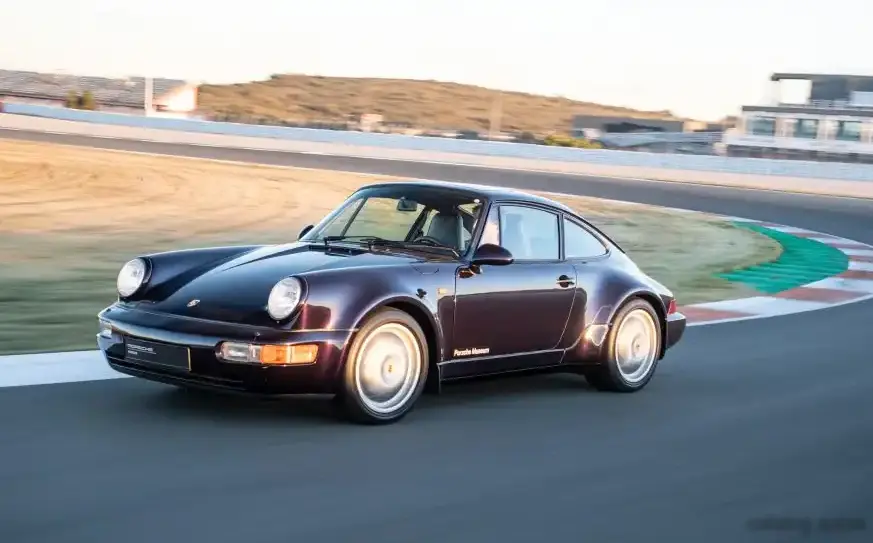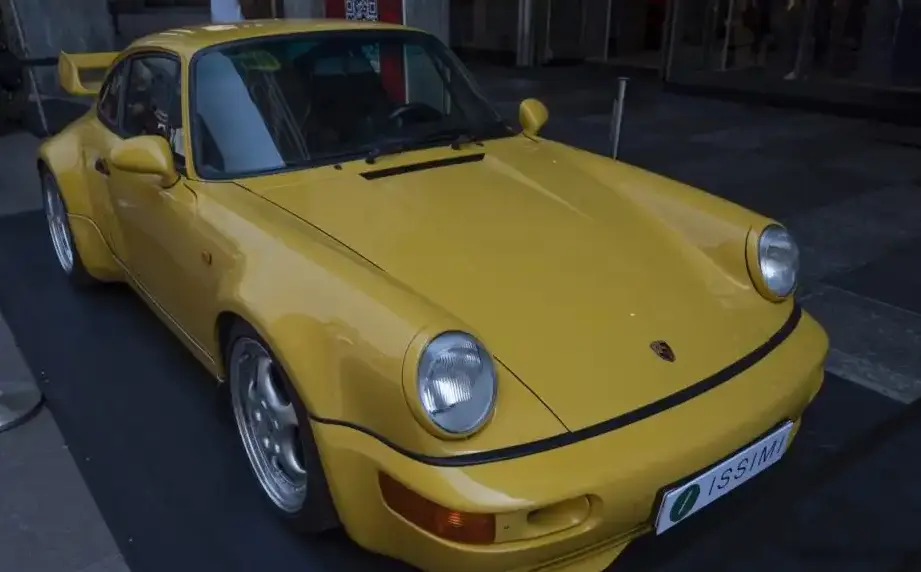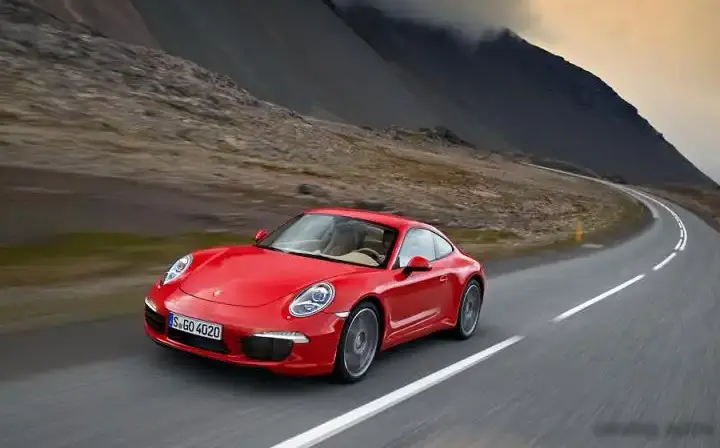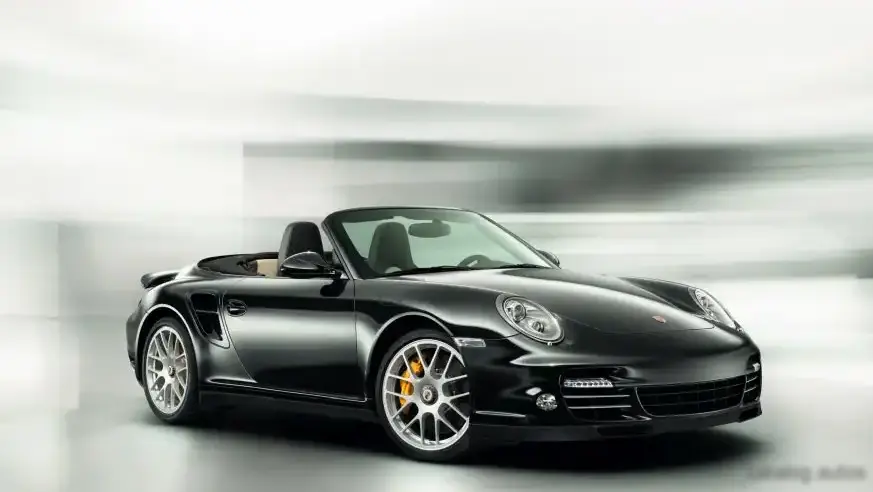
The Porsche 911 Cabriolet Carrera S 3.8 (385 Hp), produced from 2008 to 2012, represents a significant evolution within the 997 generation of Porsche’s iconic sports car. This facelifted model, often referred to as the 997.2, brought with it a host of improvements over the original 997, including direct fuel injection, a revised engine management system, and subtle styling updates. Positioned as the performance-oriented variant within the Cabriolet range, the Carrera S offered a more engaging driving experience than the base Carrera, while remaining more accessible than the track-focused Carrera GTS. It catered to drivers seeking open-top thrills combined with Porsche’s renowned handling and build quality.
Technical Specifications
| Brand | Porsche |
| Model | 911 |
| Generation | 911 Cabriolet (997, facelift 2008) |
| Type (Engine) | Carrera S 3.8 (385 Hp) |
| Start of production | 2008 |
| End of production | 2012 |
| Powertrain Architecture | Internal Combustion engine |
| Body type | Cabriolet |
| Seats | 4 |
| Doors | 2 |
| Fuel consumption (urban) | 16.2 l/100 km (14.5 US mpg, 17.4 UK mpg, 6.2 km/l) |
| Fuel consumption (extra urban) | 7.7 l/100 km (30.5 US mpg, 36.7 UK mpg, 13 km/l) |
| Fuel consumption (combined) | 10.8 l/100 km (21.8 US mpg, 26.2 UK mpg, 9.3 km/l) |
| CO2 emissions | 254 g/km |
| Fuel Type | Petrol (Gasoline) |
| Acceleration 0 – 100 km/h | 4.9 sec |
| Acceleration 0 – 62 mph | 4.9 sec |
| Acceleration 0 – 60 mph | 4.7 sec |
| Maximum speed | 302 km/h (187.65 mph) |
| Emission standard | Euro 5 |
| Weight-to-power ratio | 3.9 kg/Hp, 255 Hp/tonne |
| Weight-to-torque ratio | 3.6 kg/Nm, 278.1 Nm/tonne |
| Power | 385 Hp @ 6500 rpm |
| Power per litre | 101.3 Hp/l |
| Torque | 420 Nm @ 4400 rpm (309.78 lb.-ft. @ 4400 rpm) |
| Engine layout | Rear, Longitudinal |
| Engine Model/Code | MA1.01 |
| Engine displacement | 3800 cm3 (231.89 cu. in.) |
| Number of cylinders | 6 |
| Engine configuration | Boxer |
| Compression ratio | 12.5:1 |
| Fuel injection system | Direct injection |
| Engine oil capacity | 7.5 l (7.93 US qt | 6.6 UK qt) |
| Coolant capacity | 29 l (30.64 US qt | 25.52 UK qt) |
| Kerb Weight | 1510 kg (3328.98 lbs.) |
| Max. weight | 1890 kg (4166.74 lbs.) |
| Max load | 380 kg (837.76 lbs.) |
| Trunk (boot) space – maximum | 135 l (4.77 cu. ft.) |
| Fuel tank capacity | 64 l (16.91 US gal | 14.08 UK gal) |
| Length | 4435 mm (174.61 in.) |
| Width | 1808 mm (71.18 in.) |
| Height | 1300 mm (51.18 in.) |
| Wheelbase | 2350 mm (92.52 in.) |
| Drag coefficient (Cd) | 0.30 |
| Minimum turning circle | 10.9 m (35.76 ft.) |
| Drivetrain Architecture | Rear wheel drive |
| Number of gears | 6 |
| Gearbox type | Manual transmission |
| Front suspension | Independent type McPherson |
| Rear suspension | Independent multi-link suspension |
| Front brakes | Ventilated discs |
| Rear brakes | Ventilated discs |
| Assisting systems | ABS (Anti-lock braking system) |
| Steering type | Steering rack and pinion |
| Power steering | Hydraulic Steering |
| Tires size | 235/35 ZR19; 295/30 ZR19 |
| Wheel rims size | 8J x 19; 11J x 19 |
Powertrain & Engine Architecture
At the heart of the 997.2 Carrera S Cabriolet lies the MA1.01 engine, a 3.8-liter naturally aspirated flat-six. This engine represented a significant upgrade from the 3.6-liter unit found in the earlier 997.1 Carrera S. The introduction of direct fuel injection (DFI) was the key improvement, allowing for more precise fuel delivery, increased combustion efficiency, and a broader torque curve. The engine produced 385 horsepower at 6,500 rpm and 420 Nm (309.78 lb-ft) of torque at 4,400 rpm. The boxer configuration, with its horizontally opposed cylinders, contributes to a low center of gravity, enhancing stability and handling. The engine’s layout is longitudinal, meaning it’s mounted lengthwise in the chassis. The standard transmission for this variant was a six-speed manual, although a five-speed Tiptronic S automatic transmission was also available as an option. The automatic, while offering convenience, was generally considered less engaging than the manual and slightly less efficient.
Driving Characteristics
The Carrera S 3.8 Cabriolet delivered a distinctly sporting driving experience. The 3.8-liter engine provided ample power for both spirited driving on winding roads and comfortable cruising. Acceleration from 0 to 60 mph took approximately 4.7 seconds, and the car could reach a top speed of 187.65 mph. The manual transmission offered precise shifts and allowed the driver to fully exploit the engine’s powerband. The automatic transmission, while smooth, felt somewhat slower to respond and lacked the direct connection of the manual. The Cabriolet’s chassis was well-balanced, providing excellent handling and stability. Porsche’s active suspension management (PASM) system, available as an option, further enhanced the driving experience by allowing the driver to adjust the suspension stiffness to suit their preferences. The open-top configuration added to the sense of freedom and exhilaration, although it also introduced some wind noise at higher speeds.
Equipment & Trim Levels
The Carrera S Cabriolet came standard with a generous array of features, including leather upholstery, automatic climate control, a Bose sound system, and bi-xenon headlights. Optional extras were plentiful, allowing buyers to customize their cars to their liking. Popular options included the aforementioned PASM system, sport seats, a navigation system, and a wind deflector to reduce wind buffeting in the cabin. Interior trim options included various leather colors and finishes, as well as carbon fiber accents. The dashboard layout was typical of the 997 generation, with a central tachometer flanked by gauges for speed, fuel level, and coolant temperature. The overall interior design was functional and driver-focused, with a premium feel.
Chassis & Braking
The 997.2 Carrera S Cabriolet featured an independent suspension system at all four wheels. The front suspension utilized McPherson struts, while the rear suspension employed a multi-link design. This setup provided excellent ride quality and handling. The car was equipped with ventilated disc brakes at all four wheels, providing ample stopping power. Porsche’s ABS (Anti-lock Braking System) was standard, enhancing safety and stability during braking. The steering system was a rack-and-pinion setup with hydraulic power assistance, offering precise and responsive steering feel. The Cabriolet’s chassis was reinforced compared to the coupe to compensate for the lack of a fixed roof, ensuring structural rigidity.
Market Reception & Comparison
The 997.2 Carrera S Cabriolet was well-received by automotive critics, who praised its performance, handling, and overall refinement. It was often compared to other high-performance convertibles, such as the BMW M3 Convertible and the Audi R8 Spyder. The Carrera S offered a unique blend of performance and luxury, making it a compelling choice for buyers seeking a sophisticated and engaging driving experience. Compared to the base Carrera Cabriolet, the Carrera S offered significantly more power and performance. However, it was also more expensive. The Carrera GTS, positioned above the Carrera S, offered even more power and a more track-focused setup, but at a higher price point. Fuel economy was reasonable for a high-performance sports car, with combined fuel consumption of around 21.8 US mpg.
Legacy
The 997.2 Carrera S Cabriolet has proven to be a reliable and durable sports car. The MA1.01 engine is generally considered to be robust, although it is susceptible to issues such as intermediate shaft (IMS) bearing failure, particularly in earlier 997 models. Regular maintenance and preventative measures can mitigate this risk. Today, the 997.2 Carrera S Cabriolet remains a popular choice in the used car market, offering a compelling combination of performance, style, and Porsche heritage. Its values have been steadily increasing in recent years, reflecting its desirability among enthusiasts and collectors. The 997 generation, as a whole, is often considered the last of the “analog” 911s, offering a more raw and engaging driving experience than later, more technologically advanced models.