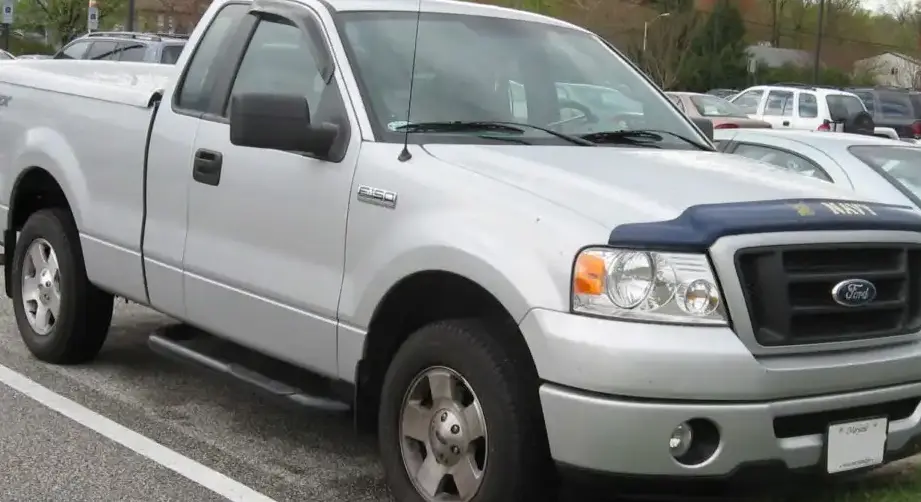
The Ford F-150 XI Regular Cab, produced between 2004 and 2006, represented a continuation of the popular F-Series lineage, specifically the tenth generation (2004-2008). This iteration of the F-150 aimed to balance traditional truck capabilities with a degree of modern refinement. The 4.6L V8 Triton engine paired with an automatic transmission was a common configuration, positioned as a step up from the base V6 models, offering a blend of power and convenience for both work and personal use. It served as a workhorse for many American consumers, offering a robust platform for hauling and towing.
Technical Specifications
| Brand | Ford |
| Model | F-Series F-150 |
| Generation | F-Series F-150 XI Regular Cab |
| Type (Engine) | 4.6 V8 Triton (231 Hp) Automatic |
| Start of production | 2004 |
| End of production | 2006 |
| Powertrain Architecture | Internal Combustion engine |
| Body type | Pick-up |
| Seats | 3 |
| Doors | 2 |
| Fuel Type | Petrol (Gasoline) |
| Weight-to-power ratio | 9.2 kg/Hp, 108.1 Hp/tonne |
| Weight-to-torque ratio | 5.4 kg/Nm, 185.9 Nm/tonne |
| Power | 231 Hp @ 4750 rpm |
| Power per litre | 50.2 Hp/l |
| Torque | 397 Nm @ 3500 rpm (292.81 lb.-ft. @ 3500 rpm) |
| Engine layout | Front, Longitudinal |
| Engine displacement | 4605 cm3 (281.01 cu. in.) |
| Number of cylinders | 8 |
| Engine configuration | V-engine |
| Cylinder Bore | 90.17 mm (3.55 in.) |
| Piston Stroke | 89.92 mm (3.54 in.) |
| Compression ratio | 9.3:1 |
| Number of valves per cylinder | 2 |
| Fuel injection system | Multi-port manifold injection |
| Engine aspiration | Naturally aspirated engine |
| Valvetrain | SOHC |
| Engine oil capacity | 5.7 l (6.02 US qt | 5.02 UK qt) |
| Coolant | 19.4 l (20.5 US qt | 17.07 UK qt) |
| Kerb Weight | 2136-2195 kg (4709.07 – 4839.15 lbs.) |
| Max. weight | 3084 kg (6799.06 lbs.) |
| Max load | 889-948 kg (1959.91 – 2089.98 lbs.) |
| Fuel tank capacity | 98-135 l (25.89 – 35.66 US gal | 21.56 – 29.7 UK gal) |
| Permitted trailer load with brakes (12%) | 5534 kg (12200.38 lbs.) |
| Length | 5364-5837 mm (211.18 – 229.8 in.) |
| Width | 2004 mm (78.9 in.) |
| Height | 1869-1920 mm (73.58 – 75.59 in.) |
| Wheelbase | 3200-3670 mm (125.98 – 144.49 in.) |
| Front track | 1702 mm (67.01 in.) |
| Rear (Back) track | 1702 mm (67.01 in.) |
| Minimum turning circle (turning diameter) | 12.7-14.1 m (41.67 – 46.26 ft.) |
| Drivetrain Architecture | The Internal combustion engine (ICE) drives the rear wheels of the vehicle. |
| Drive wheel | Rear wheel drive |
| Number of gears and type of gearbox | 4 gears, automatic transmission |
| Front suspension | Double wishbone |
| Rear suspension | Leaf spring |
| Front brakes | Ventilated discs, 330 mm |
| Rear brakes | Ventilated discs, 348 mm |
| Assisting systems | ABS (Anti-lock braking system) |
| Steering type | Steering rack and pinion |
| Power steering | Electric Steering |
| Tires size | 235/70 R17; 265/60 R18 |
| Wheel rims size | 17; 18 |
Powertrain & Engine Architecture
The heart of this F-150 variant was the 4.6-liter Triton V8 engine. This engine, part of Ford’s modular engine family, utilized a single overhead camshaft (SOHC) design with two valves per cylinder. The engine code varied, but commonly seen were variations within the earlier Triton family. The multi-port fuel injection system delivered fuel directly to each intake port, optimizing combustion. The 4.6L Triton was known for its relatively simple design, contributing to its overall reliability. The automatic transmission was typically a 4-speed unit, designed to provide smooth shifting and ease of use, particularly appealing to buyers who preferred not to operate a manual transmission. This transmission was geared towards providing adequate torque for towing and hauling, though it wasn’t optimized for fuel efficiency by modern standards.
Driving Characteristics
The 4.6L V8 with the 4-speed automatic delivered a respectable, if not exhilarating, driving experience. Acceleration was adequate for everyday driving and moderate towing, but it lacked the punch of the larger 5.4L Triton V8 or the performance-oriented variants. The automatic transmission’s gear ratios were tuned for practicality, prioritizing towing capacity and usability over outright speed. Compared to a manual transmission equipped F-150, the automatic version offered less driver engagement but greater convenience, especially in stop-and-go traffic. The weight distribution, typical of body-on-frame trucks, resulted in a noticeable body roll during cornering, but the suspension provided a reasonably comfortable ride, even when unladen.
Equipment & Trim Levels
The F-150 XI Regular Cab with the 4.6L engine and automatic transmission typically fell into the mid-range of the F-150 lineup. Standard features generally included air conditioning, a basic audio system, and vinyl upholstery. Higher trim levels, such as the XLT, added features like power windows and locks, upgraded audio systems, and cloth or leather upholstery. Optional extras included a towing package, cruise control, and various convenience features. The interior was functional and durable, designed to withstand the rigors of truck ownership. The Regular Cab configuration offered a basic, no-frills interior focused on utility.
Chassis & Braking
The F-150 XI Regular Cab utilized a traditional body-on-frame construction, providing a robust and durable platform. The front suspension employed a double wishbone design, while the rear suspension utilized leaf springs, a common setup for trucks designed for hauling heavy loads. Braking duties were handled by ventilated disc brakes on all four wheels, with ABS (Anti-lock Braking System) as a standard safety feature. The braking system was adequate for the truck’s weight and intended use, but it wasn’t particularly sophisticated by modern standards. The rear leaf spring suspension, while capable, could sometimes result in a somewhat bumpy ride when the truck was unloaded.
Market Reception & Comparison
The 4.6L V8 automatic F-150 was a popular choice for buyers who needed a capable truck without the expense of the larger engine options. Critics generally praised its reliability and affordability, but noted that its performance was not as impressive as the 5.4L Triton V8. Fuel economy was typical for a full-size truck of the era, averaging around 14-16 mpg in city driving and 18-20 mpg on the highway. Compared to the diesel options available in other full-size trucks, the 4.6L V8 offered less torque but a lower initial purchase price. It was often seen as a good value proposition for those who didn’t require the ultimate in towing or hauling capacity.
Legacy
The 4.6L Triton V8, while eventually superseded by more modern engines, proved to be a relatively durable and reliable powertrain. Many examples of this engine are still on the road today, a testament to its robust design. However, some early Triton engines were prone to spark plug issues and timing chain wear, so regular maintenance is crucial for long-term reliability. In the used car market, these F-150s are often sought after for their affordability and practicality. They represent a solid, dependable work truck that can still provide years of service with proper care. The 4-speed automatic transmission, while not as efficient as newer transmissions, is generally considered reliable and relatively inexpensive to repair.