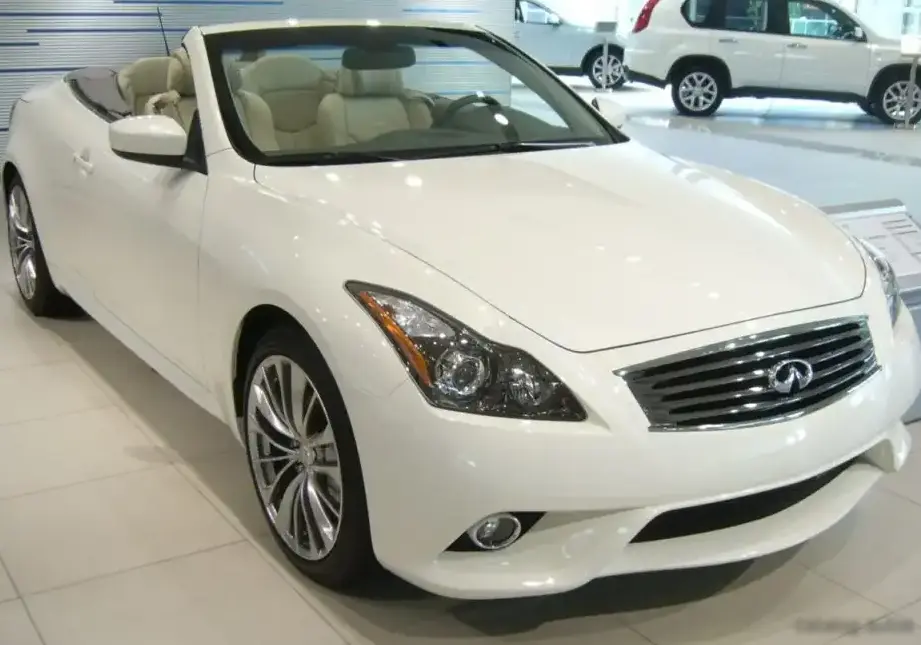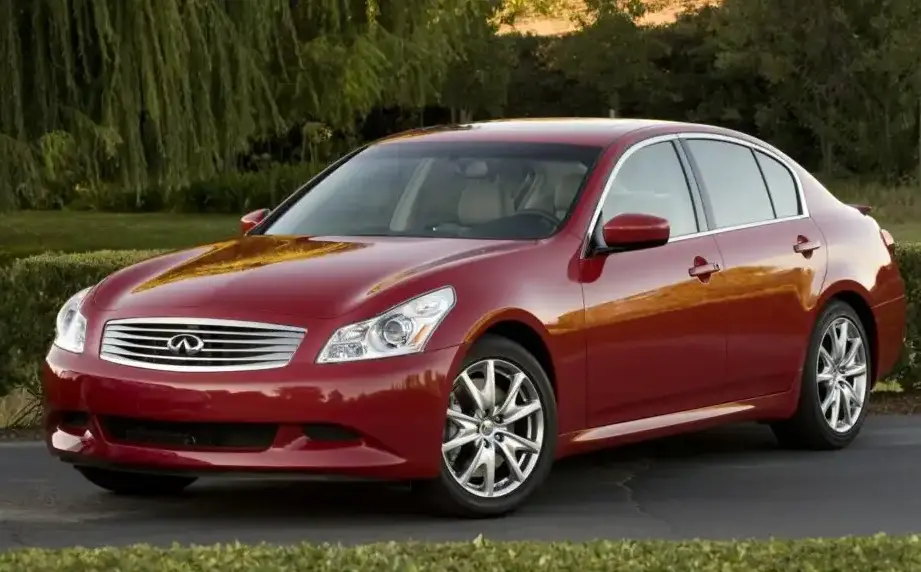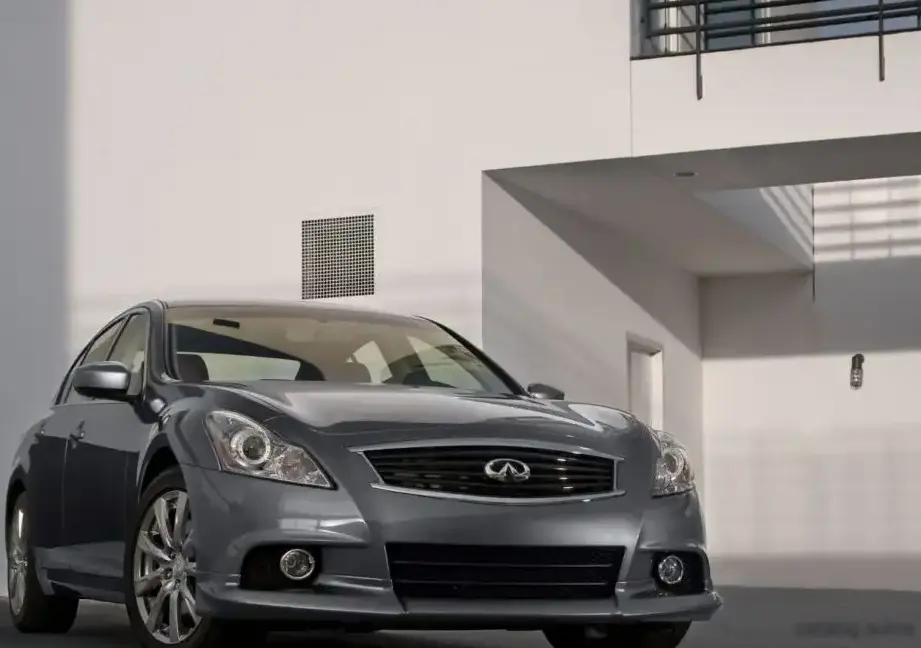
The Infiniti G37 Coupe (V36) represents a significant evolution in the Infiniti lineup, offering a compelling blend of performance, luxury, and style. Produced from 2007 through 2015, the G37 Coupe served as the flagship two-door model, building upon the success of its predecessor, the G35. This variant, equipped with the 3.7-liter V6 engine producing 320 horsepower, occupied the top performance tier within the V36 generation, positioned above the earlier 3.5-liter models and serving as a direct competitor to established sports coupes like the BMW 3 Series Coupe and the Audi A5. The G37 Coupe aimed to deliver a more engaging driving experience than its sedan counterpart, emphasizing a sporty aesthetic and dynamic handling.
Technical Specifications
| Brand | Infiniti |
| Model | G |
| Generation | G37 Coupe (V36) |
| Type (Engine) | 3.7I V6 (320 Hp) |
| Start of production | 2007 |
| End of production | 2015 |
| Powertrain Architecture | Internal Combustion engine |
| Body type | Coupe |
| Seats | 4 |
| Doors | 2 |
| Fuel consumption (urban) | 16.4 l/100 km (14.3 US mpg, 17.2 UK mpg, 6.1 km/l) |
| Fuel consumption (extra urban) | 9.5 l/100 km (24.8 US mpg, 29.7 UK mpg, 10.5 km/l) |
| Fuel consumption (combined) | 12 l/100 km (19.6 US mpg, 23.5 UK mpg, 8.3 km/l) |
| Fuel Type | Petrol (Gasoline) |
| Acceleration 0 – 100 km/h | 6 sec |
| Acceleration 0 – 62 mph | 6 sec |
| Acceleration 0 – 60 mph | 5.7 sec |
| Maximum speed | 250 km/h (155.34 mph) |
| Emission standard | Euro 4 |
| Weight-to-power ratio | 5.5 kg/Hp, 180.4 Hp/tonne |
| Weight-to-torque ratio | 4.8 kg/Nm, 206.3 Nm/tonne |
| Power | 320 Hp @ 7000 rpm |
| Power per litre | 86.6 Hp/l |
| Torque | 366 Nm @ 5200 rpm (269.95 lb.-ft. @ 5200 rpm) |
| Engine layout | Front, Longitudinal |
| Engine Model/Code | VQ37VHR |
| Engine displacement | 3696 cm3 (225.54 cu. in.) |
| Number of cylinders | 6 |
| Engine configuration | V-engine |
| Cylinder Bore | 95.5 mm (3.76 in.) |
| Piston Stroke | 86 mm (3.39 in.) |
| Compression ratio | 11:1 |
| Number of valves per cylinder | 4 |
| Fuel injection system | Multi-port manifold injection |
| Engine aspiration | Naturally aspirated engine |
| Engine oil capacity | 4.9 l (5.18 US qt | 4.31 UK qt) |
| Coolant | 8.6 l (9.09 US qt | 7.57 UK qt) |
| Kerb Weight | 1774 kg (3911 lbs.) |
| Max. weight | 2112 kg (4656.16 lbs.) |
| Max load | 338 kg (745.16 lbs.) |
| Trunk (boot) space – minimum | 242 l (8.55 cu. ft.) |
| Fuel tank capacity | 76 l (20.08 US gal | 16.72 UK gal) |
| Length | 4651 mm (183.11 in.) |
| Width | 1824 mm (71.81 in.) |
| Height | 1392 mm (54.8 in.) |
| Wheelbase | 2850 mm (112.2 in.) |
| Front track | 1547 mm (60.91 in.) |
| Rear (Back) track | 1562 mm (61.5 in.) |
| Drivetrain Architecture | Rear wheel drive |
| Number of gears and type of gearbox | 6 gears, manual transmission |
| Front suspension | Independent coil spring |
| Rear suspension | Independent multi-link spring suspension with stabilizer |
| Front brakes | Ventilated discs |
| Rear brakes | Ventilated discs |
| Assisting systems | ABS (Anti-lock braking system) |
| Power steering | Hydraulic Steering |
| Tires size | 225/50 R18; 225/45 R19; 245/40 R19 |
INTRODUCTION
The Infiniti G37 Coupe, launched in 2007, marked a significant step forward for the brand, showcasing a more aggressive design language and a potent powertrain. It was built on the Nissan FM platform (front-mid engine, rear-wheel drive), also known as the V36 platform, shared with other Nissan and Infiniti models. The G37 replaced the G35 Coupe, offering increased power, refined handling, and a more luxurious interior. The 3.7-liter V6 engine was the centerpiece of this update, delivering a substantial performance boost over the outgoing 3.5-liter engine. The G37 Coupe aimed to appeal to buyers seeking a sporty and sophisticated coupe experience, offering a compelling alternative to European rivals.
Powertrain & Engine Architecture
The heart of the G37 Coupe is the VQ37VHR 3.7-liter V6 engine. This engine is a naturally aspirated powerplant, meaning it doesn’t rely on turbocharging or supercharging for increased power. The “VHR” designation stands for “Variable Valve Timing and lift with high revolution,” highlighting the engine’s advanced valvetrain technology. This system allows for precise control over valve timing and lift, optimizing performance across the rev range. The engine utilizes a multi-port fuel injection system, delivering fuel directly into the intake ports. The VQ37VHR produces 320 horsepower at 7000 rpm and 269 lb-ft of torque at 5200 rpm. The standard transmission for the G37 Coupe was a six-speed manual, but a five-speed automatic transmission was also available. The automatic transmission featured manual shift mode, allowing drivers to select gears for more control. The engine is longitudinally mounted, contributing to a balanced weight distribution and improved handling.
Driving Characteristics
The G37 Coupe with the 3.7-liter V6 and manual transmission delivers a genuinely engaging driving experience. Acceleration is brisk, with 0-60 mph times consistently in the 5.7-second range. The engine is responsive and eager to rev, providing a satisfying surge of power throughout the RPM band. The six-speed manual transmission offers precise shifts and a sporty feel. The automatic transmission, while smooth, doesn’t quite match the engagement of the manual. The rear-wheel-drive layout contributes to balanced handling and a playful character. The suspension is tuned for a balance between comfort and performance, providing a firm but not overly harsh ride. Compared to the G35 Coupe, the G37 offers noticeably more power and a more refined driving experience. The G37 also felt more planted and stable at higher speeds.
Equipment & Trim Levels
The G37 Coupe was available in several trim levels, including Base, Journey, and Premium. The Base model came standard with features such as leather upholstery, automatic climate control, a Bose audio system, and 18-inch alloy wheels. The Journey trim added features like a sunroof, heated front seats, and a power driver’s seat. The Premium trim included features such as navigation, a rearview camera, and upgraded leather upholstery. Optional extras included a limited-slip differential, adaptive dampers, and a performance exhaust system. Interior materials were generally high quality, with a focus on creating a luxurious and sporty atmosphere.
Chassis & Braking
The G37 Coupe utilizes an independent coil spring suspension in the front and an independent multi-link spring suspension with a stabilizer bar in the rear. This suspension setup provides a good balance between ride comfort and handling performance. The G37 Coupe is equipped with ventilated disc brakes on all four wheels, providing ample stopping power. Anti-lock braking system (ABS) is standard. The steering is hydraulically assisted, offering a responsive and precise feel. The chassis is relatively stiff, contributing to improved handling and stability. The standard tire size is 225/50 R18, with larger 19-inch tires available on higher trim levels.
Market Reception & Comparison
The Infiniti G37 Coupe was generally well-received by automotive critics. Reviewers praised its powerful engine, engaging handling, and luxurious interior. However, some critics noted that the fuel economy was relatively poor for a coupe in its class. Compared to the G35 Coupe, the G37 offered a significant performance upgrade and a more refined driving experience. Against its European rivals, such as the BMW 3 Series Coupe and the Audi A5, the G37 offered a compelling value proposition, providing similar performance and features at a lower price point. The G37’s reliability was generally considered good, although some owners reported issues with the oil consumption of the VQ37VHR engine.
Legacy
The Infiniti G37 Coupe remains a popular choice in the used car market today. Its combination of performance, luxury, and style continues to appeal to buyers seeking a sporty and sophisticated coupe. The VQ37VHR engine is known for its durability and potential for modification. While some maintenance items, such as timing chain tensioners, may require attention as the car ages, the G37 Coupe is generally considered a reliable and rewarding vehicle to own. The G37 Coupe helped establish Infiniti as a serious contender in the luxury sports coupe segment, paving the way for future models like the Q60.