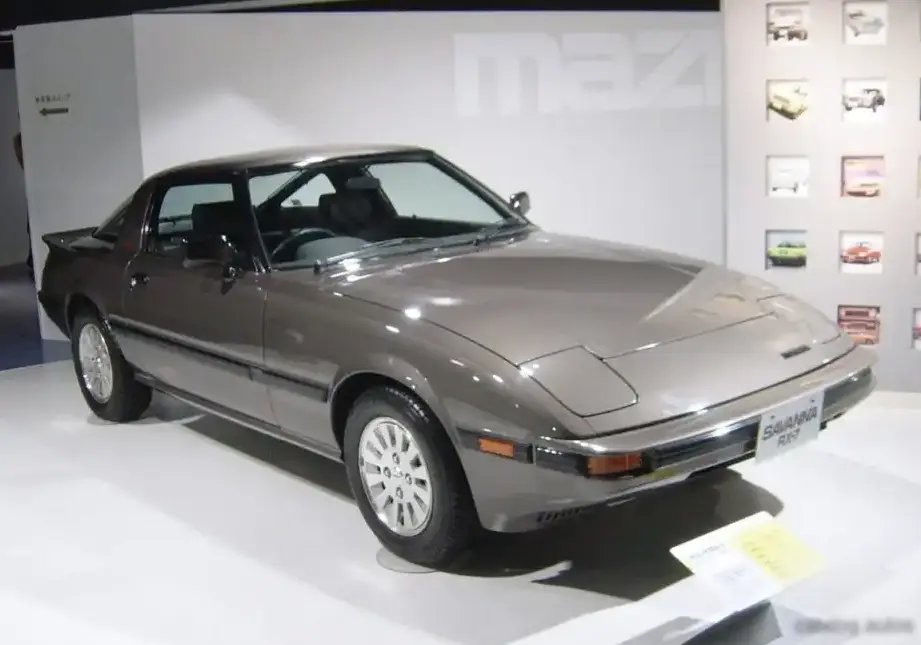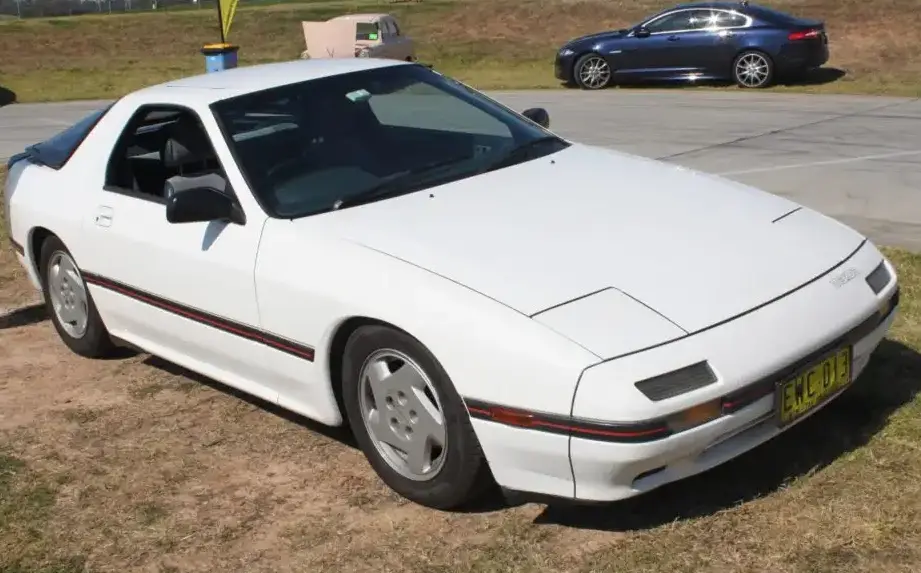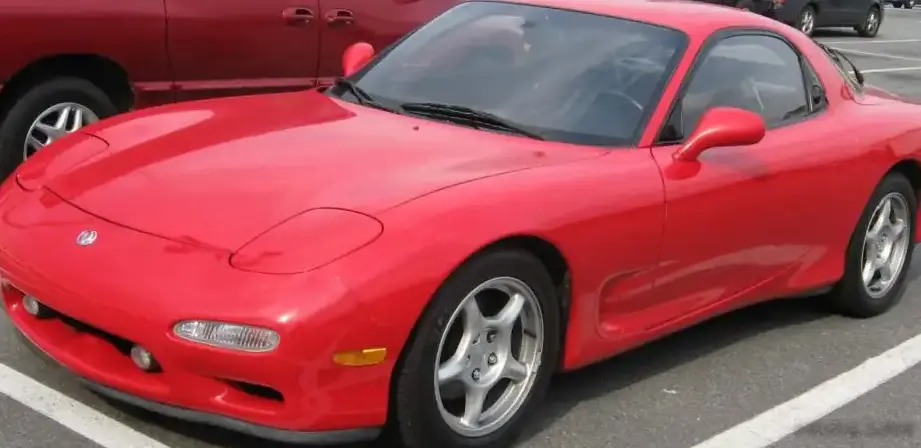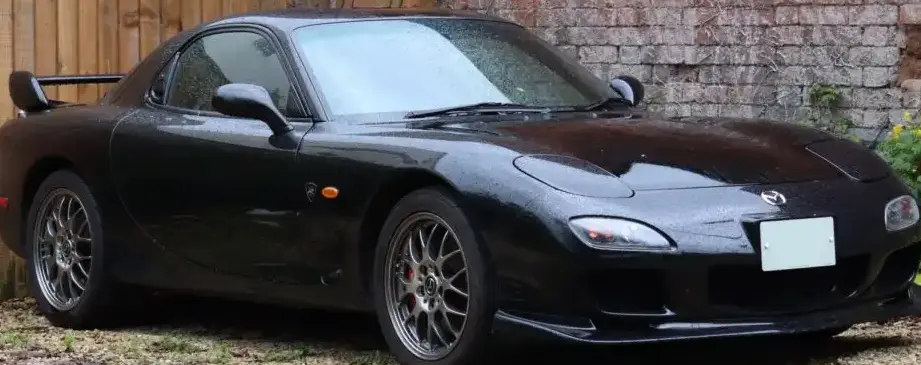
The Mazda RX-7 (FD) IV, produced from 2000 to 2002, represents the final iteration of Mazda’s iconic rotary-powered sports car. This generation, built upon the FD platform introduced in 1992, continued the RX-7’s legacy of offering a unique driving experience centered around its Wankel rotary engine. While production ended in Japan in 1996, limited production continued for export markets, including the United States, until 2002. The RX-7 IV, particularly the 1.3-liter twin-turbo variant, aimed to deliver a refined yet exhilarating performance package, solidifying its place as a highly sought-after sports car.
Technical Specifications
| Brand | Mazda |
| Model | RX-7 |
| Generation | RX 7 IV |
| Type (Engine) | Wankel 1.3 (265 Hp) |
| Start of production | 2000 year |
| End of production | 2002 year |
| Powertrain Architecture | Internal Combustion engine |
| Body type | Coupe |
| Seats | 4 |
| Doors | 2 |
| Fuel Type | Petrol (Gasoline) |
| Maximum speed | 250 km/h (155.34 mph) |
| Weight-to-power ratio | 4.7 kg/Hp, 213.7 Hp/tonne |
| Weight-to-torque ratio | 4.2 kg/Nm, 237.1 Nm/tonne |
| Power | 265 Hp @ 6500 rpm |
| Power per litre | 202.6 Hp/l |
| Torque | 294 Nm @ 5000 rpm (216.84 lb.-ft. @ 5000 rpm) |
| Engine layout | Front, Longitudinal |
| Engine displacement | 1308 cm3 (79.82 cu. in.) |
| Number of cylinders | 4 |
| Engine configuration | Rotary (Wankel) |
| Compression ratio | 9.1:1 |
| Fuel injection system | Multi-port manifold injection |
| Engine aspiration | Twin-Turbo, Intercooler |
| Kerb Weight | 1240 kg (2733.73 lbs) |
| Max. weight | 1490 kg (3284.89 lbs) |
| Max load | 250 kg (551.16 lbs) |
| Fuel tank capacity | 76 l (20.08 US gal | 16.72 UK gal) |
| Length | 4285 mm (168.7 in) |
| Width | 1760 mm (69.29 in) |
| Height | 1230 mm (48.43 in) |
| Wheelbase | 2425 mm (95.47 in) |
| Front track | 1460 mm (57.48 in) |
| Rear (Back) track | 1460 mm (57.48 in) |
| Drivetrain Architecture | The Internal combustion engine (ICE) drives the rear wheels of the vehicle. |
| Drive wheel | Rear wheel drive |
| Number of gears and type of gearbox | 5 gears, manual transmission |
| Front suspension | Double wishbone |
| Rear suspension | Coil spring |
| Front brakes | Ventilated discs |
| Rear brakes | Ventilated discs |
| Assisting systems | ABS (Anti-lock braking system) |
| Steering type | Steering rack and pinion |
| Power steering | Hydraulic Steering |
| Tires size | 225/50 R16 |
| Wheel rims size | 16 |
Powertrain & Engine Architecture
The heart of the RX-7 IV is its 13B-REW Wankel rotary engine. This 1.3-liter engine, despite its small displacement, produces a substantial 265 horsepower at 6500 rpm and 294 Nm (216.84 lb-ft) of torque at 5000 rpm thanks to its twin-turbocharger setup. The sequential twin-turbo system was a key feature, utilizing a small turbo for immediate response at low engine speeds and a larger turbo to deliver peak power in the upper rev range. This minimized turbo lag and provided a broad, usable powerband. The engine employs multi-port fuel injection for precise fuel delivery and features a 9.1:1 compression ratio. The engine is longitudinally mounted, driving the rear wheels. The five-speed manual transmission was the standard offering, providing a direct connection between the engine and the drivetrain.
Driving Characteristics
The RX-7 IV with the 1.3-liter twin-turbo and manual transmission delivers a uniquely engaging driving experience. The rotary engine’s high-revving nature and the responsive turbo system contribute to a feeling of immediacy and power. While not possessing the low-end grunt of a traditional piston engine, the RX-7 excels in the mid-to-upper RPM range, offering a thrilling surge of acceleration. The relatively lightweight chassis and well-tuned suspension contribute to nimble handling and precise cornering. The five-speed gearbox is well-matched to the engine’s powerband, allowing drivers to keep the engine in its sweet spot. Compared to earlier RX-7 generations, the IV benefits from improved refinement and a more modern driving experience.
Equipment & Trim Levels
The RX-7 IV was generally well-equipped, even in its base form. Standard features typically included power windows, power locks, air conditioning, and a basic audio system. The interior featured supportive bucket seats and a driver-focused dashboard layout. Optional extras included leather upholstery, a premium audio system, and upgraded wheels. The RX-7 IV was positioned as the performance-oriented variant of the lineup, with a focus on driving dynamics rather than outright luxury. The interior, while functional, prioritized a sporty aesthetic over lavish appointments.
Chassis & Braking
The RX-7 IV utilizes a lightweight chassis construction, contributing to its agile handling. The suspension system consists of double wishbones at the front and a multi-link setup at the rear, providing a balance between ride comfort and handling precision. Ventilated disc brakes are fitted on all four wheels, providing ample stopping power. An Anti-lock Braking System (ABS) was standard, enhancing safety and control. The steering system employs a rack-and-pinion setup with hydraulic power assistance, offering precise and responsive steering feel. The standard tire size was 225/50 R16, mounted on 16-inch alloy wheels.
Market Reception & Comparison
The RX-7 IV was generally well-received by automotive critics, who praised its unique engine, engaging driving dynamics, and stylish design. However, the rotary engine’s reputation for requiring frequent maintenance and its relatively low fuel economy were often cited as drawbacks. Compared to other sports cars of the era, such as the Toyota Supra or Nissan 300ZX, the RX-7 offered a different kind of performance experience – one that prioritized agility and responsiveness over sheer power. The RX-7’s unique character and limited production numbers have contributed to its growing popularity among collectors and enthusiasts.
Legacy
The Mazda RX-7 IV represents the culmination of Mazda’s rotary engine development. While the Wankel engine ultimately proved to be complex and challenging to maintain, it remains a beloved powerplant among enthusiasts. The RX-7 IV’s combination of performance, handling, and distinctive styling has cemented its status as a modern classic. Today, well-maintained examples command high prices in the used car market. The engine’s longevity is heavily dependent on consistent maintenance, including regular apex seal replacements. Despite the maintenance requirements, the RX-7 IV continues to be celebrated for its unique driving experience and its place in automotive history.