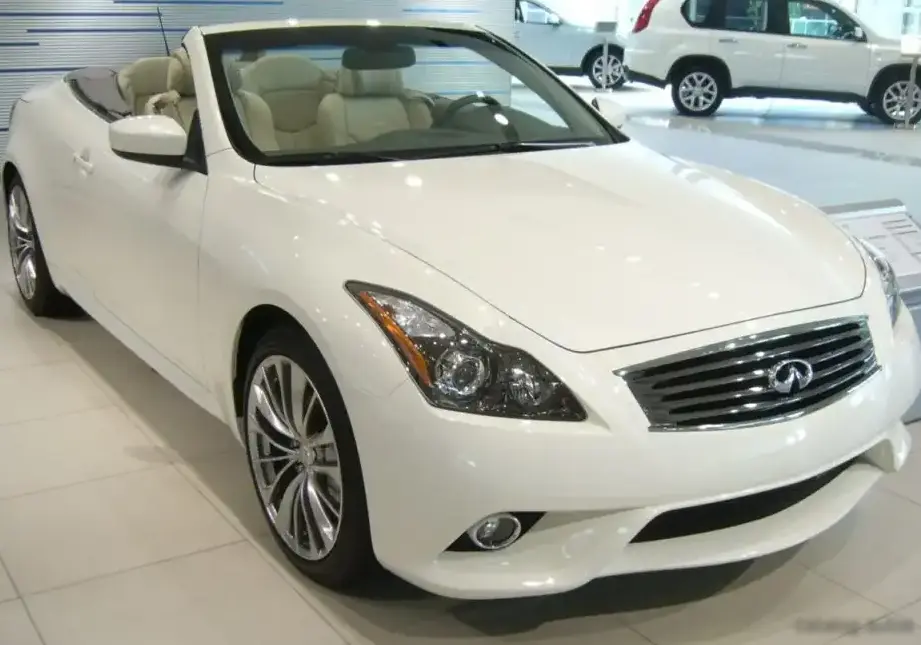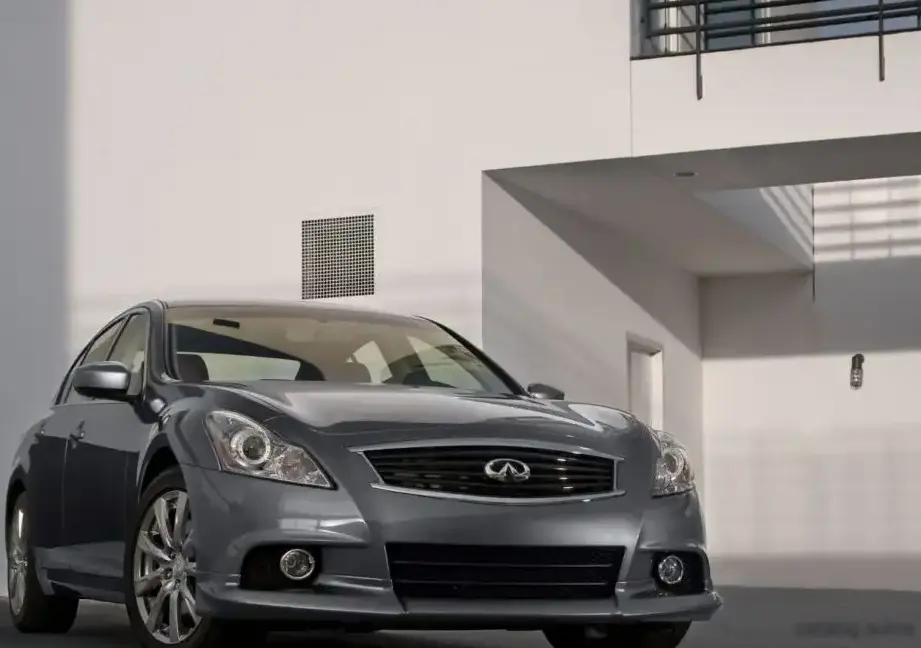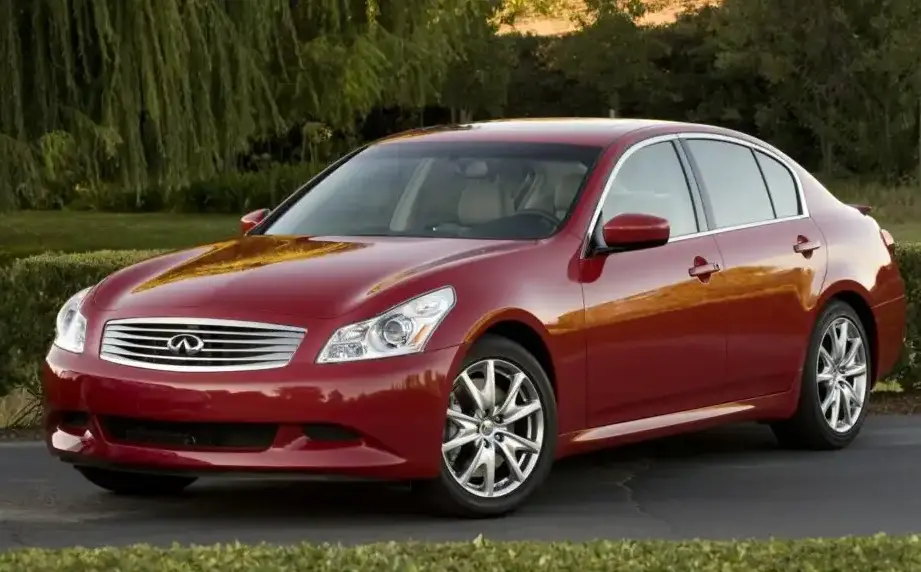
The Infiniti G37 Sedan, produced from September 2008 to November 2009, represented the second generation of Infiniti’s popular mid-size luxury car, internally designated the V36 chassis. Positioned as a direct successor to the G35, the G37 brought a significant increase in engine displacement and power, along with revised styling and a more refined interior. The 3.7-liter V6 engine paired with a seven-speed automatic transmission was a key configuration within the G37 lineup, offering a balance of performance and convenience aimed at buyers prioritizing a comfortable and capable grand touring experience. It served as a step up from the base models, while remaining more accessible than the sport-tuned manual transmission variants.
Technical Specifications
| Brand | Infiniti |
| Model | G |
| Generation | G37 Sedan (V36) |
| Type (Engine) | 3.7 V6 (328 Hp) Automatic |
| Start of production | September, 2008 |
| End of production | November, 2009 |
| Powertrain Architecture | Internal Combustion engine |
| Body type | Sedan |
| Seats | 5 |
| Doors | 4 |
| Fuel consumption (economy) – urban (EPA) | 13.1 l/100 km (18 US mpg, 21.6 UK mpg, 7.6 km/l) |
| Fuel consumption (economy) – extra urban (EPA) | 9 l/100 km (26.1 US mpg, 31.4 UK mpg, 11.1 km/l) |
| Fuel Type | Petrol (Gasoline) |
| Emission standard | LEV2 |
| Weight-to-power ratio | 5 kg/Hp, 202 Hp/tonne |
| Weight-to-torque ratio | 4.4 kg/Nm, 224.8 Nm/tonne |
| Power | 328 Hp @ 7000 rpm |
| Power per litre | 88.7 Hp/l |
| Torque | 365 Nm @ 5200 rpm (269.21 lb.-ft. @ 5200 rpm) |
| Maximum engine speed | 7600 rpm |
| Engine layout | Front, Longitudinal |
| Engine Model/Code | VQ37VHR |
| Engine displacement | 3696 cm3 (225.54 cu. in.) |
| Number of cylinders | 6 |
| Engine configuration | V-engine |
| Cylinder Bore | 95.5 mm (3.76 in.) |
| Piston Stroke | 86 mm (3.39 in.) |
| Compression ratio | 11:1 |
| Number of valves per cylinder | 4 |
| Fuel injection system | Multi-port manifold injection |
| Engine aspiration | Naturally aspirated engine |
| Valvetrain | DOHC, CVTCS, VVEL |
| Engine oil capacity | 4.9 l (5.18 US qt | 4.31 UK qt) |
| Coolant | 9 l (9.51 US qt | 7.92 UK qt) |
| Kerb Weight | 1624-1628 kg (3580.31 – 3589.13 lbs.) |
| Max. weight | 2142 kg (4722.3 lbs.) |
| Max load | 514-518 kg (1133.18 – 1141.99 lbs.) |
| Trunk (boot) space – minimum | 382 l (13.49 cu. ft.) |
| Fuel tank capacity | 76 l (20.08 US gal | 16.72 UK gal) |
| Length | 4755 mm (187.2 in.) |
| Width | 1773 mm (69.8 in.) |
| Height | 1452 mm (57.17 in.) |
| Wheelbase | 2850 mm (112.2 in.) |
| Front track | 1520 mm (59.84 in.) |
| Rear (Back) track | 1520-1530 mm (59.84 – 60.24 in.) |
| Ride height (ground clearance) | 130-132 mm (5.12 – 5.2 in.) |
| Drag coefficient (Cd) | 0.29 |
| Minimum turning circle (turning diameter) | 10.8 m (35.43 ft.) |
| Drivetrain Architecture | The Internal combustion engine (ICE) drives the rear wheels of the vehicle. |
| Drive wheel | Rear wheel drive |
| Number of gears and type of gearbox | 7 gears, automatic transmission |
| Front suspension | Coil spring, Double wishbone, Transverse stabilizer |
| Rear suspension | Independent multi-link spring suspension with stabilizer |
| Front brakes | Ventilated discs, 320×28 mm |
| Rear brakes | Ventilated discs, 308×16 mm |
| Assisting systems | ABS (Anti-lock braking system) |
| Steering type | Steering rack and pinion |
| Power steering | Hydraulic Steering |
| Tires size | Front wheel tires: 225/55 R17; 225/50 R18Rear wheel tires: 225/55 R17; 225/50 R18; 245/45 R18 |
| Wheel rims size | Front wheel rims: 7.5J x 17; 7.5J x 18Rear wheel rims: 7.5J x 17; 7.5J x 18; 8.5J x 18 |
Powertrain & Engine Architecture
The heart of the G37 Sedan Automatic is the VQ37VHR 3.7-liter V6 engine. This engine is a naturally aspirated powerplant, meaning it doesn’t rely on turbocharging or supercharging for increased power. The “VHR” designation stands for “High Revolution,” indicating the engine’s capability for high engine speeds. It features a 60-degree V-angle, four valves per cylinder, and dual overhead camshafts (DOHC) with Continuously Variable Valve Timing Control System (CVTCS) and Variable Valve Event and Lift (VVEL) technology. VVEL allows for precise control of valve timing and lift, optimizing engine performance and efficiency across a wider range of engine speeds. The engine utilizes multi-port fuel injection. The seven-speed automatic transmission, sourced from Jatco, was designed to provide smooth and responsive shifts. It features adaptive shift control, which learns the driver’s habits and adjusts shift points accordingly. Manual shift mode was also available, offering drivers more control over gear selection.
Driving Characteristics
The G37 Sedan with the 3.7L V6 and automatic transmission delivers a refined and engaging driving experience. While not as aggressively geared as the six-speed manual variants, the seven-speed automatic provides adequate acceleration and responsiveness for everyday driving. The automatic transmission prioritizes smooth shifts and comfort, making it well-suited for commuting and long highway journeys. The gear ratios are tuned for a balance between acceleration and fuel efficiency. Compared to the manual transmission models, the automatic version offers slightly slower acceleration times, but the convenience and ease of use are significant advantages for many drivers. The rear-wheel-drive configuration contributes to a balanced chassis and predictable handling.
Equipment & Trim Levels
The G37 Sedan Automatic typically came standard with a generous array of features, including leather upholstery, power-adjustable front seats, a premium audio system, automatic climate control, and a sunroof. Optional extras included navigation system, a rear-view camera, and advanced safety features like lane departure warning and intelligent cruise control. Trim levels varied slightly depending on the year and package options selected, but generally, the automatic version was available in base and Journey trims. The Journey trim added features like heated front seats, a power-adjustable steering column, and upgraded interior trim.
Chassis & Braking
The G37 Sedan utilizes a front double wishbone and rear independent multi-link suspension system, designed to provide a comfortable ride and responsive handling. Stabilizer bars are fitted to both the front and rear axles to reduce body roll during cornering. The braking system consists of ventilated disc brakes on all four wheels, providing ample stopping power. Anti-lock braking system (ABS) is standard. The rear brakes are slightly smaller in diameter than the front brakes. The steering system is a rack-and-pinion setup with hydraulic power assistance, offering precise steering feel and control.
Market Reception & Comparison
The Infiniti G37 Sedan was generally well-received by automotive critics, praised for its powerful engine, refined interior, and engaging driving dynamics. The automatic transmission was noted for its smoothness and responsiveness, although some reviewers preferred the more engaging experience of the manual transmission. Compared to its competitors, such as the BMW 3 Series and Lexus IS, the G37 offered a compelling combination of performance, luxury, and value. Fuel economy was considered average for its class. Reliability was generally good, although some owners reported minor issues with the infotainment system and electrical components.
Legacy
The VQ37VHR engine has proven to be a durable and reliable powerplant, and the G37 Sedan Automatic remains a popular choice in the used car market. The engine’s robust construction and relatively simple design contribute to its longevity. Regular maintenance, including oil changes and timing chain inspections, is crucial for ensuring long-term reliability. Today, the G37 Sedan Automatic offers a compelling blend of performance, luxury, and affordability, making it an attractive option for buyers seeking a well-rounded and capable mid-size luxury car.