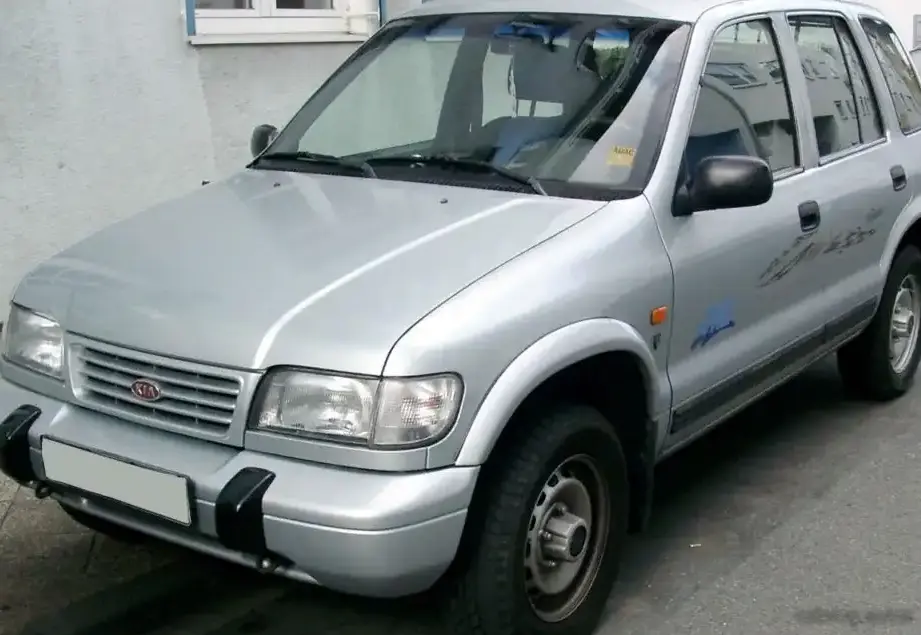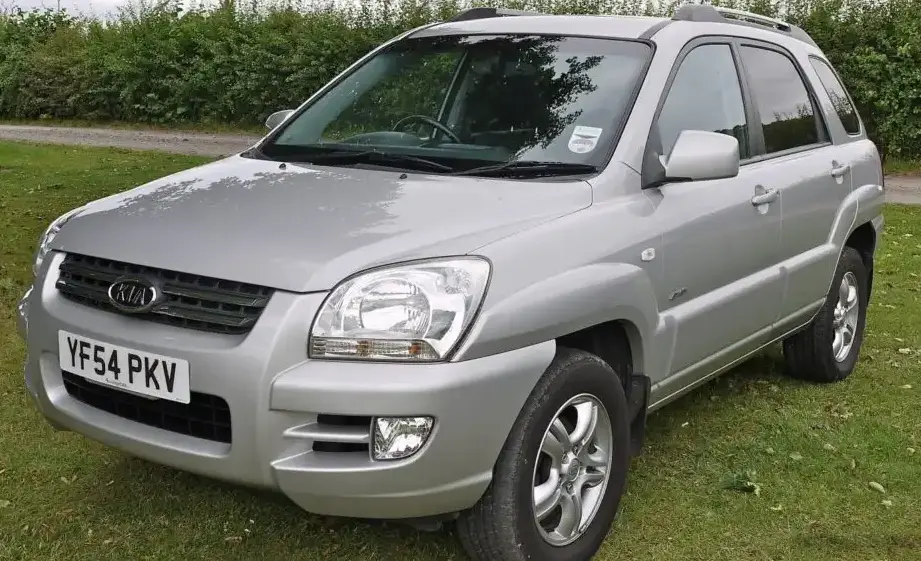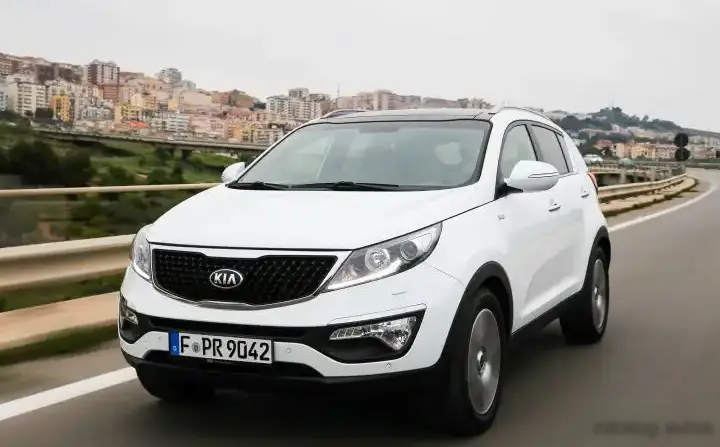
The Kia Sportage III, specifically the facelifted model introduced in 2014, represented a significant step forward for the South Korean automaker in the competitive European and global SUV market. This generation, known internally as the SL platform, aimed to offer a compelling blend of style, practicality, and value. The 1.7 CRDi variant, producing 116 horsepower, was a key component of the Sportage’s lineup from 2014 to 2016, positioned as an efficient and affordable entry point into the Sportage range. It catered to buyers prioritizing fuel economy and lower running costs over outright performance. This version was particularly popular in Europe where diesel engines dominated the SUV segment.
Technical Specifications
| Brand | Kia |
| Model | Sportage |
| Generation | Sportage III (facelift, 2014) |
| Type (Engine) | 1.7 CRDi (116 Hp) |
| Start of production | 2014 |
| End of production | 2016 |
| Powertrain Architecture | Internal Combustion engine |
| Body type | SUV |
| Seats | 5 |
| Doors | 5 |
| Fuel consumption (urban) | 6.3 l/100 km (37.3 US mpg, 44.8 UK mpg, 15.9 km/l) |
| Fuel consumption (extra urban) | 4.8 l/100 km (49 US mpg, 58.9 UK mpg, 20.8 km/l) |
| Fuel consumption (combined) | 5.3 l/100 km (44.4 US mpg, 53.3 UK mpg, 18.9 km/l) |
| CO2 emissions | 139 g/km |
| Fuel Type | Diesel |
| Acceleration 0 – 100 km/h | 12.3 sec |
| Acceleration 0 – 62 mph | 12.3 sec |
| Acceleration 0 – 60 mph | 11.7 sec |
| Maximum speed | 173 km/h (107.5 mph) |
| Emission standard | Euro 5 |
| Weight-to-power ratio | 12.8 kg/Hp, 77.9 Hp/tonne |
| Weight-to-torque ratio | 5.7 kg/Nm, 174.5 Nm/tonne |
| Power | 116 Hp @ 4000 rpm |
| Power per litre | 68.8 Hp/l |
| Torque | 260 Nm @ 1250-2750 rpm (191.77 lb.-ft. @ 1250-2750 rpm) |
| Engine layout | Front, Transverse |
| Engine Model/Code | U II / D4FD |
| Engine displacement | 1685 cm3 (102.83 cu. in.) |
| Number of cylinders | 4 |
| Engine configuration | Inline |
| Cylinder Bore | 77.2 mm (3.04 in.) |
| Piston Stroke | 90 mm (3.54 in.) |
| Compression ratio | 17:1 |
| Number of valves per cylinder | 4 |
| Fuel injection system | Diesel Commonrail |
| Engine aspiration | Turbocharger, Intercooler |
| Valvetrain | DOHC |
| Engine oil capacity | 5.3 l (5.6 US qt | 4.66 UK qt) |
| Coolant | 8.5 l (8.98 US qt | 7.48 UK qt) |
| Kerb Weight | 1490 kg (3284.89 lbs.) |
| Max. weight | 1940 kg (4276.97 lbs.) |
| Max load | 450 kg (992.08 lbs.) |
| Trunk (boot) space – minimum | 564 l (19.92 cu. ft.) |
| Trunk (boot) space – maximum | 1353 l (47.78 cu. ft.) |
| Fuel tank capacity | 58 l (15.32 US gal | 12.76 UK gal) |
| Permitted trailer load with brakes (12%) | 1200 kg (2645.55 lbs.) |
| Permitted trailer load without brakes | 750 kg (1653.47 lbs.) |
| Length | 4440 mm (174.8 in.) |
| Width | 1855 mm (73.03 in.) |
| Height | 1635 mm (64.37 in.) |
| Wheelbase | 2640 mm (103.94 in.) |
| Front track | 1600 mm (62.99 in.) |
| Rear (Back) track | 1601 mm (63.03 in.) |
| Ride height (ground clearance) | 172 mm (6.77 in.) |
| Drag coefficient (Cd) | 0.37 |
| Minimum turning circle (turning diameter) | 10.58 m (34.71 ft.) |
| Approach angle | 22.7° |
| Departure angle | 28.2° |
| Ramp-over (brakeover) angle | 17.7° |
| Drivetrain Architecture | The Internal combustion engine (ICE) drives the front wheels of the vehicle. |
| Drive wheel | Front wheel drive |
| Number of gears and type of gearbox | 6 gears, manual transmission |
| Front suspension | Independent type McPherson |
| Front brakes | Ventilated discs |
| Rear brakes | Disc |
| Assisting systems | ABS (Anti-lock braking system) |
| Steering type | Steering rack and pinion |
| Power steering | Electric Steering |
| Tires size | 225/60 R17 |
| Wheel rims size | 17 |
Powertrain & Engine Architecture
The heart of this Sportage variant is the U II / D4FD 1.7-liter four-cylinder diesel engine. This engine is a member of Kia’s U-series, known for its relatively compact size and focus on fuel efficiency. It utilizes a second-generation common-rail direct injection system, delivering fuel at extremely high pressure for optimized combustion. The engine features a turbocharger with an intercooler to boost power and torque, and a double overhead camshaft (DOHC) valvetrain for improved breathing. The engine’s 17:1 compression ratio is typical for a diesel engine, contributing to its thermal efficiency. The 1.7 CRDi was paired with a six-speed manual transmission in most markets, although a six-speed automatic was also available as an option. The automatic transmission was designed to provide smooth shifts and contribute to the overall refinement of the driving experience.
Driving Characteristics
The 116 horsepower and 260 Nm (191.77 lb-ft) of torque produced by the 1.7 CRDi engine provided adequate, but not exhilarating, performance. Acceleration from 0-60 mph took around 11.7 seconds, and top speed was approximately 107.5 mph. The engine’s torque peak, available from 1250-2750 rpm, meant that it felt reasonably responsive in everyday driving situations, particularly for overtaking and climbing hills. Compared to the more powerful 2.0-liter diesel variants, the 1.7 CRDi felt noticeably slower, especially at higher speeds. However, the manual transmission allowed drivers to make the most of the available power, while the automatic offered convenience. The gear ratios were tuned for fuel economy, resulting in a slightly less engaging driving experience than the manual version.
Equipment & Trim Levels
The 1.7 CRDi typically represented the entry-level trim in the Sportage lineup. Standard equipment generally included air conditioning, electric front and rear windows, central locking, a basic audio system with USB connectivity, and alloy wheels. Safety features such as ABS, Electronic Stability Control (ESC), and multiple airbags were also standard. Higher trim levels added features like leather upholstery, a panoramic sunroof, a more advanced infotainment system with navigation, and parking sensors. Optional extras included heated seats, a rearview camera, and automatic headlights.
Chassis & Braking
The Sportage III utilized a front-wheel-drive platform with an independent McPherson strut suspension at the front and a multi-link suspension at the rear. This setup provided a comfortable ride quality, although it wasn’t particularly sporty. The front brakes were ventilated discs, while the rear brakes were solid discs. The steering was electrically assisted, providing light and easy steering feel. The suspension was tuned to prioritize comfort over handling, making it well-suited for everyday driving conditions.
Market Reception & Comparison
The 1.7 CRDi Sportage was generally well-received by critics as a practical and affordable SUV. It was praised for its fuel efficiency, comfortable ride, and spacious interior. However, some reviewers noted that the engine lacked outright power, particularly when fully loaded. Compared to the 2.0-liter diesel variants, the 1.7 CRDi offered significantly better fuel economy but at the expense of performance. It also provided a more affordable entry point into the Sportage range, making it attractive to budget-conscious buyers. Against competitors like the Nissan Qashqai and Hyundai ix35, the Sportage 1.7 CRDi offered a competitive package in terms of value and features.
Legacy
The 1.7 CRDi engine, while not known for being exceptionally robust, generally proved to be reliable with regular maintenance. Common issues included diesel particulate filter (DPF) clogging, particularly on vehicles used primarily for short journeys. The six-speed manual transmission was generally considered durable. Today, used examples of the 2014-2016 Sportage 1.7 CRDi represent a relatively affordable option in the used SUV market. They continue to appeal to buyers seeking a fuel-efficient and practical vehicle for everyday use, but potential buyers should be aware of the potential for DPF issues and ensure the vehicle has been properly maintained.