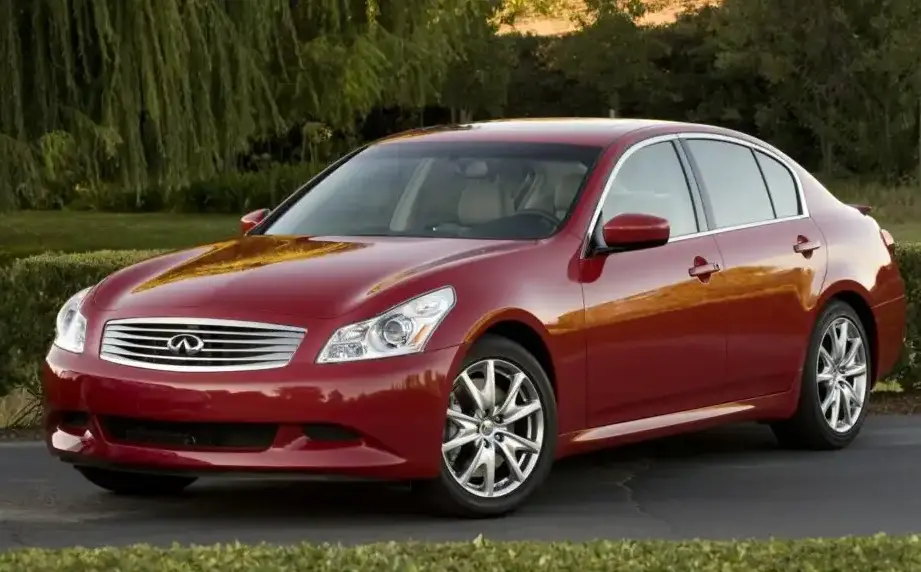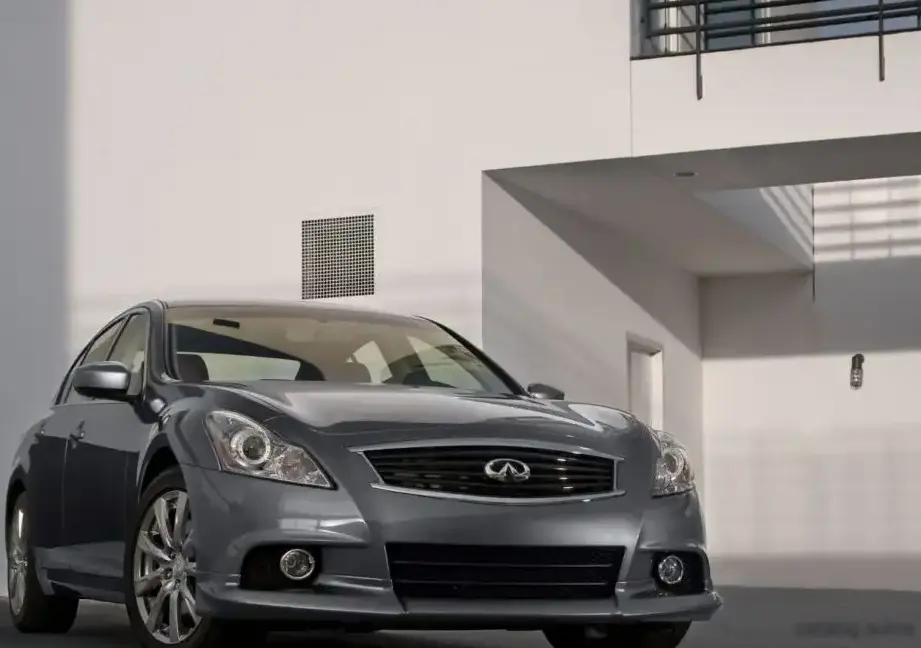
The Infiniti G37 Sedan, specifically the facelifted version introduced in December 2009 and continuing through the 2015 model year, represented a significant evolution of Infiniti’s performance sedan offerings. Built on the V36 platform (shared with the Nissan 370Z and other Nissan models), the G37 aimed to deliver a blend of luxury, performance, and technology. This particular variant, equipped with the 3.7-liter V6 engine producing 328 horsepower and paired with a seven-speed automatic transmission and all-wheel drive (AWD), occupied a premium position within the G37 lineup, offering a balance between spirited driving and all-weather capability. It was positioned as a step up from the rear-wheel drive models and the lower-powered engine options available in earlier G35 generations.
Technical Specifications
| Brand | Infiniti |
| Model | G |
| Generation | G37 Sedan (V36, facelift 2009) |
| Type (Engine) | 3.7 V6 (328 Hp) AWD Automatic |
| Start of production | December, 2009 |
| End of production | 2015 |
| Powertrain Architecture | Internal Combustion engine |
| Body type | Sedan |
| Seats | 5 |
| Doors | 4 |
| Fuel consumption (economy) – urban (EPA) | 13.1 l/100 km (18 US mpg, 21.6 UK mpg, 7.6 km/l) |
| Fuel consumption (economy) – extra urban (EPA) | 9.4 l/100 km (25 US mpg, 30.1 UK mpg, 10.6 km/l) |
| Fuel Type | Petrol (Gasoline) |
| Emission standard | LEV2 |
| Weight-to-power ratio | 5.3 kg/Hp, 189.9 Hp/tonne |
| Weight-to-torque ratio | 4.7 kg/Nm, 211.3 Nm/tonne |
| Power | 328 Hp @ 7000 rpm |
| Power per litre | 88.7 Hp/l |
| Torque | 365 Nm @ 5200 rpm (269.21 lb.-ft. @ 5200 rpm) |
| Maximum engine speed | 7500 rpm |
| Engine layout | Front, Longitudinal |
| Engine Model/Code | VQ37VHR |
| Engine displacement | 3696 cm3 (225.54 cu. in.) |
| Number of cylinders | 6 |
| Engine configuration | V-engine |
| Cylinder Bore | 95.5 mm (3.76 in.) |
| Piston Stroke | 86 mm (3.39 in.) |
| Compression ratio | 11:1 |
| Number of valves per cylinder | 4 |
| Fuel injection system | Multi-port manifold injection |
| Engine aspiration | Naturally aspirated engine |
| Valvetrain | DOHC, CVTCS, VVEL |
| Engine oil capacity | 4.9 l (5.18 US qt | 4.31 UK qt) |
| Coolant | 8.5 l (8.98 US qt | 7.48 UK qt) |
| Kerb Weight | 1727-1734 kg (3807.38 – 3822.82 lbs.) |
| Max. weight | 2198 kg (4845.76 lbs.) |
| Max load | 464-471 kg (1022.94 – 1038.38 lbs.) |
| Trunk (boot) space – minimum | 382 l (13.49 cu. ft.) |
| Fuel tank capacity | 76 l (20.08 US gal | 16.72 UK gal) |
| Length | 4779 mm (188.15 in.) |
| Width | 1773 mm (69.8 in.) |
| Height | 1468 mm (57.8 in.) |
| Wheelbase | 2850 mm (112.2 in.) |
| Front track | 1520 mm (59.84 in.) |
| Rear (Back) track | 1530 mm (60.24 in.) |
| Ride height (ground clearance) | 124-130 mm (4.88 – 5.12 in.) |
| Drag coefficient (Cd) | 0.29 |
| Minimum turning circle (turning diameter) | 11 m (36.09 ft.) |
| Drivetrain Architecture | The Internal combustion engine (ICE) drives the rear wheels permanently, and the front wheels are driven through an electrically or mechanically operated clutch if necessary. |
| Drive wheel | All wheel drive (4×4) |
| Number of gears and type of gearbox | 7 gears, automatic transmission |
| Front suspension | Coil spring, Double wishbone, Transverse stabilizer |
| Rear suspension | Independent multi-link spring suspension with stabilizer |
| Front brakes | Ventilated discs, 320×28 mm |
| Rear brakes | Ventilated discs, 308×16 mm |
| Assisting systems | ABS (Anti-lock braking system) |
| Steering type | Steering rack and pinion |
| Power steering | Hydraulic Steering |
| Tires size | 225/55 R17; 225/50 R18 |
| Wheel rims size | 7.5J x 17; 7.5J x 18 |
Powertrain & Engine Architecture
The heart of the G37 Sedan AWD Automatic is the VQ37VHR 3.7-liter V6 engine. This engine is a naturally aspirated powerplant known for its smooth power delivery and robust construction. The “VHR” designation stands for “High Revolution,” indicating the engine’s capability to rev freely. It features a 60-degree V-angle, dual overhead camshafts (DOHC), and Nissan’s Continuously Variable Valve Timing Control System (CVTCS) on both intake and exhaust valves. Further enhancing performance is Variable Valve Event and Lift (VVEL) technology, which allows for precise control of valve timing and lift, optimizing engine efficiency and responsiveness. Fuel is delivered via multi-port fuel injection. The seven-speed automatic transmission, sourced from Aisin, was chosen for its smooth shifting characteristics and ability to handle the engine’s substantial torque. The AWD system utilizes a rear-biased configuration, sending power primarily to the rear wheels under normal driving conditions and engaging the front wheels as needed for enhanced traction.
Driving Characteristics
The G37 Sedan AWD Automatic delivers a refined yet engaging driving experience. The 328 horsepower and 269 lb-ft of torque provide ample acceleration, with a 0-60 mph time typically around 5.5 seconds. The seven-speed automatic transmission is well-tuned, offering quick and seamless shifts. While not as overtly sporty as a manual transmission equipped G37, the automatic provides a comfortable and convenient driving experience, particularly in urban environments. The AWD system inspires confidence in inclement weather, providing enhanced grip and stability. Compared to the rear-wheel drive G37, the AWD variant exhibits slightly more understeer, but this is a trade-off for improved all-weather capability. The gear ratios are optimized for a balance of acceleration and fuel efficiency, with a relatively tall final drive contributing to highway cruising comfort.
Equipment & Trim Levels
The G37 Sedan AWD Automatic typically came well-equipped, even in its base form. Standard features included leather upholstery, power-adjustable front seats, a premium audio system, automatic climate control, and a rearview camera. Higher trim levels, such as the Journey and Premium packages, added features like navigation, a power-adjustable steering column, heated and cooled front seats, and a Bose premium sound system. Optional extras included a panoramic sunroof, adaptive cruise control, and lane departure warning. Interior upholstery options typically included black leather, gray leather, and wheat leather. Dashboard configurations were generally consistent across trim levels, with a focus on a driver-centric layout and high-quality materials.
Chassis & Braking
The G37 Sedan utilizes a robust chassis with a double-wishbone front suspension and an independent multi-link rear suspension. Stabilizer bars are fitted to both axles to reduce body roll during cornering. The AWD variant often featured slightly stiffer spring rates compared to the rear-wheel drive models to compensate for the added weight. Braking duties are handled by ventilated disc brakes on all four wheels, providing ample stopping power. The front brakes measure 320x28mm, while the rear brakes are 308x16mm. An Anti-lock Braking System (ABS) is standard, enhancing braking performance and stability. The steering system is a rack-and-pinion setup with hydraulic power assist, providing precise and responsive steering feel.
Market Reception & Comparison
The Infiniti G37 Sedan was generally well-received by automotive critics, praised for its powerful engine, comfortable ride, and luxurious interior. The AWD Automatic variant was particularly appreciated for its all-weather capability and refined driving experience. Compared to its rivals, such as the BMW 3 Series and the Lexus IS, the G37 offered a compelling value proposition, providing similar levels of performance and luxury at a lower price point. Fuel economy was respectable for a V6-powered luxury sedan, averaging around 19 mpg in combined driving. Reliability was generally good, although some owners reported minor issues with the infotainment system and certain sensors.
Legacy
The Infiniti G37 Sedan, including the 3.7 V6 AWD Automatic variant, has established a solid reputation as a reliable and enjoyable performance sedan. The VQ37VHR engine is known for its durability and longevity, and well-maintained examples continue to provide years of trouble-free service. On the used car market, the G37 remains a popular choice for buyers seeking a sporty and luxurious sedan at an affordable price. Its combination of performance, comfort, and all-weather capability makes it a versatile and appealing option for a wide range of drivers. While newer Infiniti models have evolved, the G37 continues to be remembered as a high point in the brand’s history.