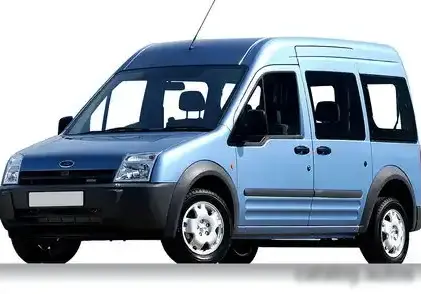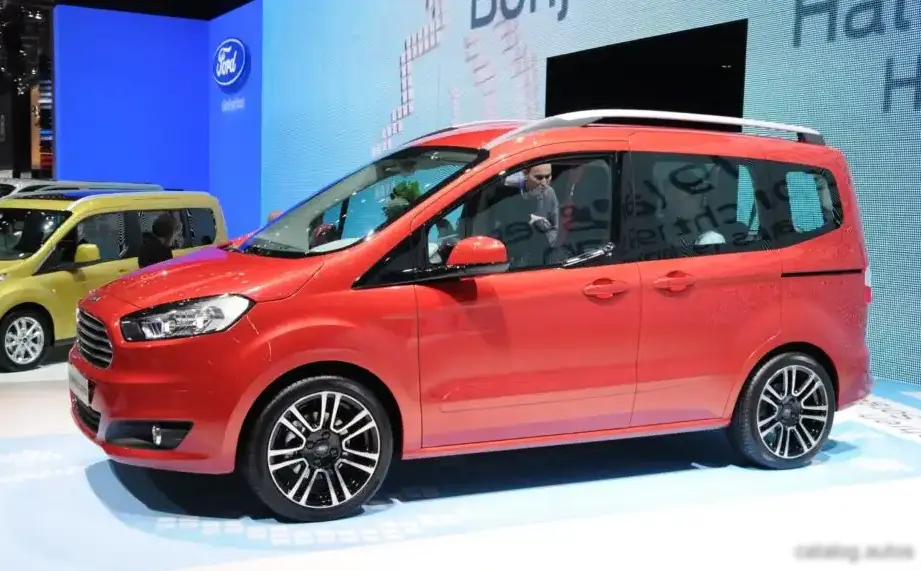
The Ford Tourneo Courier 1.0 EcoBoost (100 hp) was a compact multi-purpose vehicle (MPV) produced by Ford between 2014 and 2018. Positioned as an entry-level offering within the first generation Tourneo Courier range (model code B46), it aimed to provide an affordable and fuel-efficient option for small families and urban drivers. The Tourneo Courier itself was Ford’s response to the growing popularity of compact vans and MPVs in Europe, sharing its platform and many components with the Fiesta. This particular 1.0 EcoBoost variant represented a key part of the lineup, balancing practicality with a relatively low purchase price and running costs.
Technical Specifications
| Brand | Ford |
| Model | Tourneo Courier |
| Generation | Tourneo Courier I |
| Type (Engine) | 1.0 EcoBoost (100 Hp) |
| Start of production | 2014 |
| End of production | 2018 |
| Powertrain Architecture | Internal Combustion engine |
| Body type | MPV |
| Seats | 5 |
| Doors | 5 |
| Fuel consumption (urban) | 6.8 l/100 km (34.6 US mpg, 41.5 UK mpg, 14.7 km/l) |
| Fuel consumption (extra urban) | 4.7 l/100 km (50 US mpg, 60.1 UK mpg, 21.3 km/l) |
| Fuel consumption (combined) | 5.4 l/100 km (43.6 US mpg, 52.3 UK mpg, 18.5 km/l) |
| CO2 emissions | 124 g/km |
| Fuel Type | Petrol (Gasoline) |
| Acceleration 0 – 100 km/h | 12.3 sec |
| Acceleration 0 – 62 mph | 12.3 sec |
| Acceleration 0 – 60 mph | 11.7 sec |
| Maximum speed | 173 km/h (107.5 mph) |
| Emission standard | Euro 5 |
| Weight-to-power ratio | 12.6 kg/Hp, 79.4 Hp/tonne |
| Weight-to-torque ratio | 7.4 kg/Nm, 134.9 Nm/tonne |
| Power | 100 Hp @ 6000 rpm |
| Power per litre | 100.1 Hp/l |
| Torque | 170 Nm @ 1400-4000 rpm (125.39 lb.-ft. @ 1400-4000 rpm) |
| Engine layout | Front, Transverse |
| Engine Model/Code | M2GA, M2GB |
| Engine displacement | 999 cm3 (60.96 cu. in.) |
| Number of cylinders | 3 |
| Engine configuration | Inline |
| Cylinder Bore | 71.9 mm (2.83 in.) |
| Piston Stroke | 82 mm (3.23 in.) |
| Compression ratio | 10:1 |
| Number of valves per cylinder | 4 |
| Fuel injection system | Direct injection |
| Engine aspiration | Turbocharger, Intercooler |
| Valvetrain | DOHC |
| Engine oil capacity | 4.1 l (4.33 US qt | 3.61 UK qt) |
| Coolant | 6.3 l (6.66 US qt | 5.54 UK qt) |
| Kerb Weight | 1260 kg (2777.82 lbs.) |
| Max. weight | 1765 kg (3891.16 lbs.) |
| Max load | 505 kg (1113.33 lbs.) |
| Trunk (boot) space – minimum | 395 l (13.95 cu. ft.) |
| Trunk (boot) space – maximum | 1656 l (58.48 cu. ft.) |
| Fuel tank capacity | 48 l (12.68 US gal | 10.56 UK gal) |
| Length | 4157 mm (163.66 in.) |
| Width | 1976 mm (77.8 in.) |
| Height | 1723 mm (67.83 in.) |
| Wheelbase | 2489 mm (97.99 in.) |
| Minimum turning circle | 10.9 m (35.76 ft.) |
| Drivetrain Architecture | ICE, Front wheel drive |
| Number of gears | 5 |
| Gearbox type | Manual transmission |
| Front suspension | Independent, McPherson with coil spring and anti-roll bar |
| Rear suspension | Semi-independent, coil spring |
| Front brakes | Ventilated discs |
| Rear brakes | Drum |
| Assisting systems | ABS |
| Steering type | Steering rack and pinion |
| Tires size | 195/60 R15 |
| Wheel rims size | 6.0J x 15 |
INTRODUCTION
The Ford Tourneo Courier 1.0 EcoBoost (100 hp) was introduced in 2014 as part of the first generation of the Tourneo Courier, a compact MPV designed primarily for the European market. Built on the B46 platform, shared with the Ford Fiesta, the Tourneo Courier aimed to offer a more practical and versatile alternative to traditional hatchbacks. The 1.0 EcoBoost engine, a three-cylinder turbocharged unit, was a key component of Ford’s strategy to offer fuel-efficient and environmentally friendly vehicles. This specific 100 horsepower version, paired with a five-speed manual transmission, served as a core model within the range, appealing to buyers seeking a balance between affordability, economy, and usability.
Powertrain & Engine Architecture
The heart of the Tourneo Courier 1.0 EcoBoost is the M2GA/M2GB engine code, a 999cc three-cylinder petrol engine. This engine utilizes direct fuel injection and a single turbocharger with an intercooler to deliver a respectable 100 horsepower at 6000 rpm and 170 Nm (125 lb-ft) of torque between 1400 and 4000 rpm. The engine features a double overhead camshaft (DOHC) valvetrain with four valves per cylinder, contributing to its efficiency and responsiveness. The five-speed manual transmission was the standard gearbox for this variant, offering a relatively conventional driving experience. The engine’s compact size and lightweight construction helped to reduce the overall weight of the vehicle, further enhancing fuel economy. Ford’s EcoBoost technology focused on combining direct injection, turbocharging, and variable valve timing to maximize power output while minimizing emissions and fuel consumption.
Driving Characteristics
The 1.0 EcoBoost engine in the Tourneo Courier, while not exceptionally powerful, provided adequate performance for everyday driving. Acceleration from 0 to 60 mph took around 11.7 seconds, and the top speed was approximately 107.5 mph. The turbocharger provided a noticeable boost in power at lower engine speeds, making it relatively easy to keep up with traffic. However, when fully loaded with passengers and luggage, the engine could feel strained, particularly on inclines. The five-speed manual transmission offered a decent spread of gears, allowing drivers to optimize fuel economy or maintain comfortable cruising speeds. Compared to higher-powered versions of the Tourneo Courier, such as those equipped with the 1.5-liter EcoBoost engine, the 1.0 EcoBoost felt less refined and had a more noticeable engine noise. The gear ratios were tuned for economy rather than outright performance.
Equipment & Trim Levels
The Tourneo Courier 1.0 EcoBoost typically came equipped with a reasonable level of standard equipment. This included power steering, electric front windows, a basic audio system with USB connectivity, and ABS brakes. Higher trim levels, such as Trend and Titanium, added features like air conditioning, alloy wheels, a more advanced audio system with Bluetooth connectivity, and parking sensors. Interior upholstery was typically cloth, with a durable and practical design. Optional extras included a panoramic sunroof, navigation system, and rear parking camera. The dashboard layout was functional and straightforward, prioritizing ease of use over aesthetic flair.
Chassis & Braking
The Tourneo Courier utilized a front-wheel-drive layout with an independent McPherson strut suspension at the front and a semi-independent coil spring suspension at the rear. This setup provided a comfortable ride quality, although it wasn’t particularly sporty. The front brakes were ventilated discs, while the rear brakes were drums. ABS (Anti-lock Braking System) was standard, providing enhanced safety during emergency braking. The steering was a rack and pinion system, offering precise and responsive handling. The vehicle’s relatively light weight contributed to its agility and maneuverability in urban environments.
Market Reception & Comparison
The Ford Tourneo Courier 1.0 EcoBoost was generally well-received by critics for its fuel efficiency, practicality, and affordability. It was often praised as a sensible choice for urban drivers and small families. However, some reviewers noted that the engine could feel underpowered when fully loaded, and the interior was somewhat basic compared to some competitors. Compared to other trims in the Tourneo Courier lineup, the 1.0 EcoBoost offered the lowest purchase price and the best fuel economy. The 1.5-liter EcoBoost variants provided more power but came at a higher cost and with slightly reduced fuel efficiency. The 1.6-liter diesel versions offered even better fuel economy but were more expensive to purchase and maintain.
Legacy
The Ford Tourneo Courier 1.0 EcoBoost has proven to be a relatively reliable vehicle, with the 1.0 EcoBoost engine generally considered to be durable and long-lasting. Common issues include turbocharger wear and occasional problems with the fuel injection system, but these are typically not major concerns. On the used car market, the Tourneo Courier 1.0 EcoBoost remains a popular choice for buyers seeking an affordable and practical MPV. Its fuel efficiency and low running costs continue to be major selling points. The engine’s relatively simple design makes it relatively easy and inexpensive to repair, contributing to its ongoing appeal.