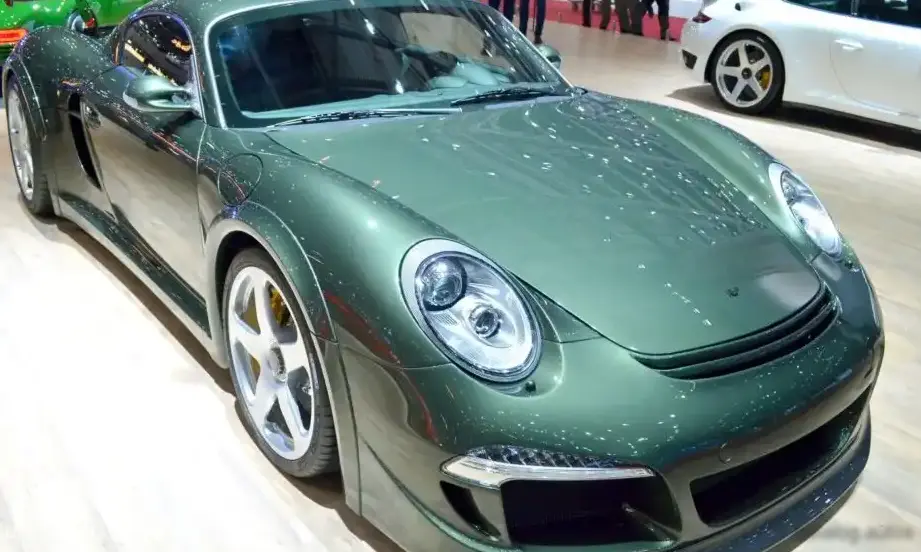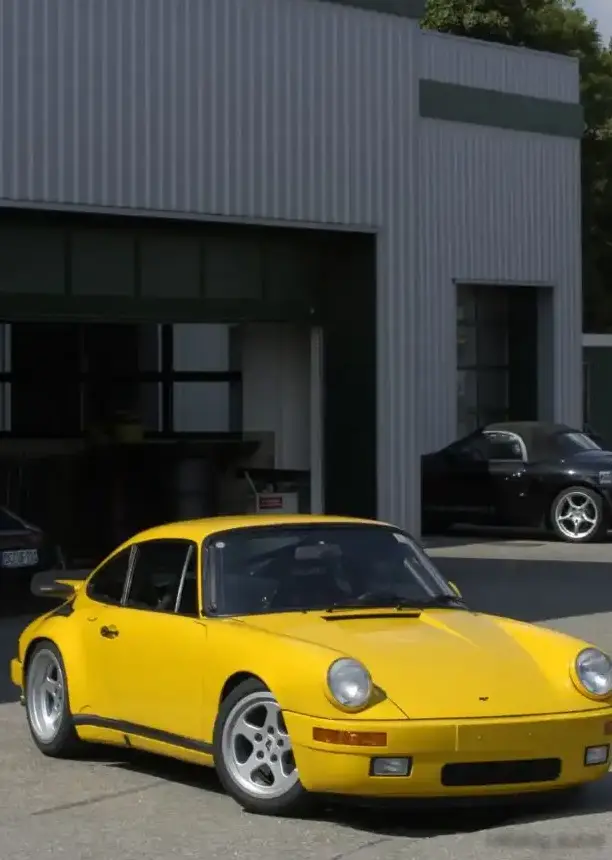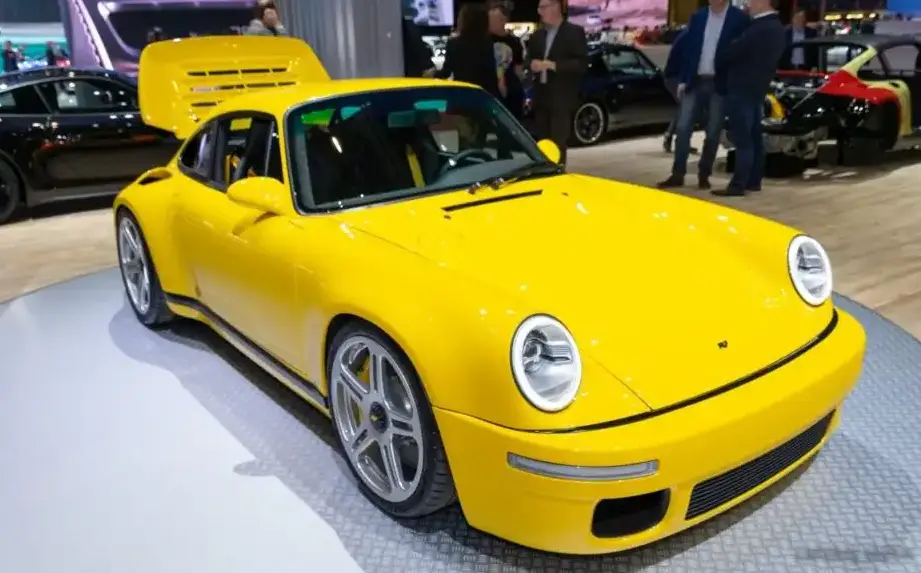
The RUF CTR 2017 3.6, producing 710 horsepower, is a limited-production, high-performance sports car built by the German manufacturer RUF Automobile. Introduced in March 2017, it represents a modern interpretation of the iconic RUF CTR “Yellowbird” from the 1980s. Unlike many tuners, RUF manufactures complete vehicles, not merely modified Porsches, and holds its own manufacturer status. The 2017 CTR is built around a carbon fiber monocoque chassis and is designed for exceptional performance and driving engagement. It is a two-seat, rear-wheel-drive coupe intended for the discerning enthusiast seeking a visceral and analog driving experience.
Technical Specifications
| Brand | RUF |
| Model | CTR |
| Generation | CTR 2017 |
| Type (Engine) | 3.6 (710 Hp) |
| Start of production | March, 2017 |
| Powertrain Architecture | Internal Combustion engine |
| Body type | Coupe |
| Seats | 2 |
| Doors | 2 |
| Fuel consumption (economy) – combined | 12.8 l/100 km |
| Fuel consumption (economy) – combined | 18.4 US mpg |
| Fuel consumption (economy) – combined | 22.1 UK mpg |
| Fuel consumption (economy) – combined | 7.8 km/l |
| CO2 emissions | 306 g/km |
| Fuel Type | Petrol (Gasoline) |
| Acceleration 0 – 100 km/h | 3.5 sec |
| Acceleration 0 – 62 mph | 3.5 sec |
| Acceleration 0 – 60 mph | 3.3 sec |
| Acceleration 0 – 200 km/h | 9.0 sec |
| Maximum speed | 360 km/h (223.69 mph) |
| Emission standard | Euro 6 |
| Weight-to-power ratio | 1.7 kg/Hp, 591.7 Hp/tonne |
| Weight-to-torque ratio | 1.4 kg/Nm, 733.3 Nm/tonne |
| Power | 710 Hp @ 6750 rpm |
| Power per litre | 197.2 Hp/l |
| Torque | 880 Nm @ 2750-4000 rpm (649.05 lb.-ft. @ 2750-4000 rpm) |
| Engine displacement | 3600 cm3 (219.69 cu. in.) |
| Number of cylinders | 6 |
| Engine configuration | Boxer |
| Number of valves per cylinder | 4 |
| Fuel injection system | Direct injection |
| Engine aspiration | BiTurbo, Intercooler |
| Kerb Weight | 1200 kg (2645.55 lbs.) |
| Length | 4210 mm (165.75 in.) |
| Width | 1820 mm (71.65 in.) |
| Drivetrain Architecture | Rear wheel drive |
| Number of gears and type of gearbox | 6 gears, manual transmission |
| Front brakes | Ventilated discs |
| Rear brakes | Ventilated discs |
| Assisting systems | ABS (Anti-lock braking system) |
| Tires size | 245/35 R19; 305/30 R19 |
| Wheel rims size | 19 |
Powertrain & Engine Architecture
The heart of the RUF CTR 2017 is a mid-mounted, twin-turbocharged 3.6-liter flat-six engine. This engine is not directly derived from a Porsche unit, but rather a completely bespoke design by RUF, though it shares a lineage with Porsche’s flat-six philosophy. It utilizes direct fuel injection and features a dry-sump lubrication system, crucial for maintaining oil supply during high-g cornering. The twin-turbochargers, with intercooling, provide significant boost, contributing to the engine’s impressive power output. The engine’s redline is set at 6750 rpm. The CTR employs a six-speed manual transmission, chosen specifically to enhance driver engagement and control. RUF deliberately avoided automatic or dual-clutch transmissions to maintain a purist driving experience.
Driving Characteristics
The RUF CTR 2017 delivers a driving experience characterized by its raw power, precise handling, and responsive steering. The relatively lightweight construction (1200 kg) combined with the 710 hp output results in a phenomenal power-to-weight ratio. Acceleration is brutal, with 0-60 mph achieved in just 3.3 seconds and a top speed of 360 km/h (223.69 mph). The manual transmission requires skill and precision, but rewards the driver with a direct connection to the powertrain. The suspension is tuned for performance, providing excellent body control and minimizing roll during cornering. The rear-wheel-drive configuration contributes to a balanced and predictable handling characteristic, though requires respect from the driver.
Equipment & Trim Levels
The RUF CTR 2017 is not offered with traditional trim levels. Each vehicle is largely bespoke, tailored to the individual customer’s preferences. Standard features include a minimalist interior focused on driving, with carbon fiber bucket seats, a leather-wrapped steering wheel, and a basic instrument cluster. Air conditioning is typically included, but many other features are optional. Customers can specify custom paint colors, interior materials, and various performance upgrades. The emphasis is on lightweight construction and functional design, rather than luxury appointments. A modern infotainment system is notably absent, reinforcing the car’s analog character.
Chassis & Braking
The CTR’s chassis is a carbon fiber monocoque, providing exceptional rigidity and minimizing weight. The suspension utilizes adjustable dampers and coil springs, allowing for fine-tuning of the ride and handling characteristics. The braking system features ventilated discs at all four corners, with high-performance calipers and pads. ABS is included as a standard safety feature. The tires are high-performance compounds, sized 245/35 R19 at the front and 305/30 R19 at the rear, providing ample grip. The car’s balanced weight distribution further enhances its handling capabilities.
Market Reception & Comparison
The RUF CTR 2017 was widely praised by automotive journalists for its exceptional performance, engaging driving experience, and stunning design. It was often compared to other high-performance sports cars, such as the Porsche 911 GT2 RS and the Ferrari 488 Pista. Critics noted that the CTR offered a more raw and visceral driving experience than many of its competitors, appealing to enthusiasts who prioritize driver involvement. Fuel economy is understandably poor, at 12.8 l/100 km, reflecting the car’s high-performance nature. Reliability is expected to be good, given RUF’s reputation for quality engineering, but maintenance costs are likely to be substantial due to the car’s specialized components.
Legacy
The RUF CTR 2017 represents a significant achievement in automotive engineering, demonstrating RUF’s ability to create a world-class sports car from the ground up. Its limited production run (only 25 were built) and unique character have made it a highly sought-after collector’s item. The CTR’s focus on analog driving dynamics and its rejection of modern electronic aids set it apart from many contemporary sports cars. In the used car market, the CTR commands a premium price, reflecting its rarity, performance, and historical significance. The powertrain, while complex, is expected to be durable with proper maintenance, ensuring its continued enjoyment for years to come. It stands as a testament to the enduring appeal of the classic sports car formula – a powerful engine, a lightweight chassis, and a direct connection between driver and machine.