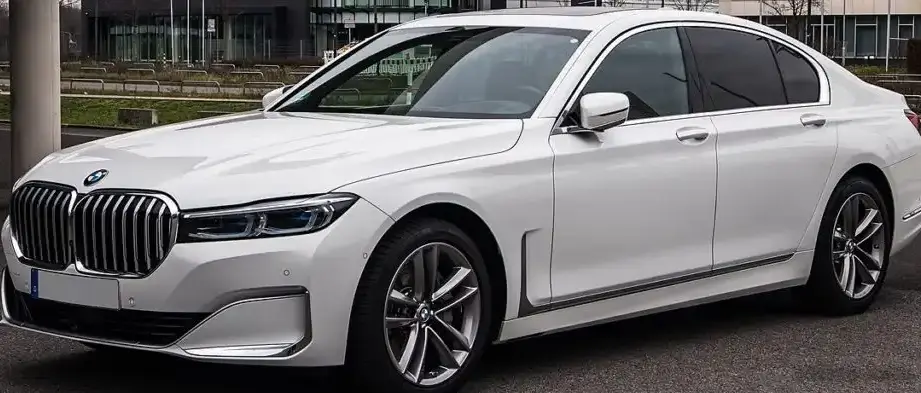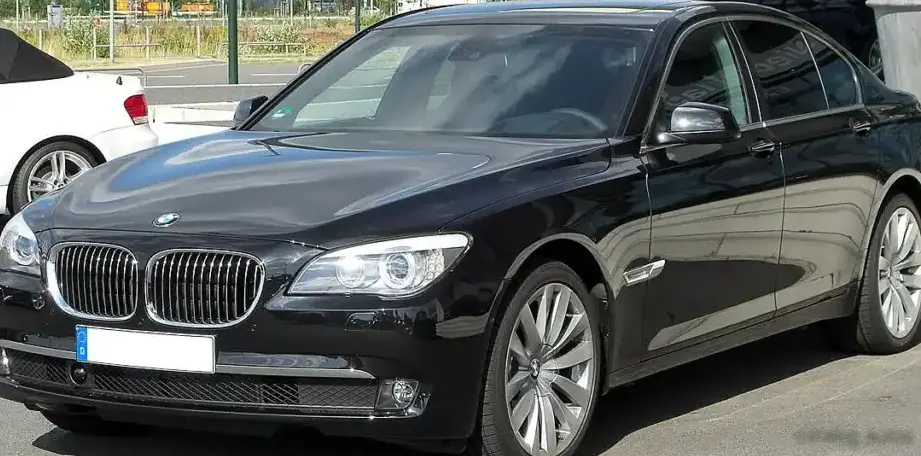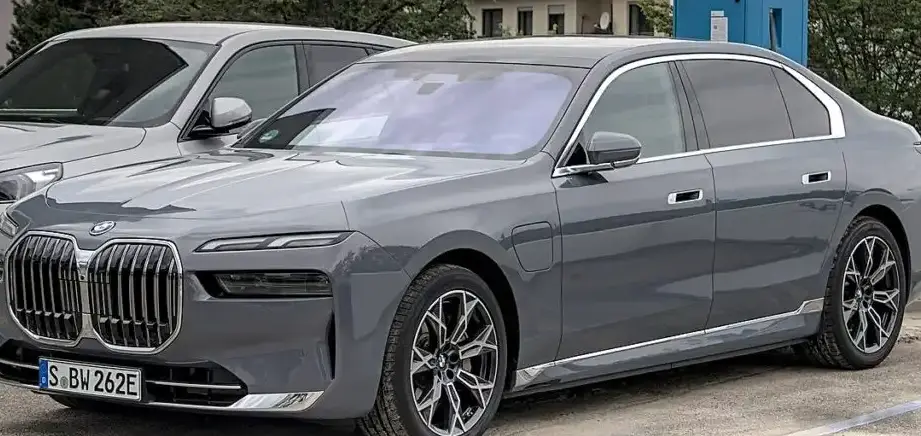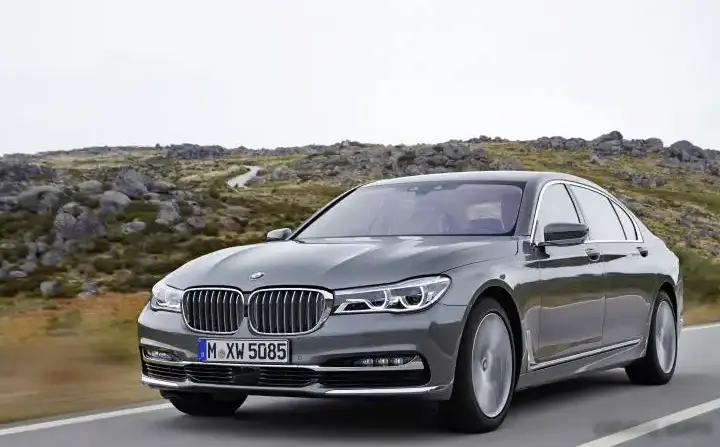
The BMW 740Le iPerformance, a plug-in hybrid variant of the G12 generation 7 Series long-wheelbase sedan, was produced from 2016 to 2019. Positioned as a technologically advanced and environmentally conscious offering within the flagship 7 Series lineup, it combined a 2.0-liter turbocharged four-cylinder engine with an electric motor, offering a blend of performance and efficiency. The “Le” designation signifies “Long Electric,” highlighting the extended range offered in electric mode compared to earlier hybrid offerings. This model was primarily aimed at the European and Asian markets, where demand for fuel-efficient luxury vehicles was high, though a limited number were also sold in the United States.
Technical Specifications
| Brand | BMW |
| Model | 7 Series |
| Generation | 7 Series Long (G12) |
| Type | 740Le iPerformance (326 Hp) Plug-in Hybrid Steptronic |
| Start of production | 2016 |
| End of production | 2019 |
| Powertrain Architecture | PHEV (Plug-in Hybrid Electric Vehicle) |
| Body type | Sedan |
| Seats | 5 |
| Doors | 4 |
| Fuel consumption (combined) | 2.0-2.2 l/100 km (117.6 – 106.9 US mpg, 141.2 – 128.4 UK mpg, 50 – 45.5 km/l) |
| CO2 emissions | 45-51 g/km |
| Fuel Type | Petrol / electricity |
| Acceleration 0 – 100 km/h | 5.5 sec |
| Acceleration 0 – 62 mph | 5.5 sec |
| Acceleration 0 – 60 mph | 5.2 sec |
| Maximum speed | 250 km/h (155.34 mph) |
| Emission standard | Euro 6 |
| Weight-to-power ratio | 6 kg/Hp, 168 Hp/tonne |
| Weight-to-torque ratio | 3.9 kg/Nm, 257.7 Nm/tonne |
| Gross battery capacity | 9.2 kWh |
| Battery voltage | 351 V |
| Battery technology | Lithium-ion (Li-Ion) |
| Battery location | Below the floor, under the rear seats |
| Recuperation output | 20 kW |
| All-electric range | 44-48 km (27.34 – 29.83 mi) |
| Average Energy consumption | 12.6-13.3 kWh/100 km (20.28 – 21.4 kWh/100 mi, 166 – 157 MPGe, 7.9 – 7.5 km/kWh, 4.9 – 4.7 mi/kWh) |
| Max speed (electric) | 140 km/h (86.99 mph) |
| Electric motor power | 113 Hp @ 3170 rpm (184.39 lb.-ft. @ 0-3170 rpm) |
| Electric motor torque | 250 Nm @ 0-3170 rpm |
| Electric motor location | Between the combustion engine and the transmission |
| System power | 326 Hp |
| System torque | 500 Nm (368.78 lb.-ft.) |
| Engine Power | 258 Hp @ 5000-6500 rpm (129.1 Hp/l) |
| Engine Torque | 400 Nm @ 1550-4400 rpm (295.02 lb.-ft. @ 1550-4400 rpm) |
| Engine layout | Front, Longitudinal |
| Engine Model/Code | B48 |
| Engine displacement | 1998 cm3 (121.93 cu. in.) |
| Number of cylinders | 4 |
| Engine configuration | Inline |
| Cylinder Bore | 82 mm (3.23 in.) |
| Piston Stroke | 94.6 mm (3.72 in.) |
| Compression ratio | 10.2:1 |
| Number of valves per cylinder | 4 |
| Fuel injection system | Direct injection |
| Engine aspiration | Twin-power turbo, Intercooler |
| Valvetrain | VALVETRONIC |
| Engine oil capacity | 5.25 l (5.55 US qt | 4.62 UK qt) |
| Coolant | 9.1 l (9.62 US qt | 8.01 UK qt) |
| Kerb Weight | 1940 kg (4276.97 lbs.) |
| Max. weight | 2600 kg (5732.02 lbs.) |
| Max load | 660 kg (1455.05 lbs.) |
| Trunk (boot) space – minimum | 420 l (14.83 cu. ft.) |
| Fuel tank capacity | 46 l (12.15 US gal | 10.12 UK gal) |
| Max. roof load | 100 kg (220.46 lbs.) |
| Length | 5238 mm (206.22 in.) |
| Width | 1902 mm (74.88 in.) |
| Width including mirrors | 2169 mm (85.39 in.) |
| Height | 1479 mm (58.23 in.) |
| Wheelbase | 3210 mm (126.38 in.) |
| Front track | 1617 mm (63.66 in.) |
| Rear (Back) track | 1646 mm (64.8 in.) |
| Front overhang | 880 mm (34.65 in.) |
| Rear overhang | 1148 mm (45.2 in.) |
| Ride height (ground clearance) | 135 mm (5.31 in.) |
| Drag coefficient (Cd) | 0.25 |
| Minimum turning circle (turning diameter) | 12.8 m (41.99 ft.) |
| Drivetrain Architecture | Rear wheel drive. PHEV. ICE and electric motor drive rear wheels. |
| Drive wheel | Rear wheel drive |
| Number of gears and type of gearbox | 8 gears, automatic transmission Steptronic |
| Front suspension | Double wishbone, Air suspension |
| Rear suspension | Independent multi-link suspension, Air suspension |
| Front brakes | Ventilated discs |
| Rear brakes | Ventilated discs |
INTRODUCTION
The BMW 740Le iPerformance represented BMW’s foray into plug-in hybrid technology within its flagship 7 Series range. Introduced in 2016 as part of the G12 generation, it aimed to deliver the luxury and refinement expected of a 7 Series while significantly reducing emissions and fuel consumption. The vehicle utilized a 2.0-liter turbocharged four-cylinder engine paired with a powerful electric motor, allowing for both all-electric driving and a combined output of 326 horsepower. It was positioned as a premium offering, bridging the gap between the standard 7 Series models and the high-performance 750i/M760i variants.
Powertrain & Engine Architecture
At the heart of the 740Le iPerformance lies the BMW B48 2.0-liter inline-four cylinder engine. This engine, part of BMW’s modular engine family, features direct fuel injection, a single twin-scroll turbocharger, and VALVETRONIC variable valve timing. It produces 258 hp and 295 lb-ft of torque. The electric motor, integrated into the transmission housing, adds another 113 hp and 184 lb-ft of torque. The combined system output is 326 hp and 369 lb-ft. The 9.2 kWh lithium-ion battery pack is located under the rear seats, minimizing impact on passenger space. The eight-speed Steptronic automatic transmission, a staple in BMW vehicles, manages power delivery. The transmission is specifically tuned to work seamlessly with both the combustion engine and the electric motor, offering smooth and efficient gear changes. The hybrid system allows for three driving modes: electric, hybrid, and sport, each adjusting the powertrain’s behavior to prioritize efficiency, balance, or performance.
Driving Characteristics
The 740Le iPerformance offers a unique driving experience. In all-electric mode, it provides near-silent and smooth acceleration, capable of covering up to 44-48 kilometers (27-30 miles) on a full charge. This range is sufficient for many daily commutes. In hybrid mode, the vehicle intelligently switches between the engine and electric motor, optimizing for fuel efficiency. The transition between electric and gasoline power is generally seamless. While not as overtly sporty as the six or twelve-cylinder 7 Series models, the 740Le still delivers respectable acceleration, achieving 0-60 mph in around 5.2 seconds. The added weight of the battery pack (approximately 300 lbs) is noticeable, particularly in cornering, but the air suspension helps to mitigate body roll. The Steptronic transmission provides quick and precise shifts, contributing to a refined driving experience.
Equipment & Trim Levels
The 740Le iPerformance came standard with a high level of equipment, befitting its flagship status. Standard features included BMW’s iDrive infotainment system with a large touchscreen display, premium leather upholstery, heated and ventilated front seats, a panoramic sunroof, and a comprehensive suite of driver-assistance systems, including lane departure warning, automatic emergency braking, and adaptive cruise control. Optional extras included upgraded leather options, rear-seat entertainment systems, a Bowers & Wilkins sound system, and various cosmetic enhancements. The interior design was largely consistent with other 7 Series models, emphasizing luxury and comfort. The trim level was generally considered a step above the base 740i, reflecting the added technology and environmental benefits of the plug-in hybrid system.
Chassis & Braking
The 740Le iPerformance utilizes a sophisticated chassis setup designed to balance comfort and handling. It features a double-wishbone front suspension and an independent multi-link rear suspension, both incorporating BMW’s air suspension system. The air suspension allows for adjustable ride height and damping, providing a smooth and comfortable ride even on uneven surfaces. Braking duties are handled by ventilated disc brakes on all four wheels. The regenerative braking system captures energy during deceleration, helping to recharge the battery and further improve efficiency. The vehicle also incorporates BMW’s Dynamic Stability Control (DSC) system, which enhances stability and traction in various driving conditions.
Market Reception & Comparison
The 740Le iPerformance was generally well-received by critics, who praised its fuel efficiency, smooth ride, and luxurious interior. However, some reviewers noted that the added weight of the battery pack slightly diminished the car’s handling agility compared to its gasoline-powered counterparts. Compared to the 740i, the 740Le offered significantly better fuel economy and lower emissions, but at a higher price point. Compared to the more powerful 750i, it provided a more environmentally friendly alternative, albeit with less outright performance. The 740Le’s fuel economy was competitive with other plug-in hybrid luxury sedans of the time, and its all-electric range was considered respectable.
Legacy
The BMW 740Le iPerformance played a significant role in establishing BMW as a leader in plug-in hybrid technology. The powertrain proved to be relatively reliable, with few widespread issues reported. On the used car market, the 740Le iPerformance remains a desirable option for buyers seeking a luxurious and fuel-efficient sedan. The battery pack’s longevity is a key consideration for potential buyers, but many examples are still operating well within their original specifications. The 740Le paved the way for BMW’s continued development of plug-in hybrid and electric vehicles, and its technology continues to influence the brand’s current offerings.