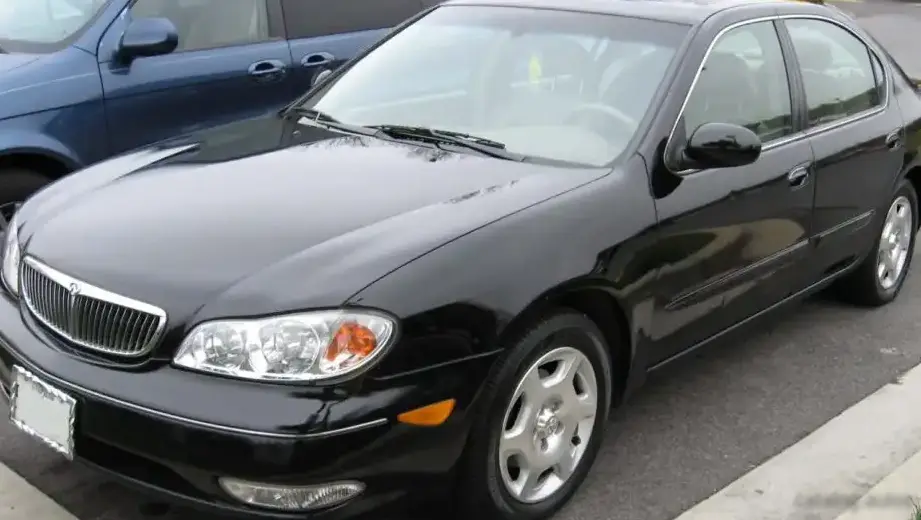
The Infiniti I30 (A33) 3.0i 24V, produced between 1998 and 2002, represented Infiniti’s entry into the mid-size luxury sedan segment, aiming to provide a blend of Japanese reliability and upscale features. Positioned as a more affordable alternative to European competitors like the BMW 5 Series and Mercedes-Benz E-Class, the I30 was based on the Nissan Cefiro/Maxima platform (A33 chassis code) but offered a more refined interior and distinct styling. This particular 3.0i variant, equipped with the VQ30DE engine producing 230 horsepower, served as the primary offering throughout the I30’s production run in the North American market.
Technical Specifications
| Brand | Infiniti |
| Model | I30 |
| Generation | I30 (A33) |
| Type (Engine) | 3.0 i 24V (230 Hp) |
| Start of production | 1998 |
| End of production | 2002 |
| Powertrain Architecture | Internal Combustion engine |
| Body type | Sedan |
| Seats | 5 |
| Doors | 4 |
| Fuel consumption (urban) | 11.8 l/100 km (19.9 US mpg) |
| Fuel consumption (extra urban) | 8.4 l/100 km (28 US mpg) |
| Fuel Type | Petrol (Gasoline) |
| Acceleration 0 – 100 km/h | 6.7 sec |
| Acceleration 0 – 62 mph | 6.7 sec |
| Acceleration 0 – 60 mph | 6.4 sec |
| Maximum speed | 255 km/h (158.45 mph) |
| Weight-to-power ratio | 6.8 kg/Hp |
| Weight-to-torque ratio | 5.3 kg/Nm |
| Power | 230 Hp @ 6400 rpm |
| Power per litre | 77 Hp/l |
| Torque | 294 Nm @ 4000 rpm (216.84 lb.-ft. @ 4000 rpm) |
| Engine layout | Front, Transverse |
| Engine displacement | 2988 cm3 (182.34 cu. in.) |
| Number of cylinders | 6 |
| Engine configuration | V-engine |
| Cylinder Bore | 93 mm (3.66 in.) |
| Piston Stroke | 73.3 mm (2.89 in.) |
| Compression ratio | 10:1 |
| Number of valves per cylinder | 4 |
| Fuel injection system | Multi-port manifold injection |
| Engine aspiration | Naturally aspirated engine |
| Valvetrain | DOHC |
| Kerb Weight | 1555 kg (3428.19 lbs.) |
| Trunk (boot) space | 454 l (16.03 cu. ft.) |
| Fuel tank capacity | 70 l (18.49 US gal | 15.4 UK gal) |
| Length | 4920 mm (193.7 in.) |
| Width | 1786 mm (70.31 in.) |
| Height | 1435 mm (56.5 in.) |
| Wheelbase | 2751 mm (108.31 in.) |
| Front track | 1530 mm (60.24 in.) |
| Rear track | 1510 mm (59.45 in.) |
| Drivetrain Architecture | Front wheel drive |
| Drive wheel | Front wheel drive |
| Number of gears | 5 gears, manual transmission |
| Front suspension | Coil spring |
| Rear suspension | Coil spring |
| Front brakes | Ventilated discs |
| Rear brakes | Disc |
| Assisting systems | ABS (Anti-lock braking system) |
| Steering type | Steering rack and pinion |
| Power steering | Hydraulic Steering |
| Tires size | 205/65 R 15H |
Powertrain & Engine Architecture
The heart of the I30 3.0i is the VQ30DE 3.0-liter V6 engine. This engine, a member of Nissan’s highly regarded VQ family, is known for its smooth operation, reliability, and relatively high output for its displacement. The VQ30DE features a 60-degree V-angle, dual overhead camshafts (DOHC), and four valves per cylinder. It utilizes a multi-port fuel injection system, delivering fuel directly into each intake port. The engine’s design prioritized refinement and drivability over outright performance, though its 230 horsepower and 294 Nm (216.84 lb-ft) of torque provided ample power for comfortable cruising and confident acceleration. The five-speed manual transmission was the standard offering, providing drivers with direct control over the engine’s power. A four-speed automatic transmission was also available, catering to those prioritizing convenience.
Driving Characteristics
The I30 3.0i with the manual transmission offered a reasonably engaging driving experience. The V6 engine delivered smooth, linear power throughout the rev range, making it easy to modulate throttle and maintain control. The five-speed manual gearbox was well-matched to the engine’s characteristics, with gear ratios that allowed for brisk acceleration. The automatic transmission, while providing convenience, did slightly diminish the car’s responsiveness. Compared to the later I35 models with their more powerful 3.5-liter engines, the I30 felt less urgent in its acceleration. However, it offered a better balance between performance and fuel economy. The front-wheel-drive configuration provided predictable handling, although it lacked the all-weather capability of an all-wheel-drive system.
Equipment & Trim Levels
The I30 3.0i came reasonably well-equipped as standard. Typical features included air conditioning, power windows and locks, a CD player, and alloy wheels. Higher trim levels, often denoted by packages, added features such as a sunroof, leather upholstery, heated front seats, and a Bose premium sound system. Interior materials were generally of good quality for the price point, with a focus on comfort and ergonomics. The dashboard layout was straightforward and functional, prioritizing ease of use. Optional extras included a navigation system, which was relatively uncommon for the time.
Chassis & Braking
The I30’s chassis utilized a front independent suspension with coil springs and a multi-link rear suspension, also with coil springs. This setup provided a comfortable ride quality, absorbing bumps and imperfections in the road surface effectively. The front brakes were ventilated discs, providing ample stopping power, while the rear brakes were solid discs. Anti-lock brakes (ABS) were standard, enhancing safety and control during emergency braking situations. The steering was a rack-and-pinion system with hydraulic power assistance, offering a good balance between feel and ease of use. The standard tire size was 205/65R15, providing a comfortable ride and adequate grip.
Market Reception & Comparison
The Infiniti I30 was generally well-received by automotive critics. It was praised for its comfortable ride, refined interior, and strong value proposition. However, some critics noted that its styling was somewhat conservative compared to its European rivals. Compared to the Nissan Maxima, which shared the same platform, the I30 offered a more luxurious interior and a more upscale image. Fuel economy was respectable for a V6-powered sedan of its size, averaging around 19 mpg in the city and 28 mpg on the highway. Reliability was also a strong point, with the VQ30DE engine proving to be exceptionally durable.
Legacy
The Infiniti I30, particularly the 3.0i variant, has proven to be a reliable and durable vehicle. The VQ30DE engine is known for its longevity, and many examples have exceeded 200,000 miles with proper maintenance. In the used car market, the I30 remains an affordable and practical option for those seeking a comfortable and reliable mid-size sedan. While not a performance icon, its blend of refinement, reliability, and value has ensured its continued presence on roads today. Common maintenance issues are relatively minor, often involving routine wear items such as brakes, suspension components, and sensors. The I30 represents a significant step in Infiniti’s development as a luxury brand, establishing a reputation for quality and value that continues to this day.