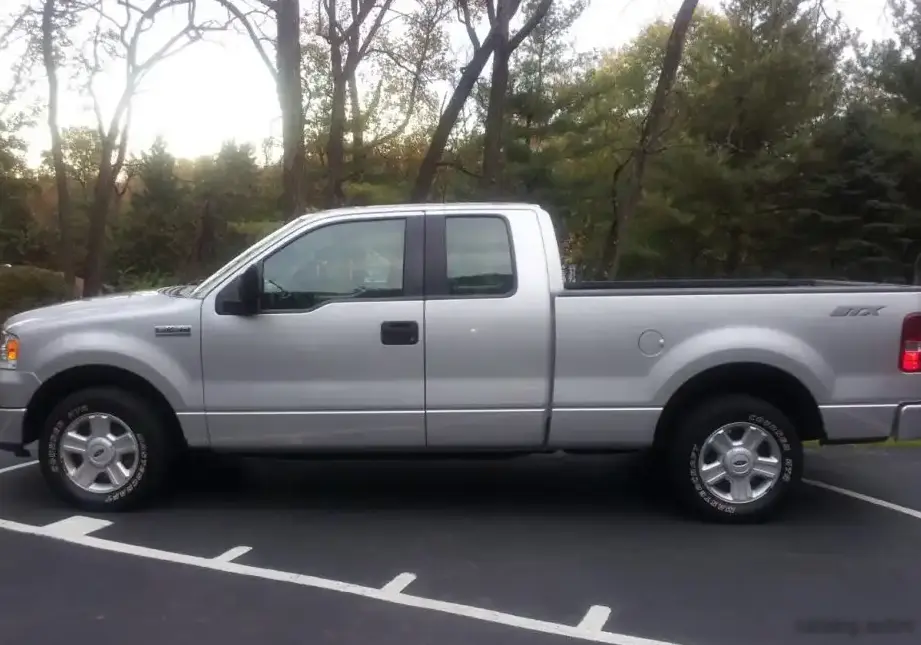
The Ford F-150 XI SuperCab, equipped with the 5.4-liter V8 Triton engine producing 300 horsepower and paired with a four-speed automatic transmission, was a significant offering in the American full-size pickup truck market from 2004 to 2008. This configuration represented a mid-range option within the broader F-150 lineup, balancing capability with a more accessible price point compared to the higher-output engines and more luxurious trims. The F-150 itself was part of the tenth generation (2004-2008) of Ford’s long-running F-Series, a lineage that has consistently been the best-selling pickup truck in the United States for decades. The “XI” designation denoted a specific trim level, typically offering a blend of features and value.
Technical Specifications
| Brand | Ford |
| Model | F-Series F-100/F-150 |
| Generation | F-Series F-150 XI SuperCab |
| Type (Engine) | 5.4 V8 Triton (300 Hp) Automatic |
| Start of production | 2004 |
| End of production | July, 2008 |
| Powertrain Architecture | Internal Combustion engine |
| Body type | Pick-up |
| Seats | 5-6 |
| Doors | 2 |
| Fuel consumption (urban) | 15.7 l/100 km (15 US mpg, 18 UK mpg) |
| Fuel consumption (extra urban) | 12.4 l/100 km (19 US mpg, 22.8 UK mpg) |
| Fuel Type | Petrol (Gasoline) |
| Weight-to-power ratio | 7.8 kg/Hp, 128.4 Hp/tonne |
| Weight-to-torque ratio | 4.7 kg/Nm, 211.9 Nm/tonne |
| Power | 300 Hp @ 5000 rpm |
| Power per litre | 55.5 Hp/l |
| Torque | 495 Nm @ 3750 rpm (365.09 lb.-ft. @ 3750 rpm) |
| Engine layout | Front, Longitudinal |
| Engine displacement | 5408 cm3 (330.02 cu. in.) |
| Number of cylinders | 8 |
| Engine configuration | V-engine |
| Cylinder Bore | 90.17 mm (3.55 in.) |
| Piston Stroke | 105.92 mm (4.17 in.) |
| Compression ratio | 9.8:1 |
| Number of valves per cylinder | 3 |
| Fuel injection system | Multi-port manifold injection |
| Engine aspiration | Naturally aspirated engine |
| Valvetrain | SOHC, VCT |
| Engine oil capacity | 6.6 l (6.97 US qt | 5.81 UK qt) |
| Coolant | 19.8 l (20.92 US qt | 17.42 UK qt) |
| Kerb Weight | 2336-2495 kg (5150 – 5500.53 lbs.) |
| Max. weight | 3719 kg (8198.99 lbs.) |
| Max load | 1224-1383 kg (2698.46 – 3048.99 lbs.) |
| Fuel tank capacity | 98-135 l (25.89 – 35.66 US gal | 21.56 – 29.7 UK gal) |
| Permitted trailer load with brakes (12%) | 4309 kg (9499.72 lbs.) |
| Length | 5532-6309 mm (217.8 – 248.39 in.) |
| Width | 2004 mm (78.9 in.) |
| Height | 1864-1943 mm (73.39 – 76.5 in.) |
| Wheelbase | 3366-4140 mm (132.52 – 162.99 in.) |
| Front track | 1702 mm (67.01 in.) |
| Rear (Back) track | 1702 mm (67.01 in.) |
| Minimum turning circle | 13.3-15.6 m (43.64 – 51.18 ft.) |
| Drivetrain Architecture | Rear wheel drive |
| Number of gears and type of gearbox | 4 gears, automatic transmission |
| Front suspension | Double wishbone |
| Rear suspension | Leaf spring |
| Front brakes | Ventilated discs, 330 mm |
| Rear brakes | Ventilated discs, 348 mm |
| Assisting systems | ABS (Anti-lock braking system) |
| Steering type | Steering rack and pinion |
| Power steering | Electric Steering |
| Tires size | 235/70 R17; 245/70 R17; 265/60 R18 |
| Wheel rims size | 17; 18 |
Powertrain & Engine Architecture
The heart of this F-150 variant was the 5.4-liter Triton V8 engine. This engine, part of Ford’s modular engine family, featured a cast iron block with aluminum cylinder heads. The engine code varied slightly depending on the specific year and calibration, but generally fell within the range of engines utilizing the 3V (three valves per cylinder) architecture introduced in 2004. This 3V design, incorporating variable valve timing (VCT), improved both power and fuel efficiency compared to earlier two-valve Triton engines. The engine employed multi-port fuel injection, delivering fuel directly to each intake port. The four-speed automatic transmission (typically the 4R75E) was chosen for its durability and suitability for towing and hauling. While not as sophisticated as newer transmissions with more gears, it provided adequate performance for the intended use case.
Driving Characteristics
The 300 horsepower and 365 lb-ft of torque delivered by the 5.4-liter Triton, when channeled through the four-speed automatic, provided a comfortable and capable driving experience. Acceleration was adequate for everyday driving and moderate towing, but it wasn’t particularly sporty. The automatic transmission’s gear ratios were optimized for towing and hauling, meaning that initial acceleration from a standstill wasn’t as brisk as with the smaller engines or manual transmissions. However, the engine provided ample low-end torque for pulling loads and navigating challenging terrain. Compared to the 4.6-liter V8, the 5.4-liter offered a noticeable increase in power and towing capacity. Compared to the diesel options, it lacked the fuel economy and sheer pulling power, but offered a smoother and quieter driving experience.
Equipment & Trim Levels
The F-150 XI SuperCab with the 5.4-liter engine typically included standard features such as air conditioning, power windows and locks, and an AM/FM stereo. The SuperCab configuration offered extended rear seating, providing more passenger space than the standard cab. Upholstery was typically cloth, although leather was available as an option. Popular optional extras included a power-sliding rear window, upgraded audio systems, and various towing packages. The XI trim level generally positioned itself as a step up from the base XL trim, offering a better balance of features and price.
Chassis & Braking
The F-150’s chassis featured a fully boxed frame for enhanced strength and rigidity. The front suspension utilized an independent double wishbone design, while the rear suspension employed a traditional leaf spring setup. This combination provided a comfortable ride and good load-carrying capacity. Brakes were ventilated discs on all four wheels, with ABS (Anti-lock Braking System) standard. The rear brakes were slightly smaller in diameter than the front brakes, reflecting the weight distribution of the vehicle. Steering was rack-and-pinion with power assist.
Market Reception & Comparison
The 5.4-liter F-150 was well-received by consumers seeking a capable and versatile pickup truck. Critics generally praised the engine’s power and torque, but noted that the four-speed automatic transmission was beginning to feel dated compared to newer transmissions with more gears. Fuel economy was typical for a full-size pickup truck of the era, but it wasn’t a strong point. Compared to the 4.6-liter V8, the 5.4-liter offered a significant performance advantage, but at a slightly higher price. The diesel options, while more expensive upfront, offered superior fuel economy and towing capacity.
Legacy
The 5.4-liter Triton engine, while generally reliable, did have some known issues, including potential spark plug breakage and timing chain wear, particularly in earlier model years. However, with proper maintenance, these engines could provide many years of service. Today, these F-150s are readily available on the used car market at relatively affordable prices. They remain popular choices for those seeking a capable and durable pickup truck for work or recreation. The combination of the 5.4-liter engine and four-speed automatic transmission represents a sweet spot for many buyers, offering a good balance of power, reliability, and affordability.