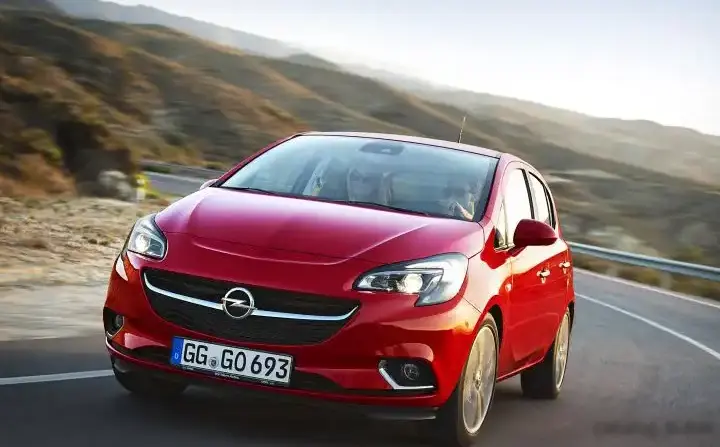
The Opel Corsa E 5-door 1.3 CDTI ECOTEC (95 hp) start/stop was a subcompact hatchback produced from January 2015 to June 2018. It represented a key entry point into the Corsa E range, offering a fuel-efficient diesel option for European buyers. Positioned as an economy-focused variant, it aimed to balance practicality, running costs, and a reasonable level of equipment. The Corsa E itself was the fourth generation of the Corsa, built on the General Motors Gamma II platform, and was a significant model for Opel, competing directly with rivals like the Volkswagen Polo, Ford Fiesta, and Renault Clio.
Technical Specifications
| Brand | Opel |
| Model | Corsa |
| Generation | Corsa E 5-door |
| Type (Engine) | 1.3 CDTI ECOTEC (95 Hp) start/stop |
| Start of production | January, 2015 |
| End of production | June, 2018 |
| Powertrain Architecture | Internal Combustion engine |
| Body type | Hatchback |
| Seats | 5 |
| Doors | 5 |
| Fuel consumption (urban) | 3.7 l/100 km (63.6 US mpg, 76.3 UK mpg, 27 km/l) |
| Fuel consumption (extra urban) | 3 l/100 km (78.4 US mpg, 94.2 UK mpg, 33.3 km/l) |
| Fuel consumption (combined) | 3.3 l/100 km (71.3 US mpg, 85.6 UK mpg, 30.3 km/l) |
| CO2 emissions | 87 g/km |
| Fuel Type | Diesel |
| Acceleration 0 – 100 km/h | 11.9 sec |
| Acceleration 0 – 62 mph | 11.9 sec |
| Acceleration 0 – 60 mph | 11.3 sec |
| Maximum speed | 182 km/h (113.09 mph) |
| Emission standard | Euro 6 |
| Weight-to-power ratio | 12.2 kg/Hp, 81.8 Hp/tonne |
| Weight-to-torque ratio | 6.1 kg/Nm, 163.5 Nm/tonne |
| Power | 95 Hp @ 3750 rpm |
| Power per litre | 76.1 Hp/l |
| Torque | 190 Nm @ 1500-3500 rpm (140.14 lb.-ft. @ 1500-3500 rpm) |
| Engine layout | Front, Transverse |
| Engine Model/Code | B13DTE |
| Engine displacement | 1248 cm3 (76.16 cu. in.) |
| Number of cylinders | 4 |
| Engine configuration | Inline |
| Cylinder Bore | 69.6 mm (2.74 in.) |
| Piston Stroke | 82 mm (3.23 in.) |
| Compression ratio | 16.25:1 |
| Number of valves per cylinder | 4 |
| Fuel injection system | Diesel Commonrail |
| Engine aspiration | Turbocharger, Intercooler |
| Engine oil capacity | 4 l (4.23 US qt | 3.52 UK qt) |
| Coolant | 6 l (6.34 US qt | 5.28 UK qt) |
| Kerb Weight | 1162 kg (2561.77 lbs.) |
| Max. weight | 1695 kg (3736.84 lbs.) |
| Max load | 533 kg (1175.06 lbs.) |
| Trunk (boot) space – minimum | 285 l (10.06 cu. ft.) |
| Trunk (boot) space – maximum | 1120 l (39.55 cu. ft.) |
| Fuel tank capacity | 45 l (11.89 US gal | 9.9 UK gal) |
| Max. roof load | 75 kg (165.35 lbs.) |
| Permitted trailer load with brakes (12%) | 1150 kg (2535.32 lbs.) |
| Permitted trailer load without brakes | 580 kg (1278.68 lbs.) |
| Length | 4021 mm (158.31 in.) |
| Width | 1746 mm (68.74 in.) |
| Width including mirrors | 1944 mm (76.54 in.) |
| Height | 1481 mm (58.31 in.) |
| Wheelbase | 2510 mm (98.82 in.) |
| Front track | 1472 mm (57.95 in.) |
| Rear (Back) track | 1464 mm (57.64 in.) |
| Minimum turning circle | 11.00 m (36.09 ft.) |
| Drivetrain Architecture | Front wheel drive |
| Number of gears and type of gearbox | 5 gears, manual transmission |
| Front suspension | Independent type McPherson |
| Rear suspension | Semi-independent, coil spring |
| Front brakes | Disc |
| Rear brakes | Disc |
| Assisting systems | ABS (Anti-lock braking system) |
| Steering type | Steering rack and pinion |
| Tires size | 185/70 R14 88T; 185/65 R15 88H |
| Wheel rims size | 5.5J x 14; 6.0J x 15 |
Powertrain & Engine Architecture
The Corsa E 1.3 CDTI utilized the B13DTE engine, a 1.3-liter inline-four cylinder diesel engine. This engine was part of Opel/Fiat’s family of small-displacement diesel engines, known for its efficiency. It featured a turbocharger with intercooling to boost power output, and a common rail direct fuel injection system for precise fuel delivery. The engine produced 95 horsepower at 3750 rpm and 190 Nm (140 lb-ft) of torque between 1500 and 3500 rpm. The Start/Stop system, standard on this variant, automatically shut off the engine when the vehicle came to a halt, further improving fuel economy. The engine’s relatively high compression ratio of 16.25:1 was typical for diesel engines, contributing to its thermal efficiency. The 5-speed manual transmission was the only gearbox option available with this engine.
Driving Characteristics
The 1.3 CDTI with 95 hp offered modest performance. Acceleration from 0-100 km/h (0-62 mph) took around 11.9 seconds, making it suitable for urban and suburban driving but less ideal for frequent highway use or overtaking maneuvers. The engine’s torque peak was relatively low in the rev range, providing decent responsiveness at lower speeds. However, the engine could feel strained when pushed hard, particularly when fully loaded. The 5-speed gearbox was well-matched to the engine’s characteristics, with gear ratios optimized for fuel efficiency rather than outright performance. Compared to the more powerful 1.4-liter petrol versions, the 1.3 CDTI prioritized fuel economy over acceleration.
Equipment & Trim Levels
The 1.3 CDTI ECOTEC typically came with a base level of equipment, focusing on essential features. Standard equipment generally included air conditioning, power steering, electric front windows, a basic audio system with USB connectivity, and ABS brakes. Safety features like ESP (Electronic Stability Program) were also usually included. Higher trim levels, such as ‘Enjoy’ or ‘Cosmo’, added features like alloy wheels, cruise control, a more advanced infotainment system, and upgraded interior trim. Optional extras included parking sensors, a sunroof, and heated seats.
Chassis & Braking
The Corsa E featured a McPherson strut front suspension and a semi-independent torsion beam rear suspension. This setup provided a reasonable balance between ride comfort and handling. The front brakes were ventilated discs, while the rear brakes were typically solid discs. The steering was a rack and pinion system, offering light and precise steering feel. The relatively lightweight nature of the Corsa E helped to compensate for the modest engine power, contributing to acceptable handling characteristics.
Market Reception & Comparison
The Corsa E 1.3 CDTI was generally well-received as an economical and practical city car. Critics praised its fuel efficiency and low running costs, but noted its limited performance. Compared to the petrol-powered versions, the diesel offered significantly better fuel economy, making it a popular choice for drivers covering high mileages. However, the diesel engine was more expensive to purchase initially and potentially more costly to maintain due to the complexity of its emissions control systems. Against competitors like the Volkswagen Polo and Ford Fiesta, the Corsa E offered a competitive price point and a good level of standard equipment.
Legacy
The 1.3 CDTI engine, while reliable, has been known to exhibit issues with the diesel particulate filter (DPF) if not driven on longer journeys regularly. The Start/Stop system can also be a potential source of problems if not properly maintained. In the used car market, the Corsa E 1.3 CDTI remains a relatively affordable option, appealing to buyers seeking a fuel-efficient and practical hatchback. Its longevity and relatively low maintenance costs (excluding potential DPF issues) contribute to its continued popularity as a budget-friendly transportation solution.