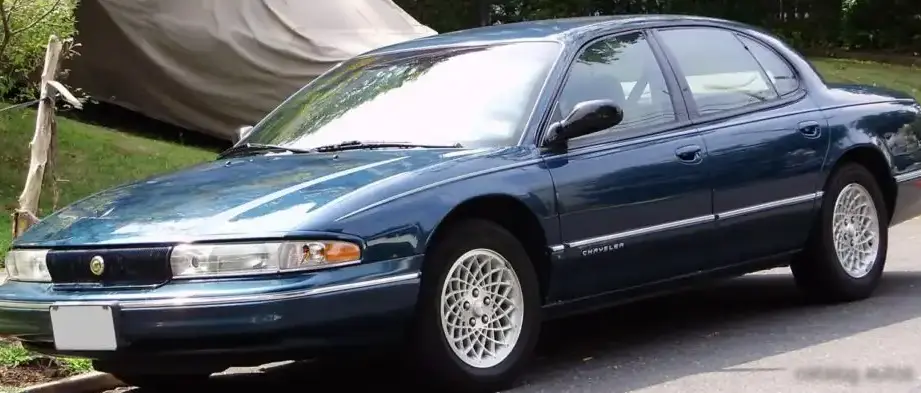
The Chrysler LHS I 3.5i V6 Automatic, produced between 1994 and 1997, represented a significant step in Chrysler’s attempt to compete in the near-luxury segment of the American automotive market. Positioned as a more upscale alternative to the Chrysler Fifth Door and Dodge Intrepid, the LHS (Luxury Home Sedan) offered a blend of spaciousness, comfort, and a relatively powerful V6 engine. It was built on the LH platform (designated 1HX), shared with the Dodge Intrepid and Eagle Vision, but distinguished itself through unique styling cues and a more refined interior. This variant, equipped with the 3.5-liter V6 and a four-speed automatic transmission, served as the primary offering for the LHS during its initial production run.
Technical Specifications
| Brand | Chrysler |
| Model | LHS |
| Generation | LHS I |
| Type (Engine) | 3.5i V6 (214 Hp) Automatic |
| Start of production | 1994 |
| End of production | 1997 |
| Powertrain Architecture | Internal Combustion engine |
| Body type | Sedan |
| Seats | 5 |
| Doors | 4 |
| Fuel Type | Petrol (Gasoline) |
| Power | 214 Hp @ 5800 rpm |
| Power per litre | 60.8 Hp/l |
| Torque | 300 Nm @ 2800 rpm / 221.27 lb.-ft. @ 2800 rpm |
| Engine layout | Front, Longitudinal |
| Engine Model/Code | EGJ |
| Engine displacement | 3518 cm3 / 214.68 cu. in. |
| Number of cylinders | 6 |
| Engine configuration | V-engine |
| Number of valves per cylinder | 4 |
| Fuel injection system | Multi-port manifold injection |
| Engine aspiration | Naturally aspirated engine |
| Valvetrain | OHC |
| Length | 5268 mm / 207.4 in. |
| Width | 1890 mm / 74.41 in. |
| Height | 1415 mm / 55.71 in. |
| Wheelbase | 2870 mm / 112.99 in. |
| Number of gears and type of gearbox | 4 gears, automatic transmission |
Powertrain & Engine Architecture
The heart of the LHS I 3.5i was the EGJ engine, a 3.5-liter (3518 cc) 60-degree V6. This engine was a significant departure from Chrysler’s earlier V6 designs, utilizing an overhead camshaft (OHC) configuration with four valves per cylinder. The multi-port fuel injection system delivered fuel directly to each cylinder, optimizing combustion efficiency. The engine’s block was constructed from cast iron, while the cylinder heads were made of aluminum, contributing to a reasonable balance between durability and weight. The 3.5L V6 produced 214 horsepower at 5800 rpm and 300 Nm (221 lb-ft) of torque at 2800 rpm. This power was channeled through a four-speed automatic transmission, a Chrysler-built unit known for its smooth shifting characteristics, though not particularly sporty responsiveness. The transmission was tuned for comfort and fuel efficiency rather than aggressive acceleration.
Driving Characteristics
The LHS I 3.5i Automatic offered a comfortable and refined driving experience. The automatic transmission, while not offering manual shift control, provided smooth and predictable gear changes. Acceleration was adequate for most driving situations, with the 214 hp engine providing sufficient power for highway merging and passing maneuvers. However, it wasn’t a particularly quick car by contemporary standards. Compared to the base Intrepid models with the 3.3-liter V6, the LHS offered a noticeable performance improvement. The longer wheelbase and softer suspension tuning prioritized ride comfort over handling precision. The steering was light and easy, making it well-suited for city driving, but lacking in feedback for more enthusiastic drivers. The automatic transmission’s gear ratios were optimized for cruising, resulting in relatively low engine speeds at highway speeds, contributing to a quiet and comfortable cabin environment.
Equipment & Trim Levels
The LHS I was positioned as the premium offering within the LH platform family. Standard equipment included features such as air conditioning, power windows and locks, a premium sound system, and a tilt steering wheel. The interior was distinguished by its upscale upholstery, typically featuring leather seats and woodgrain trim. The dashboard layout was clean and functional, with easy-to-read gauges. Optional extras included a sunroof, upgraded sound system with a CD changer, and traction control. The LHS generally came well-equipped, reflecting its intended market position as a comfortable and luxurious family sedan. The interior color schemes were typically conservative, with shades of gray, beige, and dark blue being the most common.
Chassis & Braking
The LHS I utilized an independent front suspension with MacPherson struts and a multi-link rear suspension. This suspension setup provided a comfortable ride, effectively absorbing bumps and irregularities in the road surface. The front brakes were ventilated discs, while the rear brakes were drums. This configuration was typical for American sedans of this era, prioritizing cost-effectiveness over ultimate stopping power. Anti-lock brakes (ABS) were available as an option, enhancing safety in emergency braking situations. The chassis was designed to provide a stable and predictable driving experience, with a focus on minimizing body roll during cornering. Stabilizer bars were included at both the front and rear to further reduce body roll.
Market Reception & Comparison
The Chrysler LHS I was generally well-received by automotive critics, who praised its spacious interior, comfortable ride, and relatively powerful engine. However, some critics noted that its styling was somewhat conservative and that its handling was not as sharp as some of its European competitors. Compared to the Dodge Intrepid, the LHS offered a more refined interior and a more upscale image. Fuel economy was respectable for a V6-powered sedan of its size, averaging around 18 mpg city and 26 mpg highway. Reliability was generally good, although some owners reported minor issues with the automatic transmission and electrical components. The LHS offered a compelling value proposition, providing a significant amount of features and comfort for its price.
Legacy
The Chrysler LHS I, particularly the 3.5i V6 Automatic variant, has developed a modest following among collectors and enthusiasts. The EGJ engine, while not known for being particularly high-strung, proved to be reasonably durable and reliable when properly maintained. The four-speed automatic transmission, while not a performance-oriented unit, has also proven to be relatively long-lasting. Today, well-maintained examples of the LHS I are becoming increasingly rare, and prices for clean, low-mileage vehicles are slowly appreciating. The LHS represents a transitional period in Chrysler’s history, showcasing the company’s attempt to move upmarket and compete with established luxury brands. It remains a comfortable and spacious sedan, offering a glimpse into the automotive landscape of the mid-1990s.