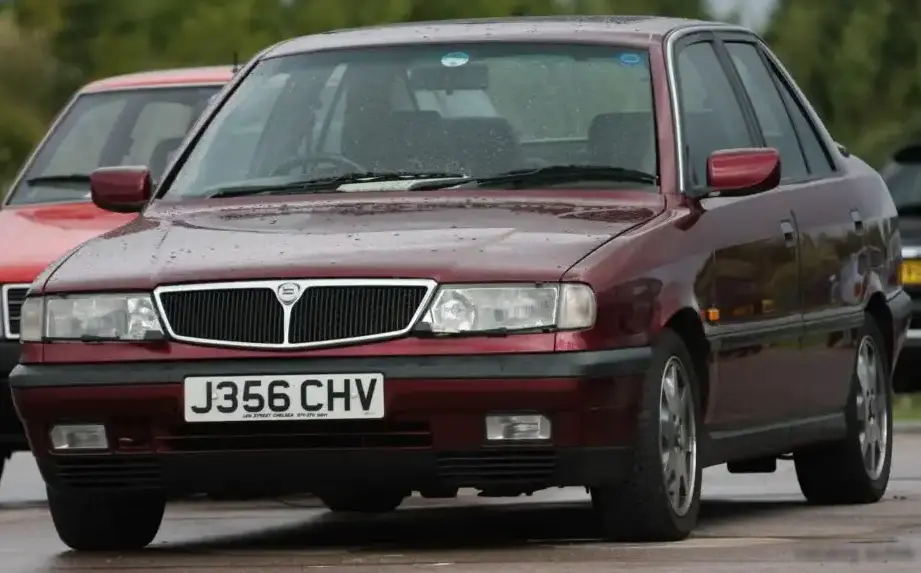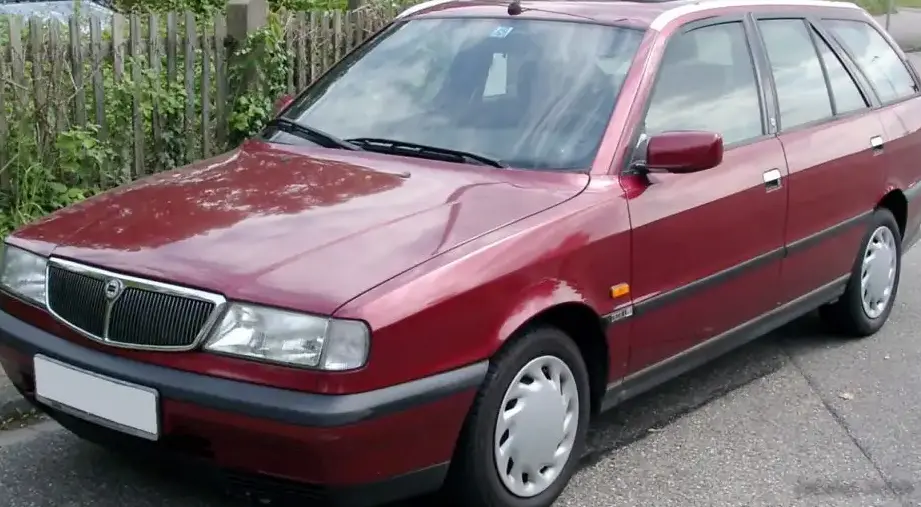
The Lancia Dedra Station Wagon (835) 1.9 TDS, produced between 1994 and 1999, represented a practical and relatively economical offering within the Dedra range. Positioned as a mid-range trim, it catered to buyers seeking the versatility of a station wagon with the fuel efficiency of a diesel engine. The Dedra itself was a significant model for Lancia, built upon the Tipo-based 835 platform (shared with the Fiat Croma, Alfa Romeo 164, and Saab 9000) and aimed at providing a more upmarket alternative to mainstream family cars in the European market. This particular variant, with its 90 horsepower turbodiesel engine and typically a five-speed manual transmission, offered a balance between performance and running costs.
Technical Specifications
| Brand | Lancia |
| Model | Dedra |
| Generation | Dedra Station Wagon (835) |
| Type (Engine) | 1.9 TDS (90 Hp) |
| Start of production | 1994 |
| End of production | 1999 |
| Powertrain Architecture | Internal Combustion engine |
| Body type | Station wagon (estate) |
| Seats | 5 |
| Doors | 5 |
| Fuel consumption (combined) | 6.2 l/100 km (37.9 US mpg, 45.6 UK mpg, 16.1 km/l) |
| Fuel Type | Diesel |
| Acceleration 0 – 100 km/h | 13.3 sec |
| Acceleration 0 – 62 mph | 13.3 sec |
| Acceleration 0 – 60 mph | 12.6 sec |
| Maximum speed | 174 km/h (108.12 mph) |
| Power | 90 Hp @ 4200 rpm |
| Power per litre | 46.7 Hp/l |
| Torque | 186 Nm @ 2500 rpm (137.19 lb.-ft. @ 2500 rpm) |
| Engine layout | Front, Transverse |
| Engine Model/Code | 835 A4.000 |
| Engine displacement | 1929 cm3 (117.71 cu. in.) |
| Number of cylinders | 4 |
| Engine configuration | Inline |
| Cylinder Bore | 82.6 mm (3.25 in.) |
| Piston Stroke | 90 mm (3.54 in.) |
| Compression ratio | 19.2:1 |
| Number of valves per cylinder | 2 |
| Fuel injection system | Precombustion chamber injection |
| Engine aspiration | Turbocharger |
| Valvetrain | DOHC |
| Engine oil capacity | 6 l (6.34 US qt | 5.28 UK qt) |
| Coolant | 8.9 l (9.4 US qt | 7.83 UK qt) |
| Trunk (boot) space – maximum | 1449 l (51.17 cu. ft.) |
| Fuel tank capacity | 60 l (15.85 US gal | 13.2 UK gal) |
| Length | 4343 mm (170.98 in.) |
| Width | 1703 mm (67.05 in.) |
| Height | 1449 mm (57.05 in.) |
| Wheelbase | 2540 mm (100 in.) |
| Front track | 1436 mm (56.54 in.) |
| Rear (Back) track | 1415 mm (55.71 in.) |
| Drivetrain Architecture | The Internal combustion engine (ICE) drives the front wheels of the vehicle. |
| Drive wheel | Front wheel drive |
| Number of gears and type of gearbox | 5 gears, manual transmission |
| Front suspension | Spring Strut |
| Rear suspension | Trailing arm |
| Front brakes | Disc |
| Rear brakes | Disc |
| Assisting systems | ABS (Anti-lock braking system) |
| Steering type | Steering rack and pinion |
| Power steering | Hydraulic Steering |
| Tires size | 185/60 R14 |
Powertrain & Engine Architecture
The heart of the Dedra 1.9 TDS was the 835 A4.000 engine, a 1929cc inline-four cylinder diesel. This engine utilized a precombustion chamber injection system, a common technology for diesel engines of the era, designed to improve combustion efficiency and reduce noise. The addition of a turbocharger significantly boosted power output to 90 horsepower at 4200 rpm and 186 Nm (137.19 lb-ft) of torque at 2500 rpm. The engine featured a double overhead camshaft (DOHC) valvetrain, contributing to improved breathing and overall performance. The five-speed manual transmission was the most common pairing, although an automatic transmission was available as an option, albeit less frequently chosen. The automatic, typically a four-speed unit, traded some responsiveness for ease of driving.
Driving Characteristics
The 1.9 TDS, even with the manual transmission, wasn’t a performance-oriented vehicle. Acceleration from 0-60 mph took around 12.6 seconds, and top speed was limited to 108 mph. However, the engine’s torque delivery made it a capable cruiser, particularly on highways. The five-speed gearbox allowed drivers to keep the engine in its optimal power band, providing reasonable flexibility for overtaking. Compared to the more powerful (but also more expensive) 2.0-liter inline-four or the V6 options, the 1.9 TDS prioritized fuel economy and lower running costs. The automatic transmission version further dulled acceleration, but offered a smoother, more relaxed driving experience.
Equipment & Trim Levels
The Dedra 1.9 TDS typically came equipped with features considered standard for a mid-range family car in the 1990s. This included central locking, power windows, and a basic audio system. Interior upholstery was generally cloth, with options for upgraded materials available. Air conditioning was a popular option. Trim levels varied slightly depending on the market, but generally included features like alloy wheels, a sunroof, and upgraded interior trim on higher-spec versions. The Dedra aimed for a comfortable and practical interior, rather than a luxurious one.
Chassis & Braking
The Dedra Station Wagon utilized a front-engine, front-wheel-drive layout. Suspension consisted of a MacPherson strut setup at the front and a trailing arm arrangement at the rear. Braking was typically disc brakes all around, with ABS (Anti-lock Braking System) becoming increasingly common as standard equipment. Steering was rack and pinion with hydraulic power assistance. The suspension was tuned for comfort, prioritizing ride quality over sporty handling. The 185/60 R14 tires were a common fitment, balancing grip and fuel efficiency.
Market Reception & Comparison
The Lancia Dedra 1.9 TDS was generally well-received as a practical and economical family car. Critics praised its spacious interior, comfortable ride, and fuel efficiency. However, it wasn’t considered particularly exciting to drive, and its styling was somewhat conservative. Compared to the petrol-powered Dedra variants, the 1.9 TDS offered significantly better fuel economy, making it a popular choice for high-mileage drivers. Against competitors like the Ford Mondeo, Vauxhall/Opel Vectra, and Peugeot 406, the Dedra offered a more distinctive Italian flair, but often at a slightly higher price point.
Legacy
The Lancia Dedra, and specifically the 1.9 TDS variant, has developed a modest following among enthusiasts. The 835 A4.000 engine, while not known for being particularly high-revving, is generally considered to be robust and reliable if properly maintained. Common issues include wear and tear on the turbocharger and potential problems with the precombustion chamber injection system. Today, finding a well-maintained Dedra 1.9 TDS is becoming increasingly difficult, but they represent an interesting alternative for those seeking a classic European station wagon with a focus on practicality and fuel efficiency. Parts availability can be a challenge, but a dedicated community of owners and specialists exists to support these vehicles.