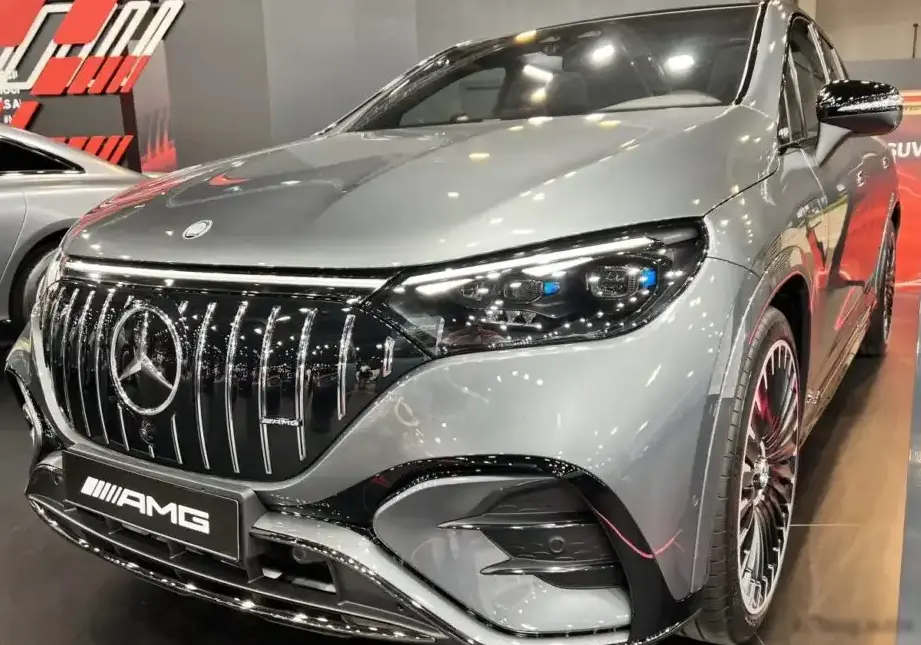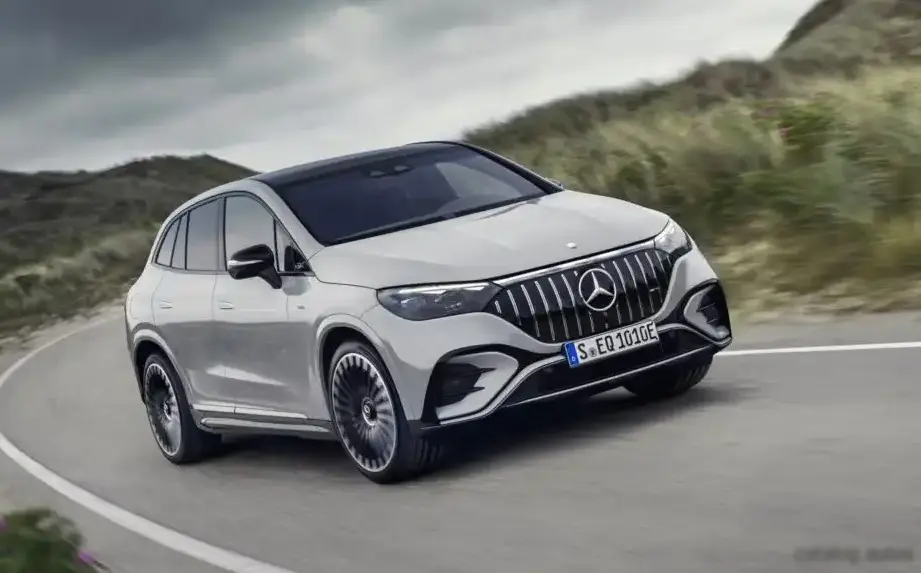
The Mercedes-Benz EQE SUV (X294) EQE 300 98 kWh, producing 245 horsepower, represents Mercedes-Benz’s entry into the all-electric luxury SUV segment. Introduced in 2023, this model is built upon the Electric Vehicle Architecture (EVA) platform, shared with the EQE sedan. The EQE 300 serves as the base model within the EQE SUV lineup, offering a balance of range, performance, and features aimed at attracting a broad customer base. Production of this specific configuration continued through October 2023, before being superseded by updated models and trims.
Technical Specifications
| Brand | Mercedes-Benz |
| Model | EQE SUV |
| Generation | EQE SUV (X294) |
| Type (Engine) | EQE 300 98 kWh (245 Hp) |
| Start of production | 2023 |
| End of production | October, 2023 |
| Powertrain Architecture | BEV (Electric Vehicle) |
| Body type | SUV |
| Seats | 5 |
| Doors | 5 |
| Fuel Type | Electricity |
| Acceleration 0 – 100 km/h | 7.6 sec |
| Acceleration 0 – 62 mph | 7.6 sec |
| Acceleration 0 – 60 mph | 7.2 sec |
| Maximum speed | 210 km/h (130.49 mph) |
| Weight-to-power ratio | 9.7 kg/Hp, 102.7 Hp/tonne |
| Weight-to-torque ratio | 4.3 kg/Nm, 230.6 Nm/tonne |
| Gross battery capacity | 98 kWh |
| Net (usable) battery capacity | 89 kWh |
| Battery technology | Lithium nickel manganese cobalt oxides (Li-NMC) |
| Battery weight | 557 kg (1227.97 lbs) |
| Battery location | Below the floor |
| All-electric range (WLTP) | 470-554 km (292.04 – 344.24 mi) |
| Average Energy consumption (WLTP) | 18.6-22 kWh/100 km (29.93 – 35.41 kWh/100 mi) |
| MPGe | 113 – 95 |
| km/kWh | 5.4 – 4.5 |
| mi/kWh | 3.3 – 2.8 |
| Electric motor power | 245 Hp |
| Electric motor Torque | 550 Nm (405.66 lb.-ft.) |
| Electric motor location | Rear axle, Transverse |
| Electric motor type | Synchronous |
| System power | 245 Hp |
| System torque | 550 Nm (405.66 lb.-ft.) |
| Kerb Weight | 2385 kg (5258.02 lbs) |
| Max. weight | 2975 kg (6558.75 lbs) |
| Max load | 590 kg (1300.73 lbs) |
| Trunk (boot) space – minimum | 520 l (18.36 cu. ft.) |
| Trunk (boot) space – maximum | 1675 l (59.15 cu. ft.) |
| Max. roof load | 100 kg (220.46 lbs) |
| Permitted trailer load with brakes (12%) | 750 kg (1653.47 lbs) |
| Permitted trailer load without brakes | 750 kg (1653.47 lbs) |
| Permitted towbar download | 100 kg (220.46 lbs) |
| Length | 4863 mm (191.46 in) |
| Width | 1940 mm (76.38 in) |
| Width including mirrors | 2141 mm (84.29 in) |
| Height | 1685 mm (66.34 in) |
| Wheelbase | 3030 mm (119.29 in) |
| Front track | 1654 mm (65.12 in) |
| Rear (Back) track | 1659 mm (65.31 in) |
| Front overhang | 883 mm (34.76 in) |
| Rear overhang | 950 mm (37.4 in) |
| Ride height (ground clearance) | 181 mm (7.13 in) |
| Drag coefficient (Cd) | 0.25 |
| Minimum turning circle (turning diameter) | 10.5 m (34.45 ft) |
| Approach angle | 18° |
| Departure angle | 22.6° |
| Wading depth | 300 mm (11.81 in) |
| Drivetrain Architecture | One electric motor drives the rear wheels. |
| Drive wheel | Rear wheel drive |
| Number of gears and type of gearbox | 1 gears, automatic transmission |
| Front suspension | Coil spring, Independent multi-link suspension, Transverse stabilizer, Air Suspension – Optional |
| Rear suspension | Independent multi-link spring suspension with stabilizer, Air Suspension – Optional |
| Front brakes | Ventilated discs |
| Rear brakes | Ventilated discs |
| Assisting systems | ABS (Anti-lock braking system), 4-wheel steering (4WS, active rear steering) |
| Steering type | Steering rack and pinion |
| Power steering | Electric Steering |
| Tires size | 235/55 R19; 255/45 R20; 265/40 R21; 265/35 R22 |
| Wheel rims size | 19; 20; 21; 22 |
Powertrain & Engine Architecture
The EQE 300 SUV utilizes a single rear-mounted electric motor, producing 245 horsepower and 550 Nm (405.66 lb.-ft.) of torque. This synchronous motor is powered by a 98 kWh (gross) / 89 kWh (net) lithium-nickel-manganese-cobalt (Li-NMC) battery pack located under the vehicle floor. The battery pack’s design prioritizes energy density and thermal management for optimal range and longevity. The vehicle employs a single-speed automatic transmission, typical of electric vehicles, delivering seamless power delivery. The EQE platform supports fast DC charging, allowing for a 10-80% charge in approximately 31 minutes using a compatible charger.
Driving Characteristics
The EQE 300 SUV offers a comfortable and refined driving experience. Acceleration from 0-60 mph takes approximately 7.2 seconds. While not as brisk as higher-performance EQE SUV variants, the EQE 300 provides ample power for everyday driving and highway merging. The rear-wheel drive configuration contributes to balanced handling, and the optional air suspension (available on higher trims) further enhances ride comfort. The single-speed transmission provides linear acceleration without noticeable gear changes. Regenerative braking is adjustable, allowing drivers to customize the level of deceleration when lifting off the accelerator, contributing to increased efficiency.
Equipment & Trim Levels
The EQE 300 SUV came standard with a comprehensive suite of features, including Mercedes-Benz User Experience (MBUX) infotainment system with a large touchscreen display, premium synthetic leather upholstery, heated front seats, and a panoramic sunroof. Standard safety features included automatic emergency braking, lane keeping assist, and adaptive cruise control. Optional extras included genuine leather upholstery, advanced driver-assistance systems (such as lane change assist and parking assist), a Burmester surround sound system, and the aforementioned air suspension. The EQE 300 served as the entry point to the EQE SUV range, with higher trims offering more luxurious appointments and advanced technology.
Chassis & Braking
The EQE 300 SUV features a multi-link suspension system at both the front and rear axles, designed to provide a comfortable ride and precise handling. Ventilated disc brakes are standard on all four wheels, providing ample stopping power. The vehicle is equipped with ABS (Anti-lock Braking System) and electronic stability control. Optional four-wheel steering (4WS) enhances maneuverability at low speeds and stability at high speeds. The vehicle’s relatively low center of gravity, due to the battery pack’s placement, contributes to its stable handling characteristics.
Market Reception & Comparison
The EQE 300 SUV was generally well-received by automotive critics, who praised its comfortable ride, spacious interior, and advanced technology. Compared to other entry-level luxury electric SUVs, such as the BMW iX1 and Audi Q4 e-tron, the EQE 300 offered a more premium interior and a longer driving range. However, some critics noted that its styling was somewhat conservative and that its infotainment system could be complex to navigate. Fuel economy, expressed as MPGe, ranged from 95 to 113, depending on driving conditions and wheel size.
Legacy
The EQE 300 SUV represents an important step in Mercedes-Benz’s transition to an all-electric future. While early reports suggest generally good reliability for the powertrain, long-term durability data is still emerging. On the used car market, the EQE 300 SUV is expected to hold its value reasonably well, given the increasing demand for electric vehicles and the Mercedes-Benz brand’s reputation for quality. The model’s relatively affordable price point (compared to higher-end EQE SUV variants) makes it an attractive option for buyers seeking a luxurious and efficient electric SUV.