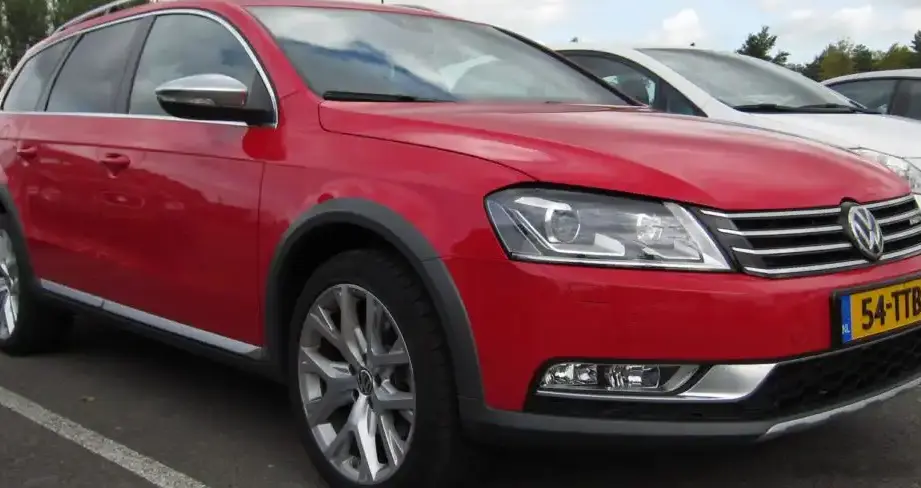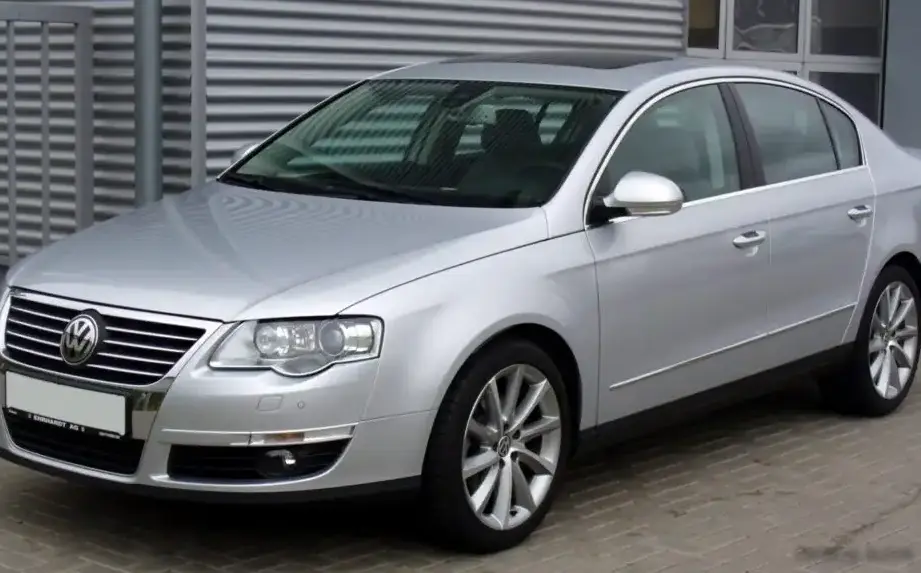
The Volkswagen Passat B6 1.6 FSI, produced from February 2005 to April 2008, represented an entry-level offering within the sixth generation (B6) Passat lineup. Positioned as a more economical alternative to the higher-performance variants like the 2.0 FSI and the diesel-powered models, the 1.6 FSI aimed to provide comfortable and practical transportation for families and commuters. It was primarily sold in the European market, where fuel efficiency and affordability were key considerations for many buyers. This variant utilized Volkswagen’s direct injection technology to balance performance with reasonable fuel consumption.
Technical Specifications
| Brand | Volkswagen |
| Model | Passat |
| Generation | Passat (B6) |
| Type (Engine) | 1.6 FSI (115 Hp) |
| Start of production | February, 2005 |
| End of production | April, 2008 |
| Powertrain Architecture | Internal Combustion engine |
| Body type | Sedan |
| Seats | 5 |
| Doors | 4 |
| Fuel consumption (urban) | 10 l/100 km (23.5 US mpg, 28.2 UK mpg, 10 km/l) |
| Fuel consumption (extra urban) | 6.1 l/100 km (38.6 US mpg, 46.3 UK mpg, 16.4 km/l) |
| Fuel consumption (combined) | 7.5 l/100 km (31.4 US mpg, 37.7 UK mpg, 13.3 km/l) |
| Fuel Type | Petrol (Gasoline) |
| Acceleration 0 – 100 km/h | 11.4 sec |
| Acceleration 0 – 62 mph | 11.4 sec |
| Acceleration 0 – 60 mph | 10.8 sec |
| Maximum speed | 200 km/h (124.27 mph) |
| Emission standard | Euro 4 |
| Weight-to-power ratio | 11.1 kg/Hp, 90.3 Hp/tonne |
| Weight-to-torque ratio | 8.2 kg/Nm, 121.8 Nm/tonne |
| Power | 115 Hp @ 6000 rpm |
| Power per litre | 72 Hp/l |
| Torque | 155 Nm @ 4000 rpm (114.32 lb.-ft. @ 4000 rpm) |
| Engine layout | Front, Transverse |
| Engine Model/Code | BLF |
| Engine displacement | 1598 cm3 (97.52 cu. in.) |
| Number of cylinders | 4 |
| Engine configuration | Inline |
| Cylinder Bore | 76.5 mm (3.01 in.) |
| Piston Stroke | 86.9 mm (3.42 in.) |
| Compression ratio | 12:1 |
| Number of valves per cylinder | 4 |
| Fuel injection system | Direct injection |
| Engine aspiration | Naturally aspirated engine |
| Valvetrain | DOHC |
| Engine oil capacity | 3.6 l (3.8 US qt | 3.17 UK qt) |
| Coolant | 5.6 l (5.92 US qt | 4.93 UK qt) |
| Kerb Weight | 1273 kg (2806.48 lbs.) |
| Max. weight | 1960 kg (4321.06 lbs.) |
| Max load | 687 kg (1514.58 lbs.) |
| Trunk (boot) space – minimum | 565 l (19.95 cu. ft.) |
| Trunk (boot) space – maximum | 1091 l (38.53 cu. ft.) |
| Fuel tank capacity | 70 l (18.49 US gal | 15.4 UK gal) |
| Max. roof load | 100 kg (220.46 lbs.) |
| Permitted trailer load with brakes (12%) | 1300 kg (2866.01 lbs.) |
| Permitted trailer load without brakes | 710 kg (1565.28 lbs.) |
| Permitted towbar download | 85 kg (187.39 lbs.) |
| Length | 4765 mm (187.6 in.) |
| Width | 1820 mm (71.65 in.) |
| Width including mirrors | 1991 mm (78.39 in.) |
| Height | 1472 mm (57.95 in.) |
| Wheelbase | 2709 mm (106.65 in.) |
| Front track | 1552 mm (61.1 in.) |
| Rear (Back) track | 1551 mm (61.06 in.) |
| Front overhang | 965 mm (37.99 in.) |
| Rear overhang | 1091 mm (42.95 in.) |
| Ride height (ground clearance) | 114 mm (4.49 in.) |
| Drag coefficient (Cd) | 0.281 |
| Minimum turning circle (turning diameter) | 11.4 m (37.4 ft.) |
| Approach angle | 14.4° |
| Departure angle | 12.6° |
| Ramp-over (brakeover) angle | 10.8° |
| Drivetrain Architecture | The Internal combustion engine (ICE) drives the front wheels of the vehicle. |
| Drive wheel | Front wheel drive |
| Number of gears and type of gearbox | 6 gears, manual transmission |
| Front suspension | Spring Strut |
| Rear suspension | Coil spring |
| Front brakes | Ventilated discs |
| Rear brakes | Disc |
| Assisting systems | ABS (Anti-lock braking system) |
| Steering type | Steering rack and pinion |
| Power steering | Electric Steering |
| Tires size | 215/55 R16 |
| Wheel rims size | 6.5J x 16 |
Powertrain & Engine Architecture
The heart of the Passat 1.6 FSI is the BLF engine code, a 1.6-liter inline-four cylinder engine. This engine utilizes direct fuel injection (FSI – Fuel Stratified Injection), a technology that allows for precise fuel delivery directly into the combustion chamber. This improves combustion efficiency, resulting in increased power and reduced emissions compared to traditional port fuel injection systems. The engine features a double overhead camshaft (DOHC) valvetrain with four valves per cylinder, optimizing airflow for enhanced performance. The compression ratio of 12:1 contributes to the engine’s efficiency. The 1.6 FSI engine produces 115 horsepower at 6000 rpm and 155 Nm (114 lb-ft) of torque at 4000 rpm. The engine is transversely mounted, driving the front wheels. The standard transmission for this variant was a 6-speed manual gearbox, although a 6-speed automatic transmission was also available as an option.
Driving Characteristics
The 1.6 FSI engine, paired with the manual transmission, provided adequate, but not exhilarating, performance. Acceleration from 0 to 100 km/h (0-62 mph) took approximately 11.4 seconds, and the top speed was around 200 km/h (124 mph). The engine felt relatively responsive at lower RPMs, thanks to the direct injection system, but power tapered off noticeably at higher speeds. The 6-speed manual transmission offered a reasonable spread of gear ratios, allowing drivers to keep the engine in its optimal power band. Compared to the more powerful 2.0 FSI variant, the 1.6 FSI felt noticeably slower, particularly during overtaking maneuvers. However, it offered a smoother and more relaxed driving experience, making it well-suited for everyday commuting and long-distance journeys.
Equipment & Trim Levels
The 1.6 FSI typically came equipped with a respectable level of standard features, though it was positioned below the higher trim levels. Standard equipment generally included air conditioning, power windows, central locking, and an audio system. Interior upholstery was typically cloth, and the dashboard featured a functional, if somewhat understated, design. Optional extras included alloy wheels, a sunroof, upgraded audio systems, and parking sensors. The specific trim level (Trendline, Comfortline, Highline) influenced the standard equipment and available options.
Chassis & Braking
The Passat B6 1.6 FSI utilized a MacPherson strut front suspension and a multi-link coil spring rear suspension. This setup provided a comfortable ride quality, absorbing bumps and imperfections in the road surface effectively. The braking system consisted of ventilated discs on the front wheels and solid discs on the rear wheels. Anti-lock Braking System (ABS) was standard, enhancing braking performance and stability. The steering was rack and pinion with electric power assistance, providing a light and precise steering feel.
Market Reception & Comparison
The Passat 1.6 FSI was generally well-received as a practical and economical option within the B6 range. Critics praised its fuel efficiency and comfortable ride, but noted its lack of outright performance compared to the more powerful variants. Compared to the 2.0 FSI, the 1.6 FSI offered significantly better fuel economy, but at the cost of performance. The diesel-powered TDI models offered even better fuel economy and comparable torque, but were typically more expensive to purchase. The 1.6 FSI appealed to buyers who prioritized affordability and fuel efficiency over sporty driving dynamics.
Legacy
The BLF 1.6 FSI engine, while generally reliable, is known to be susceptible to carbon buildup on the intake valves, a common issue with direct injection engines. Regular use of fuel system cleaners and occasional professional cleaning can help mitigate this problem. The Passat B6 1.6 FSI remains a relatively affordable and practical used car option today. Its simple engine design and readily available parts contribute to relatively low maintenance costs. However, potential buyers should be aware of the potential for carbon buildup and ensure that the vehicle has been properly maintained.