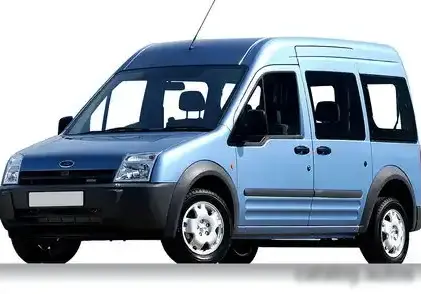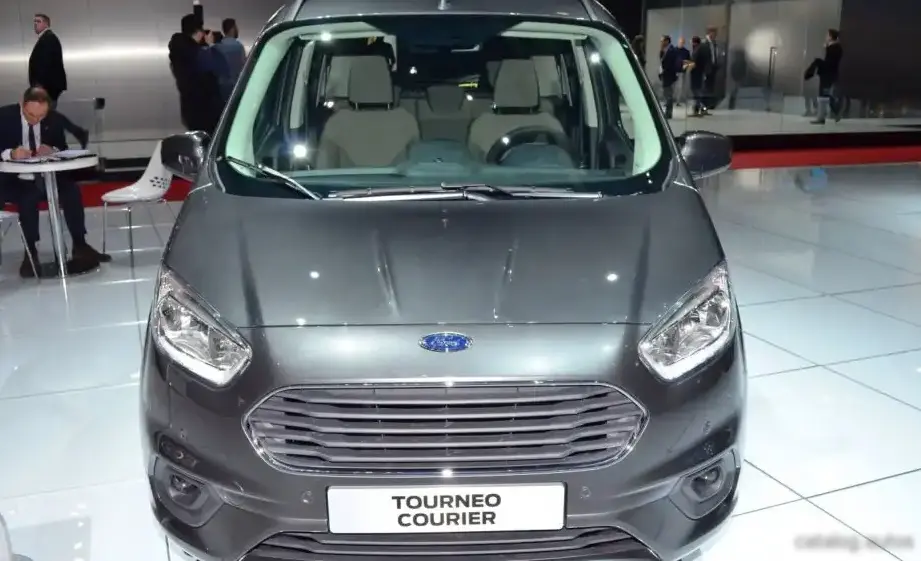
The Ford Tourneo Courier, introduced in 2014 and receiving a facelift in 2017, represented Ford’s entry into the compact leisure activity vehicle (LAV) segment in Europe. Positioned as a more versatile alternative to traditional hatchbacks, the Tourneo Courier aimed to provide practicality and space within a relatively small footprint. The 1.5 TDCi 75 horsepower variant, produced from 2018 to 2023, served as the entry-level engine option, prioritizing fuel efficiency and affordability over outright performance. This model occupied the base trim level, appealing to buyers seeking a functional and economical vehicle for urban commuting and light commercial use. It was built on the B-platform shared with the Ford Fiesta.
Technical Specifications
| Brand | Ford |
| Model | Tourneo Courier |
| Generation | Tourneo Courier I (facelift 2017) |
| Type (Engine) | 1.5 TDCi (75 Hp) S&S |
| Start of production | 2018 |
| End of production | 2023 |
| Powertrain Architecture | Internal Combustion engine |
| Body type | MPV |
| Seats | 5 |
| Doors | 5 |
| Fuel consumption (urban) | 4.6 l/100 km (51.1 US mpg, 61.4 UK mpg, 21.7 km/l) |
| Fuel consumption (extra urban) | 4.1 l/100 km (57.4 US mpg, 68.9 UK mpg, 24.4 km/l) |
| Fuel consumption (combined) | 4.3 l/100 km (54.7 US mpg, 65.7 UK mpg, 23.3 km/l) |
| CO2 emissions | 112 g/km |
| Fuel Type | Diesel |
| Emission standard | Euro 6 |
| Weight-to-power ratio | 17.1 kg/Hp, 58.6 Hp/tonne |
| Power | 75 Hp @ 4000 rpm |
| Power per litre | 50.1 Hp/l |
| Engine layout | Front, Transverse |
| Engine Model/Code | XWCA, XWCB |
| Engine displacement | 1498 cm3 (91.41 cu. in.) |
| Number of cylinders | 4 |
| Engine configuration | Inline |
| Cylinder Bore | 73.5 mm (2.89 in.) |
| Piston Stroke | 88.3 mm (3.48 in.) |
| Compression ratio | 16:1 |
| Number of valves per cylinder | 2 |
| Fuel injection system | Diesel Commonrail |
| Engine aspiration | Turbocharger, Intercooler |
| Valvetrain | SOHC |
| Engine oil capacity | 3.8 l (4.02 US qt | 3.34 UK qt) |
| Coolant capacity | 6 l (6.34 US qt | 5.28 UK qt) |
| Kerb Weight | 1280 kg (2821.92 lbs.) |
| Max. weight | 1780 kg (3924.23 lbs.) |
| Max load | 500 kg (1102.31 lbs.) |
| Trunk (boot) space – minimum | 395 l (13.95 cu. ft.) |
| Trunk (boot) space – maximum | 1656 l (58.48 cu. ft.) |
| Fuel tank capacity | 48 l (12.68 US gal | 10.56 UK gal) |
| Length | 4157 mm (163.66 in.) |
| Width | 1964 mm (77.32 in.) |
| Width including mirrors | 2112 mm (83.15 in.) |
| Height | 1723 mm (67.83 in.) |
| Wheelbase | 2489 mm (97.99 in.) |
| Minimum turning circle | 10.9 m (35.76 ft.) |
| Drivetrain | Front wheel drive |
| Number of gears | 6 |
| Gearbox type | Manual transmission |
| Front suspension | Independent, McPherson with coil spring and anti-roll bar |
| Rear suspension | Semi-independent, coil spring |
| Front brakes | Ventilated discs |
| Rear brakes | Drum |
| Assisting systems | ABS (Anti-lock braking system) |
| Steering type | Steering rack and pinion |
| Tires size | 195/60 R15 |
| Wheel rims size | 6.0 J x 15 |
Powertrain & Engine Architecture
The Tourneo Courier 1.5 TDCi 75 S&S utilized the Ford Duratorq engine family, specifically the 1.5-liter four-cylinder diesel. Engine codes XWCA and XWCB were commonly assigned to this variant. This engine featured a turbocharger with an intercooler to enhance power output and efficiency. The engine employed a common-rail direct fuel injection system, delivering fuel directly into the combustion chamber at high pressure for improved combustion and reduced emissions. The single overhead camshaft (SOHC) valvetrain operated two valves per cylinder. The “S&S” designation indicates the inclusion of Ford’s Auto Start-Stop system, which automatically shuts off the engine when the vehicle is stationary to conserve fuel. The engine was paired with a six-speed manual transmission, chosen for its fuel efficiency and affordability, although an automatic transmission was available as an option in some markets.
Driving Characteristics
The 75 horsepower output of this engine resulted in modest performance. Acceleration was adequate for urban driving and highway merging required planning. The six-speed manual transmission helped to keep the engine within its optimal power band, but the vehicle wasn’t designed for spirited driving. The gear ratios were tuned for fuel economy rather than outright speed. Compared to the more powerful 1.0 EcoBoost petrol engine or the higher-output diesel variants, the 1.5 TDCi 75 felt noticeably slower. However, it offered a more relaxed driving experience and superior fuel economy, making it well-suited for drivers prioritizing practicality and cost-effectiveness. The front-wheel-drive configuration provided predictable handling, but lacked the all-weather capability of an all-wheel-drive system.
Equipment & Trim Levels
The 1.5 TDCi 75 typically came equipped with basic but functional features. Standard equipment generally included power steering, central locking, electric front windows, and an audio system with USB connectivity. Safety features such as ABS, Electronic Stability Control (ESC), and driver/passenger airbags were also standard. Interior upholstery was typically cloth, and the dashboard featured a simple, utilitarian design. Optional extras included air conditioning, alloy wheels, parking sensors, and a more advanced audio system with Bluetooth connectivity. Higher trim levels offered additional features such as upgraded interior trim, cruise control, and a touchscreen infotainment system.
Chassis & Braking
The Tourneo Courier utilized a McPherson strut front suspension and a semi-independent coil spring rear suspension. This setup provided a comfortable ride quality, particularly on smoother roads. The front brakes were ventilated discs, offering adequate stopping power, while the rear brakes were drums, a cost-saving measure common in entry-level vehicles. A stabilizer bar was fitted to the front suspension to reduce body roll during cornering. The steering was a rack and pinion system, providing precise and responsive steering feel. The relatively light weight of the vehicle contributed to its nimble handling characteristics.
Market Reception & Comparison
The Ford Tourneo Courier 1.5 TDCi 75 was generally well-received by critics as a practical and economical small MPV. Its fuel efficiency was a major selling point, and its compact size made it easy to maneuver in urban environments. However, some reviewers criticized its lack of power and its relatively basic interior. Compared to other vehicles in its class, such as the Renault Kangoo and the Citroën Berlingo, the Tourneo Courier offered a competitive level of practicality and affordability. The 1.5 TDCi 75 was often seen as a sensible choice for budget-conscious buyers who prioritized fuel economy and functionality over performance and luxury.
Legacy
The 1.5 TDCi engine, while generally reliable, is known to require regular maintenance, particularly regarding the diesel particulate filter (DPF). Proper servicing and the use of high-quality diesel fuel are essential to prevent DPF issues. The Tourneo Courier 1.5 TDCi 75 has proven to be a durable and dependable vehicle, and well-maintained examples continue to hold their value in the used car market. Its practicality and fuel efficiency make it a popular choice for small families, urban commuters, and light commercial users. The model represents a significant step in Ford’s development of compact and versatile vehicles for the European market.