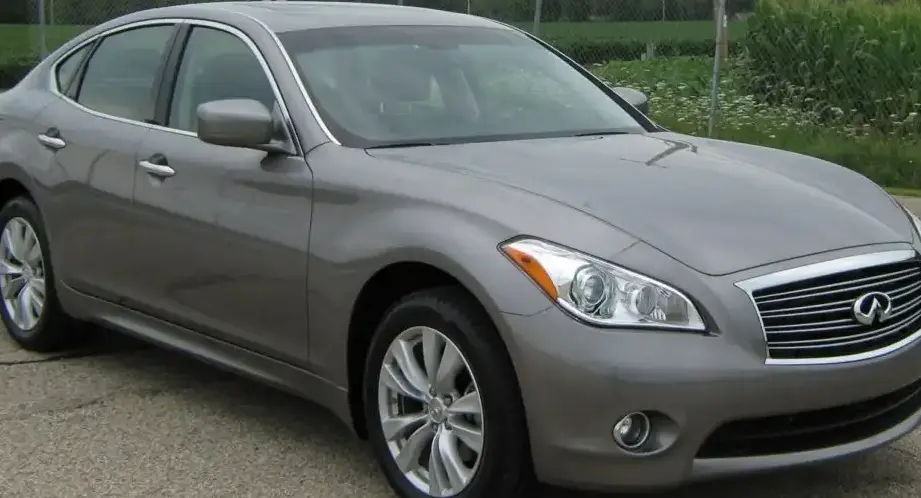
The Infiniti M III (Y50) 35i, produced from 2008 to 2010, represented a significant step forward for Nissan’s luxury brand. This generation of the M sedan, internally designated Y50, aimed to compete directly with established European rivals like the BMW 5 Series and Mercedes-Benz E-Class. The 35i variant, equipped with the potent 3.5-liter V6 engine and a seven-speed automatic transmission, served as a core model within the lineup, offering a balance of performance, luxury, and technology. It was positioned as the primary volume seller, bridging the gap between the base models and the higher-performance 56x trims.
Technical Specifications
| Brand | Infiniti |
| Model | M |
| Generation | M III (Y50) |
| Type (Engine) | 35 i V6 24V (303 Hp) |
| Start of production | 2008 |
| End of production | 2010 |
| Powertrain Architecture | Internal Combustion engine |
| Body type | Sedan |
| Seats | 5 |
| Doors | 4 |
| Fuel consumption (urban) | 13.8 l/100 km (17 US mpg, 20.5 UK mpg) |
| Fuel consumption (extra urban) | 9.4 l/100 km (25 US mpg, 30.1 UK mpg) |
| Fuel Type | Petrol (Gasoline) |
| Weight-to-power ratio | 5.9 kg/Hp, 169.6 Hp/tonne |
| Weight-to-torque ratio | 5 kg/Nm, 198.7 Nm/tonne |
| Power | 303 Hp @ 6800 rpm |
| Power per litre | 86.6 Hp/l |
| Torque | 355 Nm @ 4800 rpm (261.83 lb.-ft. @ 4800 rpm) |
| Engine layout | Front, Longitudinal |
| Engine Model/Code | VQ35HR |
| Engine displacement | 3498 cm3 (213.46 cu. in.) |
| Number of cylinders | 6 |
| Engine configuration | V-engine |
| Number of valves per cylinder | 4 |
| Fuel injection system | Multi-port manifold injection |
| Engine aspiration | Naturally aspirated engine |
| Valvetrain | DOHC |
| Engine oil capacity | 5.5 l (5.81 US qt | 4.84 UK qt) |
| Coolant capacity | 9.2 l (9.72 US qt | 8.09 UK qt) |
| Kerb Weight | 1787 kg (3939.66 lbs) |
| Trunk (boot) space – maximum | 388 l (13.7 cu. ft.) |
| Fuel tank capacity | 75 l (19.81 US gal | 16.5 UK gal) |
| Length | 4930 mm (194.09 in) |
| Width | 1806 mm (71.1 in) |
| Height | 1509 mm (59.41 in) |
| Wheelbase | 2900 mm (114.17 in) |
| Front track | 1536 mm (60.47 in) |
| Rear track | 1549 mm (60.98 in) |
| Drivetrain Architecture | Rear wheel drive |
| Number of gears and type of gearbox | 7 gears, automatic transmission |
| Front suspension | Independent, type McPherson with coil spring and anti-roll bar |
| Rear suspension | Independent multi-link spring suspension with stabilizer |
| Front brakes | Ventilated discs |
| Rear brakes | Ventilated discs |
| Assisting systems | ABS (Anti-lock braking system) |
| Tires size | 245/45 R18 |
Powertrain & Engine Architecture
The heart of the 35i was Nissan’s VQ35HR 3.5-liter V6 engine. This engine, a member of the highly-regarded VQ family, was known for its smooth power delivery and reliability. The “HR” designation signified “High Revolution,” indicating improvements to the engine’s valvetrain and intake system for increased high-rpm performance. It featured a 60-degree V-angle, dual overhead camshafts (DOHC) with continuously variable valve timing (CVTCS) on both intake and exhaust valves, and a multi-port fuel injection system. The engine produced 303 horsepower at 6800 rpm and 355 Nm (261.83 lb-ft) of torque at 4800 rpm. The engine’s architecture was longitudinally mounted in the engine bay, driving the rear wheels. Paired with the VQ35HR was a seven-speed automatic transmission, offering smooth and relatively quick shifts. This transmission featured adaptive shift control, adjusting shift points based on driving conditions and driver input.
Driving Characteristics
The 35i offered a comfortable and refined driving experience. While not as overtly sporty as the higher-trim models, the 3.5-liter V6 provided ample power for everyday driving and confident highway passing. The seven-speed automatic transmission contributed to a smooth ride, although some reviewers noted that it could occasionally feel hesitant during quick downshifts. The rear-wheel-drive configuration provided a balanced feel, and the suspension, tuned for comfort, absorbed bumps effectively. Compared to the manual transmission equipped versions, the automatic offered convenience but sacrificed some driver engagement. The 35i’s acceleration was respectable, achieving 0-60 mph times in the low-to-mid 6-second range, making it competitive within its segment.
Equipment & Trim Levels
The 35i typically came standard with a generous array of features, including leather upholstery, power-adjustable front seats, a premium audio system, automatic climate control, and a navigation system. Exterior features included alloy wheels, automatic headlights, and a power sunroof. Optional extras included a rear-seat entertainment system, advanced climate control with air purification, and a collision warning system. Trim levels within the 35i range often varied based on regional markets, but generally offered packages that added features like upgraded interior trim, enhanced audio systems, and advanced safety technologies.
Chassis & Braking
The Y50 M utilized a robust chassis with an independent suspension setup at all four corners. The front suspension employed a McPherson strut design with coil springs and an anti-roll bar, while the rear featured a multi-link setup, also with coil springs and a stabilizer bar. This configuration aimed to provide a balance between ride comfort and handling precision. Braking duties were handled by ventilated disc brakes on all four wheels, providing ample stopping power. An Anti-lock Braking System (ABS) was standard, enhancing safety during emergency braking situations. The steering was a speed-sensitive power rack-and-pinion system, offering precise control and a comfortable feel.
Market Reception & Comparison
The Infiniti M III 35i was generally well-received by automotive critics. It was praised for its comfortable ride, spacious interior, and powerful engine. However, some reviewers noted that the styling was somewhat conservative compared to its European rivals. Fuel economy was considered average for its class, with combined figures around 20-22 mpg. Compared to the higher-trim 56x models, the 35i offered a more affordable entry point into the M lineup, appealing to a broader range of buyers. Against competitors like the BMW 528i and Mercedes-Benz E350, the M 35i offered a compelling value proposition, often undercutting their prices while providing similar levels of luxury and performance.
Legacy
The Infiniti M III 35i has proven to be a relatively reliable vehicle in the used car market. The VQ35HR engine is known for its durability, and with proper maintenance, can provide many years of service. Common issues reported by owners include minor electrical glitches and wear-and-tear on suspension components. However, major mechanical failures are relatively rare. Today, the Y50 M 35i represents a well-rounded luxury sedan that offers a comfortable ride, a powerful engine, and a good value for the money. It remains a popular choice for buyers seeking a reliable and refined used car.